

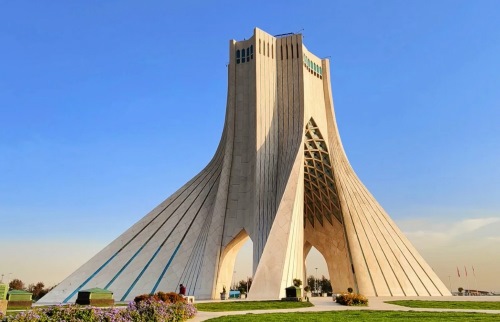
1. Overview of Iran
Islamic Republic of Iran (Persian:جمهوریاسلامیایران, English: The Islamic Republic of Iran, abbreviated as Iran, Iran is an ancient civilization with a history of four or five thousand years. It is located in southwestern Asia and is known as the “European Land Bridge” and the “Eastern and West Air Corridor”. It has an area of 1.645 million square kilometers, a coastline of 2,700 kilometers, and many plateaus in the territory. The east is basins and deserts, with a population of 88.55 million. Iran’s GDP in 2023 is approximately US$401.5 billion, and its per capita GDP is US$4,500.
Iran has rich oil and gas and mineral resources, and is known as the “World Mineral Museum”. It ranks fourth in the world in oil reserves and second in the world in natural gas reserves. Zinc ore reserves rank first in the world, with copper ore reserves of 3.3 billion tons, accounting for about 4% of the world’s total reserves, ranking third in the world; iron ore 4.7 billion tons, ranking tenth in the world.
2. Overview of Iran’s steel
Iran is the tenth largest steel producer in the world and the largest steel producer in the Middle East. The crude steel production accounts for more than 50% of the crude steel production in the Middle East. In 2024, Iran’s crude steel production will be 31 million tons. “Vision 2025” was released in 2004, and the crude steel production capacity will reach 55 million tons by 2025.
Iran has rich iron ore resources, ranking tenth in the world. Iranian iron ore contains high silica content and coarse particle size. It is a good ore distribution variety. The direct reduced iron produced by it has strong competitiveness in the international market.
Iran is the second largest producer of direct reduction iron in the world (the first is India), with a production of 33.45 million tons, accounting for about one-quarter of the world’s total output, and 90% of its direct reduction iron is produced through the Midrex process. Therefore, Iran’s steel industry mainly adopts the direct reduction iron-electric furnace (electric arc furnace and induction furnace) process, accounting for about 90% of its total steel output, and only 10% of its capacity adopts the blast furnace-converter process.
There are nearly 100 steel companies in Iran, and almost all important steel manufacturers in Iran are fully or partly affiliated with the Iranian Mining Development and Reform Organization (IMIDRIO) under the government.
Iran’s crude steel capacity utilization rate is slightly higher than the global average, but the steel capacity utilization rate is only 44.8%.
3. Iran’s major steel enterprises
1. Mobarakeh Steel: Iran’s largest steel producer and the largest long material manufacturer in the Middle East. It was founded in 1983 and is headquartered in Tehran. It has an annual production capacity of 11.8 million tons and has multiple production bases, mainly producing hot-rolled coils, cold-rolled coils, coated plates, etc. Their steel output accounts for about 50% of Iran, of which more than 95% are flat materials for automobiles. It also has Saba Steel and Hormuzgan Steel.
2. Esfahan Steel: Founded in 1994, it is headquartered in Isfahan. It mainly produces hot-rolled coil plates, cold-rolled coil plates, coated plates and other products, with an annual production capacity of about 4 million tons. It is the only manufacturer with large blast furnaces, and is also the largest manufacturer of steel structure products in Iran and the largest manufacturer of long materials.
3. Khouzestan Steel: Founded in 1986, it is headquartered in Avas. It mainly produces hot-rolled coils, cold-rolled coils, coated plates, etc., with an annual production capacity of about 5 million tons, occupying an important position in the Iranian steel industry.
4. National Iron and Steel Corporation of Iran (NISCO): Iran’s largest wire and bar manufacturer, founded in 1994, headquartered in Shiraz, mainly produces wire and bar products of various specifications, with an annual production capacity of about 3 million tons. It has 5 steel mills under its jurisdiction.
5. South Kaveh Steel: The production capacity is about 2.4 million tons, and it also has a certain position in Iran’s steel industry.
6. Iran’s Zaland Steel Company (Zisco): In 2021, a blast furnace with a capacity of 1.7 million tons and corresponding converter steelmaking workshop were put into production, gradually making its mark in the steel field.
7. Khorasan Steel Company: Opened in the late 1980s in Khorasanlazavi Province, directly controlled by the Iranian Mining Development and Reform Organization.
4. Overview of Iran’s steel import and export
Iran is also a net exporter of steel. In recent years, under normal circumstances, the annual export volume of semi-finished and finished steel is about 10 million tons. The destination countries for Iran’s steel exports are mainly in the Middle East, Southeast Asia, Africa and Europe. China imports an average of 10 million tons of iron ore to Iran every year..
In 2024, Iran continued to increase the import of finished steel. The total amount of steel products imported by Iran from China reached US$8.7 billion, with Chinese products accounting for as much as 45%. The plate market accounts for the largest share of the total import tonnage, with annual imports of about 1.5 million tons. Iran imports steel and metal products for construction projects, infrastructure development and manufacturing. Steel beams, steel pipes and coils are one of the main imported products, driving growth in the construction and manufacturing industries.
5. The advantages and challenges of Iranian steel
A: Advantages:
(1) Oil and gas and mineral resources are abundant, most of which can meet production needs and rely less on external minerals, which makes Iran’s direct reduction iron (DRI) production cost the lowest in the world (about US$200-250/ton), far lower than that of India (US$300-350/ton), which is dependent on coal.
(2) Iran has many steel plants and obvious production capacity advantages.
(3) Iran’s DRI technology originated from the US MIDREX process introduced in the 1970s, but under long-term sanctions, the country has gradually realized technological autonomy. For example, Saba Steel’s “Iranian version of Midrex” adapts to the characteristics of local raw materials. This process proves that even under the technological blockade, resource + market + policy support can still promote industrial upgrading.
B: Challenge
(1) External sanctions: The long-term sanctions of the United States have restricted exchanges and cooperation between Iranian steel companies and the international market, hindered the introduction of advanced technologies and equipment, and the development of Iran’s steel industry has been greatly affected. Despite facing economic sanctions, Iran’s steel production has continued to grow, with an average annual growth rate of 6% to 10% since 2008.
(2) Energy supply: The supply restrictions on electricity and natural gas affect the normal production of steel enterprises. Although Iran has abundant iron ore reserves, providing a foundation for the development of the steel industry, the country still faces the problem of supplying water, natural gas and electricity. In order to achieve a production capacity of 55 million tons of crude steel by 2025, Iran’s annual steelmaking water consumption exceeds 250 million cubic meters, and natural gas energy consumption will also increase significantly. Since most steel mills in Iran use arc furnace technology to produce steel, this process requires a lot of electricity, and the tight power supply directly affects production capacity
(2) Cybersecurity: In recent years, Iranian steel companies have been hacked many times, resulting in accidents such as suspension of production and affecting production operations.
(3) Market competition: In terms of exports, Iran’s long-material products are mainly sold to neighboring countries, while semi-finished steel is exported to the East Asian market. But in East Asia, Iran’s semi-finished steel faces fierce competition from exported products from China.
6. Policy guidance for Iran’s steel industry
(1) Core industry: The Iranian government regards the steel industry as a core industry that reduces oil dependence and breaks through sanctions.
(2) Suppress imports: In order to curb domestic dependence on imported steel, the government imposes heavy taxes on imported steel and cancels the loan policy of long-term preferential treatment for imported steel.
(3) Industrial upgrading: Accelerate the transformation of old enterprises, and the government provides financial support; implement privatization and transformation of steel enterprises, and build private enterprises with an annual output of 4-5 million tons of steel within 2-3 years. Steel market participants are reducing their dependence on foreign products by increasing capacity utilization. Mobarakeh Steel, the country’s leading plates company, is working to expand its product range to provide specific grades of products, planning and producing products previously supplied from abroad, and producing more than 35 products over the past three years, among the main measures.
(4) Attract foreign investment: ………………………………..
7. Projects under construction and expected construction
8. Iran’s steel prospects are good
More、 Read: https://www.sinosteel-pipe.com/en/blog-5642534725223679.html
Submit guest articles that reach decision-makers, influencers, and professionals. Yarabook offers a trusted platform for quality content, strong backlinks, and SEO-driven visibility. Pay. Publish. Promote.