

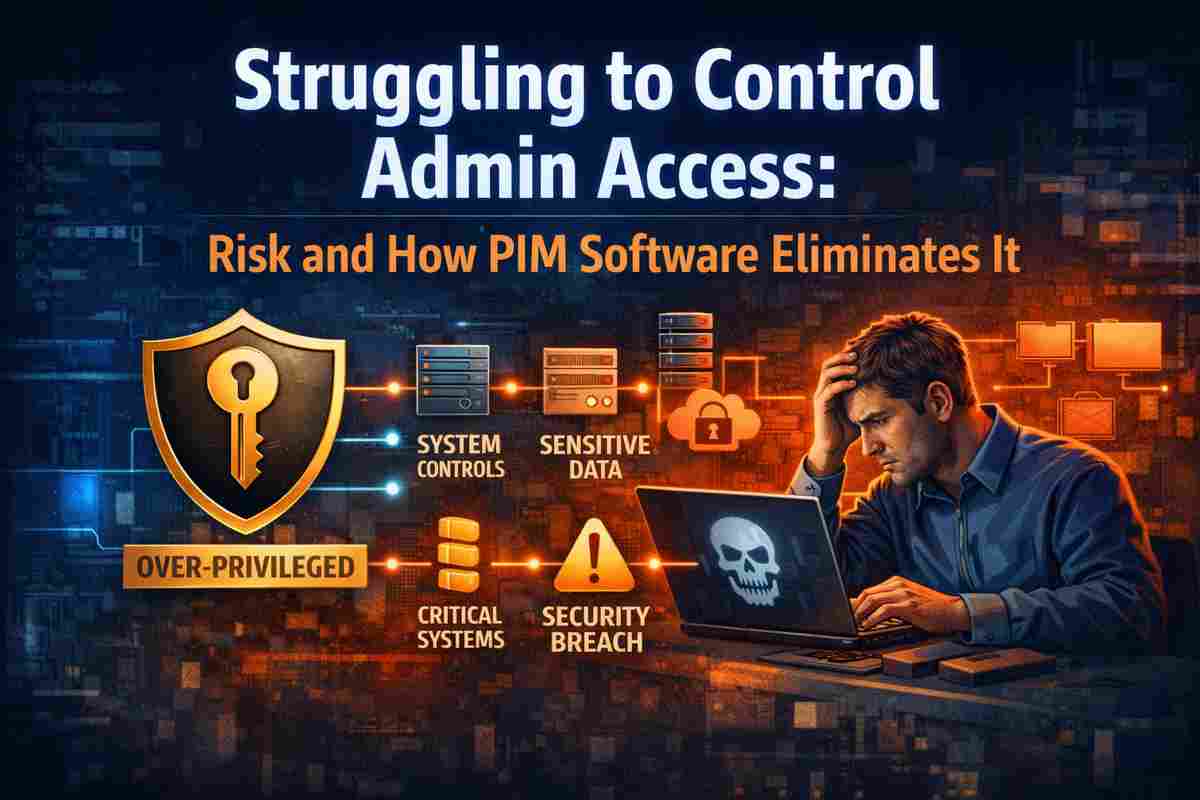
Administrative privileges are one of the most potent powers within any organization. It enables teams to set up infrastructure, develop and deploy applications, store and analyze data, while keeping everything secure. But that power also creates one of the most dangerous security threats facing enterprises.
Visibility decreases, accountability decays, and exposure grows quietly in the dark, under the guise of unwatched elevated privileges. This is why corporate organizations are increasingly turning to privileged identity management solutions for locking down sensitive systems and keeping operating trust.
If your organization cannot determine who has elevated access, why they have it, or what they’re doing with it, then perhaps a formal privileged identity management program is not something to delay implementing.
Privileged accounts appear across your entire enterprise infrastructure:
But nobody speaks for these identities, and they accumulate permissions without every being reviewed. As with any form of power, excess privilege becomes the norm.
Well, a formalised privileged identity management capability brings visibility and governance across the entire lifecycle of administrative access. Access has history, and with it, much greater accountability than perhaps what was intended to be automated at startup. It is this focus on accountability that privileged identity management software has an important part to play in enhancing control of operations.
Many companies continue to use documentation, ticketing workflows or disconnected tools to manage admin privileges. This ad-hoc method falls apart quickly in more complex environments.
Typical challenges include:
These pains are addressed with a centralized privileged identity management solution, which automates governance and offers consolidated oversight. They enforce access discipline through privileged identity management software rather than risking it all on human intervention.
As more organizations adopt hybrid and multi-cloud, this ability is a prerequisite, not an optional investment.
These are the kind of accounts that attackers want to compromise. If even one administrative account is compromised, lateral movement, data disclosure,e or infrastructure modification can be the result.
Types of controls provided by privileged identity management software are:
These controls are designed to act only when a privilege is needed. An advanced privileged identity management system limits susceptible exposure windows and enhances discovery of abuse, thereby lessening the risk associated with internal and external threats.
’72 Auditor Audit requires a clear understanding of government activity , such as:
Without PIM software, this data gathering can be a difficult and partial process. A hardened identity management system automatically writes records on an ongoing basis that makes compliance more straightforward to validate and provides greater governance visibility.
That makes the technology not just protective, but operationally strategic.
A lot of people incorrectly assume they are slowing tech teams down by adding governance. However, in reality, a privileged identity management solution enhances workflow efficiency by:
Because it streamlines everything, a robustly implemented privileged identity management solution doesn’t create unnecessary conflict between productivity and control.
When It Comes to Governing Privilege, Think Identity Not Discipline.
Organizations in search of greater confidence would be better served by strengthening identity validation around privileged identity management software than by treating privilege governance as a discrete control layer.
Privileged Identity Management System Facilitates integration of cryptographic trust with administrative processes in eMudhra. Identity signal-based privilege elevation. Using certificate-based authentication, multi-factor validation, and centralized identity governance enable that privilege elevation decisions are based on verified identity signals instead of static credentials.
These capabilities increase visibility and traceability already provided by privileged identity management software, lowering the risk of impersonation and increasing session assurance. Identity frameworks from eMudhra are regulatory-compliant and improve governance in a bound environment.
This model provides enterprises the ability to unlock the full potential of their privileged identity management system while preserving audit confidence and continuity of trust in identities.
Administrative rule is not a project that is ever finished. As infrastructure changes, it needs to be constantly honed.
Organizations that deploy privileged identity management systems typically build them to:
In the long run, a scalable PIM-set allows for moving from a reactive control to proactive identity assurance.
There will be a risk, since administrative privilege always includes a certain amount of it. The goal isn’t to vanquish high access, it’s to regulate it — and we need intelligent regulation.
A good privileged identity management system converts a dangerous uncontrolled exposure to privilege into a controlled capability. With accountability, automation and monitoring, privilege identity management solutions can enable a faster time to value by reducing the risk to an organisation without impeding agility.
In the identity-first security era, it is no longer simply technical hygiene to govern administrative access securely.
It is strategic resilience.
Submit guest articles that reach decision-makers, influencers, and professionals. Yarabook offers a trusted platform for quality content, strong backlinks, and SEO-driven visibility. Pay. Publish. Promote.