

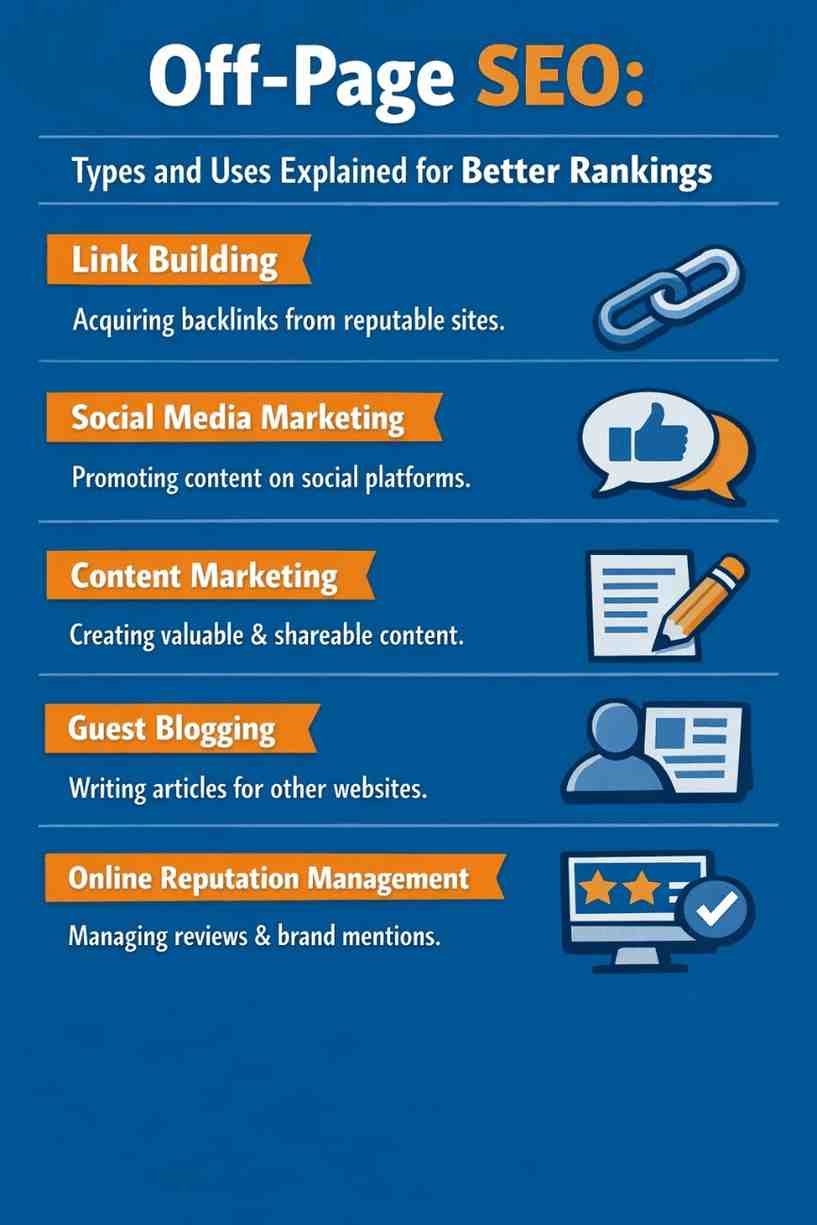
Off-Page SEO: Types and Uses Explained for Better Rankings
In the world of digital marketing, Search Engine Optimization (SEO) is crucial to achieving online visibility. While most people are familiar with on-page SEO—which involves optimizing content, title tags, and meta descriptions—there’s another equally important aspect: off-page SEO.
Off-page SEO refers to all the activities that happen outside your website but still contribute to your search engine rankings. These strategies help build your website’s reputation, trustworthiness, and authority. That’s why modern digital marketing courses in Pune emphasize learning both on-page and off-page SEO to deliver real-world results.
In this blog, we’ll dive into the types of off-page SEO, their uses, and how you can master them by enrolling in a trusted digital marketing training institute in Pune.
What is Off-Page SEO?
Off-page SEO involves all external optimization practices used to improve your site’s ranking in search engine results. This includes:
Unlike on-page SEO, which you control directly, off-page SEO is more about how others perceive and engage with your content or brand across the web.
Why is Off-Page SEO Important?
Search engines like Google consider external signals—such as backlinks and brand mentions—to determine a website’s credibility and relevance.
Here’s why off-page SEO matters:
Types of Off-Page SEO Techniques
Now let’s explore the main types of off-page SEO that professionals use to boost their rankings:
Definition:
The process of acquiring hyperlinks from other websites to your own.
Types of Links:
Methods:
Definition:
Sharing your content on social platforms to increase visibility and generate interactions.
Platforms:
Facebook, LinkedIn, Twitter, Instagram, Reddit, Pinterest
Why it Works:
While social signals may not directly affect rankings, increased engagement can lead to more shares, backlinks, and traffic.
Definition:
Writing and publishing articles on other websites in your niche.
Benefits:
Best Practices:
Definition:
Collaborating with influencers to promote your content or brand.
Tactics:
Why it’s Useful:
Trusted voices drive quality backlinks, high referral traffic, and social proof.
Definition:
Engaging in online communities by answering questions or contributing to discussions.
Popular Platforms:
Best Practices:
Definition:
Listing your website on relevant business directories.
Types:
Definition:
Publishing company updates on media and PR platforms.
Benefits:
Tip: Use tools like PRWeb or collaborate with local media to publish stories about your training institute or achievements.
Definition:
Online references to your brand without a clickable backlink.
Why It Matters:
Google’s algorithms can recognize brand mentions as a form of authority and trust—even without direct links.
Tools:
Set up Google Alerts to track your mentions.
Definition:
Re-publishing your original content on third-party platforms.
Platforms:
Benefits:
Note: Always use canonical tags to avoid duplicate content penalties.
Definition:
Publishing SEO-optimized videos on platforms like YouTube.
Why It’s Valuable:
Use Case:
Create a video tour of your digital marketing training institute in Pune and optimize the video title, tags, and links.
How to Learn Off-Page SEO the Right Way
The best way to master off-page SEO is through structured learning and hands-on practice.
What to Expect from Digital Marketing Courses:
Choosing a top-rated digital marketing training institute in Pune ensures you get up-to-date, practical training aligned with search engine guidelines.
Definition:
The process of acquiring hyperlinks from other websites to your own.
Types of Links:
Methods:
Definition:
Sharing your content on social platforms to increase visibility and generate interactions.
Platforms:
Facebook, LinkedIn, Twitter, Instagram, Reddit, Pinterest
Why it Works:
While social signals may not directly affect rankings, increased engagement can lead to more shares, backlinks, and traffic.
Definition:
Writing and publishing articles on other websites in your niche.
Benefits:
Best Practices:
Definition:
Collaborating with influencers to promote your content or brand.
Tactics:
Why it’s Useful:
Trusted voices drive quality backlinks, high referral traffic, and social proof.
Definition:
Engaging in online communities by answering questions or contributing to discussions.
Popular Platforms:
Best Practices:
Definition:
Listing your website on relevant business directories.
Types:
Definition:
Publishing company updates on media and PR platforms.
Benefits:
Tip: Use tools like PRWeb or collaborate with local media to publish stories about your training institute or achievements.
Submit guest articles that reach decision-makers, influencers, and professionals. Yarabook offers a trusted platform for quality content, strong backlinks, and SEO-driven visibility. Pay. Publish. Promote.