

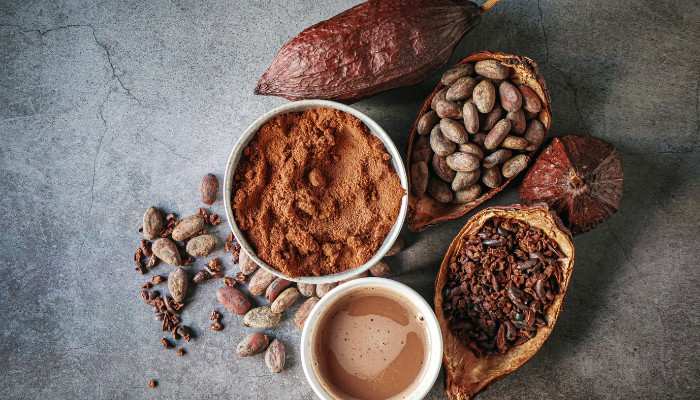
Cocoa, the essential ingredient behind chocolate, has a story as rich and flavorful as the treat itself. Its journey spans thousands of years, continents, and cultures, evolving from a sacred drink to a globally loved delight. In this blog, we explore the History of Cocoa, its origin, discovery, the cocoa tree, and how it became the foundation of the chocolate industry we know today.
The History of Cocoa dates back more than 5,000 years to the ancient civilizations of Central and South America. The Olmecs, considered one of the earliest Mesoamerican civilizations, were the first to discover the potential of the cacao fruit. Observing the edible nature of the cacao beans, they soon began using them to prepare a bitter, frothy beverage mixed with spices and chili. This beverage was not just a source of nutrition but held cultural and spiritual significance.
Cocoa’s importance grew over time with the Mayans and Aztecs. These civilizations used cacao in sacred rituals, ceremonies, and even as currency. Among the Aztecs, cacao beans were so valuable that they could be traded for food, clothing, and other essentials. The beans were also believed to have medicinal properties, such as boosting energy and treating various ailments.
Cocoa is derived from the seeds of the cacao tree (Theobroma cacao). The beans inside these colorful pods are fermented, dried, roasted, and processed to produce natural cocoa mass, cocoa powder, and cocoa butter. Each of these products plays a crucial role in making chocolate and other cocoa-based items.
The cocoa tree is native to the tropical rainforests of Central and South America. It thrives in warm, humid climates near the equator, requiring rich soil and shade for optimal growth. Historically, cultivation methods included planting cacao trees under the canopy of taller trees to mimic their natural environment—a practice still used in sustainable farming today.
For businesses looking to source quality products, bulk cocoa beans exporters like Walksea Industries Russia offer reliable access to high-quality cocoa for industrial and commercial use. Companies sourcing from trusted cocoa exporters in Russia can ensure consistency, quality, and adherence to international standards.
The transformative chapter in the History of Cocoa began in the 16th century when Spanish explorers brought cacao to Europe. Hernán Cortés, after experiencing the Aztec Emperor Montezuma’s cacao drink, introduced it to the Spanish court. Europeans adapted the drink to suit their tastes by adding sugar, cinnamon, and vanilla, transforming it from a bitter ceremonial drink into a sweet beverage for the elite.
By the 17th and 18th centuries, cocoa spread throughout Europe. Chocolate houses emerged in cities like Paris, London, and Amsterdam, making cocoa products more widely available, though still primarily enjoyed by the upper classes. Innovations in processing during this era, including the development of cocoa powder and solid chocolate, paved the way for chocolate as we know it today.
The Industrial Era marked a significant turning point in the History of Cocoa. Factories in Europe began producing chocolate at scale, making it accessible to more people. The first chocolate factory opened in Barcelona in 1780, followed by other European countries.
Cocoa cultivation also expanded globally. European colonial powers established plantations in tropical regions of Africa, particularly in São Tomé, Príncipe, and later West Africa. Today, Africa remains the largest producer of cocoa, supplying beans to chocolatiers and bulk cocoa beans exporters worldwide.
In the 19th and 20th centuries, cocoa became a household staple. Innovations such as the first milk chocolate by Daniel Peter and Henri Nestlé, and mass production by Milton Hershey in the United States, made chocolate affordable and accessible to the general public.
Companies like Walksea Industries Russia, a trusted name among cocoa exporters in Russia, continue to play a vital role in supplying premium quality cocoa beans to manufacturers around the world. Whether for chocolate production, bakery products, or industrial use, sourcing from reputable exporters ensures quality and reliability.
From its discovery in ancient Mesoamerica to its role as a global commodity, the History of Cocoa is a tale of exploration, trade, and innovation. Cocoa has evolved from a sacred ritual beverage to a mass-produced, universally loved treat. Its versatility continues to inspire culinary creativity, whether in desserts, beverages, or confections.
For chocolate lovers and industry professionals alike, understanding the History of Cocoa deepens appreciation for this remarkable ingredient. By sourcing quality beans through trusted bulk cocoa beans exporter like Walksea Industries Russia, businesses can continue the legacy of cocoa while maintaining sustainable and ethical practices.
Cocoa’s journey is a testament to human ingenuity, cultural exchange, and industrial progress. From ancient rituals to modern chocolate bars, this ingredient has captivated hearts worldwide. Today, with ethical sourcing and innovative uses, cocoa remains more than a commodity, it is a symbol of taste, tradition, and global connection.
Submit guest articles that reach decision-makers, influencers, and professionals. Yarabook offers a trusted platform for quality content, strong backlinks, and SEO-driven visibility. Pay. Publish. Promote.