

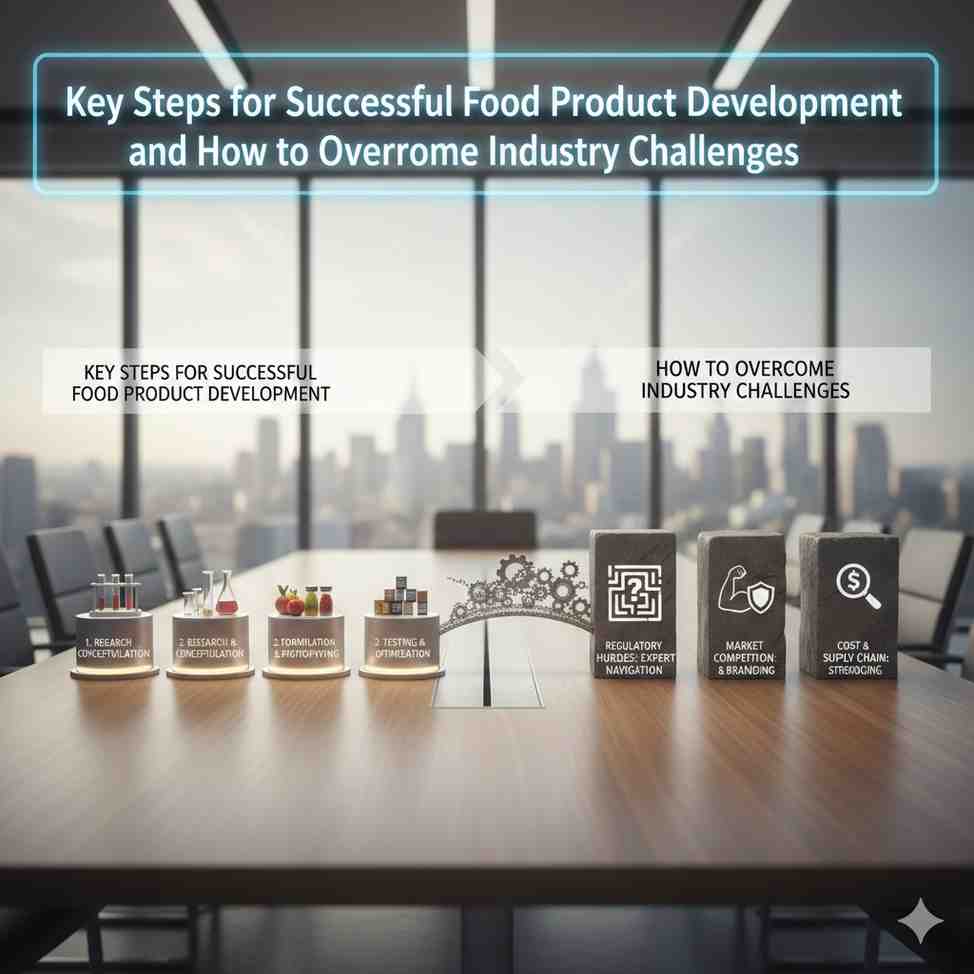
Key Steps for Successful Food Product Development and How to Overcome Industry Challenges
Creating a new food product is an exciting yet complex journey. In today’s highly competitive market, having just a good idea is not enough. Companies need a well-structured food product development process that balances innovation, taste, nutrition, safety, and market demand. From startups to established brands, many businesses face challenges such as formulation issues, regulatory hurdles, and scaling difficulties. Understanding the key stages of food product development and how to address common problems can significantly improve the chances of success.
Step 1: Ideation and Concept Planning
Every successful product starts with a strong concept. In the food industry, understanding consumer needs, identifying market gaps, and keeping up with emerging trends is essential. During the ideation phase, teams often struggle to define a concept that is both innovative and feasible. Conducting thorough market research, competitor analysis, and trend forecasting helps identify high-potential ideas that are more likely to succeed. Consulting with professional food consultants at this stage can save valuable time, reduce costly mistakes, and provide actionable insights that guide the development process.
Step 2: Food Formulation and Ingredient Selection
Creating the right food formulation is one of the most critical and challenging stages in product development. It is not just about flavor — factors like texture, shelf life, stability, nutritional content, and clean-label requirements all play a major role in consumer acceptance. Many products fail because the initial formula does not meet consumer expectations or regulatory standards. Using scientific testing and iterative development processes ensures that the formulation delivers the desired taste, texture, and health benefits. Collaborating with experienced food scientists can optimize ingredient selection and help create products that are both appealing and compliant with industry standards.
Step 3: Sensory Testing and Consumer Feedback
Even a well-formulated product can fail without proper testing. Food product development services often include sensory analysis and consumer feedback sessions. These tests evaluate key factors such as taste, aroma, texture, appearance, and overall appeal. Early validation allows brands to fine-tune the product before it reaches the market, ensuring better consumer acceptance and reducing the risk of launch failure. Incorporating feedback from real consumers is essential to understand preferences and identify potential improvements before mass production.
Step 4: Regulatory Compliance and Documentation
Navigating regulations is a critical part of product development in the food industry. Different countries have unique rules regarding labeling, ingredient safety, allergens, and nutritional claims. Non-compliance can lead to delays, fines, or even product recalls. Comprehensive documentation and regulatory support during development can prevent costly setbacks and streamline the approval process. Working with experts who understand local and international regulations ensures that your product meets all necessary standards from the start.
Step 5: Pilot Manufacturing and Scale-Up
Transitioning a product from the lab to pilot or commercial production is often the most challenging stage. Many businesses face issues with consistency, ingredient sourcing, and process optimization. Effective pilot manufacturing ensures that the product can be produced at scale without losing quality, taste, or nutritional value. This stage also allows brands to test manufacturing processes, refine packaging, and optimize production efficiency, ultimately saving time and costs during full-scale launch.
Step 6: Clinical and Nutritional Validation
For functional foods, nutraceuticals, or fortified products, clinical and nutritional validation is essential. Scientific testing, including nutritional analysis and efficacy studies, provides credibility for health claims. This step builds consumer trust and enhances product positioning in a competitive market. Validated claims also help in marketing and regulatory approval, making the product more attractive to health-conscious consumers.
Real-World Example: Launching a Plant-Based Beverage
Consider a startup aiming to launch a high-protein, plant-based beverage. The team initially struggled with flavor balance, nutrient stability, and shelf-life issues. By following a structured development process — including careful formulation, sensory evaluation, and pilot-scale testing — these challenges were addressed. The result was a product that met consumer expectations, complied with regulatory standards, and was ready for market launch. This example demonstrates how a systematic approach can overcome common pitfalls and deliver successful products.
Why Following a Structured Approach Matters
From ideation to market launch, a structured food product development process helps brands avoid common mistakes. Each stage — concept development, food formulation, sensory testing, regulatory compliance, and scale-up — requires expertise, collaboration, and careful planning. Skipping steps or rushing development can lead to product failure, wasted resources, and missed market opportunities.
Partnering with experienced food consultants and organizations like Food Research Lab can streamline the process. They provide scientific guidance, technical know-how, and pilot manufacturing support, helping brands bring high-quality, innovative, and consumer-ready products to market efficiently. Leveraging their expertise ensures that your product is not only appealing and safe but also compliant with regulations and optimized for production at scale.
In conclusion, the journey from concept to launch is complex but navigable with the right strategy and support. By following a structured food product development process, addressing formulation challenges, incorporating consumer feedback, ensuring regulatory compliance, and validating nutritional claims, companies can successfully bring innovative food products to market. Partnering with experienced consultants and CDMOs adds significant value, reducing risk and increasing the likelihood of a successful launch.
Submit guest articles that reach decision-makers, influencers, and professionals. Yarabook offers a trusted platform for quality content, strong backlinks, and SEO-driven visibility. Pay. Publish. Promote.