

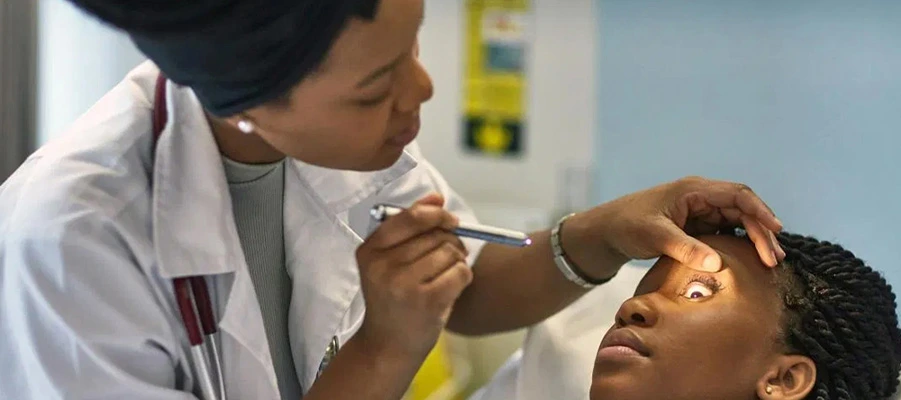
Many eye diseases such as glaucoma, cataracts, diabetic eye disease, and macular degeneration can progress silently. By the time symptoms become noticeable, vision damage may already be permanent.
A professional eye exam does more than check how well you can see. It evaluates:
Whether you are young or old, regular eye checkups are essential for lifelong vision health.
One of the most common signs that you need an eye checkup is blurred or inconsistent vision. If objects appear unclear, distorted, or out of focus—especially when reading, driving, or using digital screens—it may indicate an underlying issue.
Blurred vision should never be ignored, even if it comes and goes. A professional eye exam can identify the cause and recommend appropriate treatment, whether it’s corrective lenses, lifestyle changes, or medical care.
If you often experience headaches, particularly after reading, working on a computer, or using your phone, your eyes may be working harder than they should. Eye strain is increasingly common due to long screen hours and poor visual ergonomics.
These symptoms may be linked to uncorrected vision problems or improper screen habits. An eye specialist can assess your vision, prescribe glasses if needed, and provide guidance on reducing digital eye strain.
Struggling to see clearly at night, especially while driving, is another sign that your eyes may need professional evaluation. If you notice increased glare from headlights, halos around lights, or reduced night vision, it could signal an eye condition.
Night vision problems can affect safety and quality of life. An eye checkup helps determine the root cause and ensures proper treatment before the condition worsens.
Occasional eye redness or dryness can be caused by dust, allergies, or fatigue. However, persistent irritation, dryness, or redness should not be overlooked.
These signs may indicate dry eye disease, allergies, infections, or inflammation. A professional eye exam can identify triggers and provide effective treatment to relieve discomfort and prevent complications.
Sudden vision changes are a medical warning sign and require immediate attention. This includes:
Such symptoms can be linked to serious conditions like retinal detachment, glaucoma attacks, eye infections, or neurological issues. Early diagnosis is critical to prevent permanent vision loss.
While everyone benefits from eye checkups, certain groups should be especially vigilant:
Even if you don’t notice symptoms, routine eye exams help maintain long-term eye health.
General recommendations:
Your eye care professional may suggest a customized schedule based on your health and vision needs.
Early detection through regular eye exams offers several advantages:
Professional eye care ensures that small issues don’t become major problems.
Your vision is too important to ignore. Blurred sight, frequent headaches, eye strain, and sudden changes in vision are clear signals that your eyes need professional attention. Early diagnosis and timely care can prevent long-term eye problems and help you maintain clear, comfortable vision for years to come. If you notice any of these warning signs, scheduling a professional eye checkup is a smart and proactive decision. For those seeking reliable eye care services in Lusaka, Medcross Hospital offers comprehensive eye examinations and expert support to help protect your eye health.
Submit guest articles that reach decision-makers, influencers, and professionals. Yarabook offers a trusted platform for quality content, strong backlinks, and SEO-driven visibility. Pay. Publish. Promote.