

Oily skin is often linked to genetics and hormonal activity, but that does not mean it cannot be managed. In reality, your everyday habits play a significant role in how your skin behaves throughout the day. Many people unknowingly follow routines that either trigger excess oil production or make pores appear more visible. By making small, consistent changes, it is possible to maintain better oil balance and improve overall skin texture over time.
Managing oily skin is not about eliminating oil. Your skin needs natural oils to stay healthy. The goal is to control excess sebum, prevent clogged pores, and support a balanced skin barrier. The following habits can help you move toward that balance.
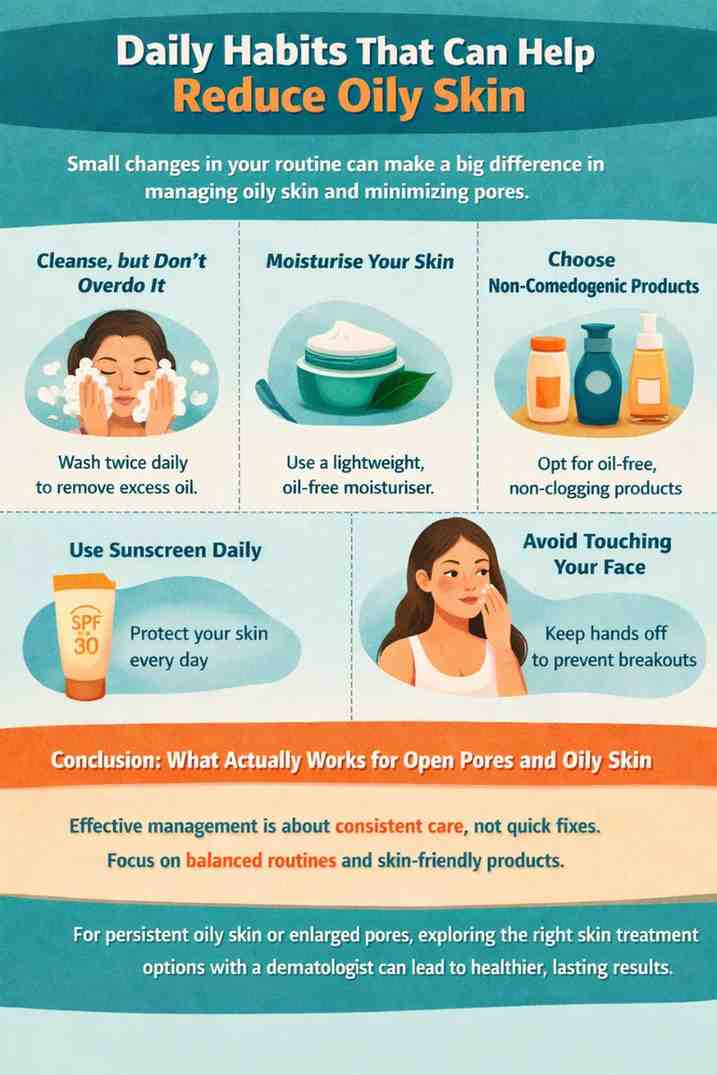
Cleansing is one of the most important steps for oily skin, as it helps remove excess oil, dirt, and environmental impurities that accumulate on the skin. Washing your face twice a day—morning and night—is generally sufficient.
However, frequent washing or using harsh cleansers can strip away natural oils, causing the skin to react by producing even more sebum. This can lead to increased shine and more noticeable pores. Choosing a gentle, pH-balanced cleanser designed for oily or combination skin can help keep the skin clean without disturbing its natural balance.
A common misconception is that oily skin does not need moisturiser. In reality, skipping hydration can make the problem worse. When the skin becomes dehydrated, it often compensates by producing more oil, which can increase greasiness and clog pores.
Using a lightweight, gel-based or water-based moisturiser helps maintain hydration without feeling heavy on the skin. Proper moisturisation also supports the skin barrier, which is essential for keeping oil production under control and improving overall skin health.
The products you use daily can either support your skin or contribute to congestion. Heavy creams, thick makeup, or oil-based products may clog pores, leading to blackheads, whiteheads, and breakouts.
Opting for oil-free and non-comedogenic skincare and makeup ensures that your pores remain clear and less congested. It is equally important to remove makeup thoroughly at the end of the day. Leaving makeup on overnight allows oil, dirt, and product buildup to accumulate, which can worsen pore visibility and trigger acne.
Sun protection is often overlooked by people with oily skin due to concerns about greasiness. However, exposure to UV rays can damage collagen and reduce skin elasticity, which may make pores appear larger over time.
Using a lightweight, matte-finish or gel-based sunscreen helps protect the skin without adding excess shine. Regular sunscreen use not only prevents sun damage but also supports smoother-looking skin in the long run.
Touching your face throughout the day may seem harmless, but it can transfer oil, bacteria, and dirt from your hands onto your skin. This can lead to clogged pores, irritation, and breakouts.
Being conscious of this habit can make a noticeable difference in maintaining cleaner skin. Simple steps like keeping your hands away from your face and regularly cleaning items like mobile phones can help reduce unnecessary skin contact with impurities.
Consistency is one of the most overlooked yet powerful factors in skincare. Many people switch products frequently or try trending remedies expecting quick results. However, the skin needs time to respond to any routine.
Following a simple and consistent skincare routine with suitable products is more effective than experimenting with multiple solutions. Over time, consistency helps regulate oil production, improve skin texture, and reduce the appearance of pores more sustainably.
In addition to skincare, certain lifestyle factors can also influence how oily your skin appears. Diet, stress levels, and sleep patterns can all impact sebum production. Staying hydrated, managing stress, and maintaining a balanced routine can support overall skin health and reduce excessive oiliness.
Open pores and oily skin are common concerns, but managing them effectively requires a practical and informed approach. Instead of relying on quick fixes or viral remedies, focus on the basics. Proper cleansing, hydration, sun protection, and consistent care can make a visible difference over time.
It is important to understand that pores cannot be permanently removed. However, their appearance can be improved by controlling excess oil, preventing buildup, and supporting healthy skin turnover. Gentle exfoliation, balanced skincare, and avoiding harsh treatments are key to maintaining smoother skin texture.
If you are dealing with persistent oily skin, clogged pores, or uneven skin texture, exploring the right skin treatment options under professional guidance can help you achieve more reliable and long-term results. A personalised approach often works better than trial-and-error methods when it comes to improving skin health.
Submit guest articles that reach decision-makers, influencers, and professionals. Yarabook offers a trusted platform for quality content, strong backlinks, and SEO-driven visibility. Pay. Publish. Promote.