

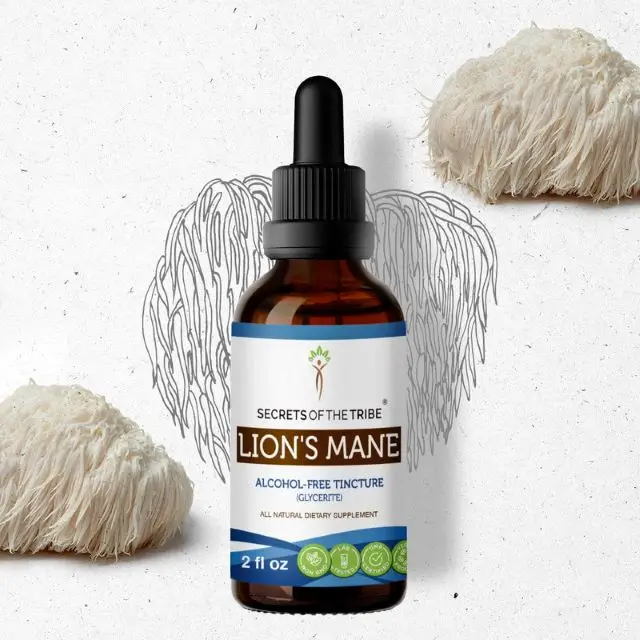
Lion’s Mane for gamers, creators, and office work sounds like a perfect modern supplement pitch. Better focus. Cleaner thinking. Less mental drag. But real life is less dramatic. Lion’s Mane may fit as a low-key, long-game support product for some adults, yet it does not act like an instant performance switch for ranked matches, deadline sprints, or creative breakthroughs.
This is the practical question the article answers. Where does it actually fit in a routine built around screens, meetings, editing, writing, design, coding, and long attention blocks? The short answer is this: Lion’s Mane makes more sense as a background wellness tool than as an acute “brain boost.” The current human evidence is still early, mixed, and based on small studies. That matters if you are choosing between hype and realistic expectations.

Lion’s Mane is the common name for Hericium erinaceus, an edible mushroom used as food and as a dietary supplement. It appears in capsules, powders, coffee blends, gummies, and extracts. The interest comes from compounds discussed in research, especially hericenones and erinacines, plus the broader “functional mushroom” trend.
Gamers, creators, and office workers usually care about the same three things. First, sustained focus. Second, lower mental fatigue across long sessions. Third, steady mood and less friction during repetitive work. That is why Lion’s Mane gets pulled into conversations around deep work, creative output, screen fatigue, productivity stacks, and nootropic routines.
In practice, the appeal is easy to understand. Unlike high-stimulant products, Lion’s Mane is often positioned as subtle. That framing matters for people who already drink coffee, want less jitter, or do not want a supplement that changes how they feel in an obvious way.
No. That is the first filter to apply.
If you expect a same-day jump in reaction time, a huge spike in motivation, or a noticeable “locked in” esports effect, Lion’s Mane is a poor fit. A 2025 placebo-controlled trial on acute consumption in healthy younger adults did not find a significant overall improvement in cognitive performance and mood, though some task-specific effects may still be possible. A 2023 trial in healthy young adults suggested possible improvements in speed of performance and lower subjective stress, but the sample was small and the authors called for larger studies.
That means the realistic use case is not “take before one gaming session and dominate.” It is closer to “test over time, watch for subtle effects, and stop if nothing meaningful changes.”
Lion’s Mane fits best when the goal is routine support, not a dramatic short-term edge. For many people, that places it in the same category as sleep protection, daylight exposure, movement breaks, hydration, and stable caffeine use. Those basics still matter more.
| User type | Main demand | Where Lion’s Mane may fit | Where it likely does not fit |
|---|---|---|---|
| Gamers | Reaction, attention, consistency | As part of a non-stimulant routine during longer training cycles | As an instant pre-match performance booster |
| Creators | Idea flow, editing stamina, reduced mental friction | As a background habit during sustained project weeks | As a shortcut for creativity or originality |
| Office workers | Focus, task switching, screen-heavy endurance | As one optional support layer in a structured workday | As a fix for burnout, poor sleep, or overload |
So the product-market fit is narrow but real. Lion’s Mane may appeal most to adults who want something milder than stimulants and are willing to judge results over weeks, not hours.
The most repeated mistake in this category is treating animal or lab findings as if they already prove real-world cognitive outcomes in humans. They do not. Human data matters more for buying decisions.
Here is the current practical read:
Small human studies have reported possible cognitive or mood-related benefits in specific groups. One double-blind placebo-controlled trial in older adults with mild cognitive impairment reported better cognitive test scores during the supplementation period. Another clinical study also reported improvement on some cognitive measures after oral intake. At the same time, newer reviews describe the intervention evidence as mixed, and recent acute-use data in healthy younger adults does not support a strong instant effect.
That pattern matters. It suggests three things. First, evidence is not zero. Second, the signal is not strong enough to justify exaggerated marketing. Third, the populations with the clearest findings are not the same as healthy gamers, designers, video editors, programmers, or office staff in their 20s to 40s.
Intervention reviews in this area often deal with small samples, variable formulations, short study periods, and different endpoints. That makes direct product-to-product claims unreliable. A label can say “Lion’s Mane,” yet the actual extract type, fruiting body versus mycelium content, dose, and standardization can differ a lot.
Possibly, but the effect should be treated as modest and uncertain.
For office work, the best-case scenario is not magic focus. It is a subtle reduction in mental drag over time. For creators, that may feel like smoother entry into editing, writing, or design sessions. For gamers, it may mean slightly steadier attention during repetitive practice rather than better peak mechanics. The key word is may.
Also, context matters more than the supplement itself. A person sleeping six hours, chugging energy drinks, and sitting for ten hours will usually get more from fixing routine inputs than from adding Lion’s Mane. Supplements are weak levers compared with sleep, caffeine timing, posture, movement, visual breaks, and workload design.
Realistic expectations protect your money and your workflow.
| Expectation | Realistic? | Practical note |
|---|---|---|
| Instant sharper focus today | No | Human evidence does not support a reliable acute boost |
| Subtle support over time | Maybe | Some small studies suggest a possible signal |
| Replacement for sleep or breaks | No | It cannot compensate for poor recovery habits |
| Guaranteed better creativity | No | Creative output depends on process, not one ingredient |
| Useful for low-stim routines | Maybe | That is one of the more reasonable use cases |
Use a simple decision framework. Do not judge it by hype. Judge it by workflow relevance.
An adult who wants a non-stimulant option, already has decent sleep habits, tracks routine quality, and is willing to test for several weeks without expecting fireworks.
A person chasing instant energy, replacing fundamentals with supplements, stacking too many products at once, or expecting clinical-grade outcomes from a general wellness product.
Look for clear species naming, transparent ingredient details, serving size, and third-party testing or quality verification when available. Be cautious with vague mushroom blends that hide the form, ratio, or actual amount of Lion’s Mane.
Yes. Two are common.
First, supplements are not the same as approved drugs. In the United States, FDA does not approve dietary supplements before they are marketed, and supplement claims cannot legally market a product as intended to diagnose, treat, cure, or prevent disease. That is why serious articles should stay away from disease-style promises.
Second, quality variation is real. Two Lion’s Mane products can look similar and behave very differently on paper because the formulation is different. Fruiting body and mycelium products are often discussed as if they are interchangeable. They are not automatically the same thing. Extraction method, active compound profile, and label transparency all matter.
Reported side effects in studies and summaries are generally mild, such as gastrointestinal discomfort or rash, but “generally well tolerated” does not mean “risk free.” Anyone with allergies, medication use, or complex health questions should be more careful.
For gamers, Lion’s Mane fits only if you think in training blocks, not match-day miracles. It is not a substitute for sleep, mechanics practice, or reaction drills. It may be worth testing only if your stack is already simple and you want a non-stimulant background option. If your real problem is tilt, inconsistent sleep, or excess caffeine, fix that first.
For creators, Lion’s Mane fits as a routine experiment for long editing, writing, scripting, design, or production cycles. The best-case result is not “more talent.” It is less friction entering focused work. Creative performance still depends on systems: idea capture, batching, deadlines, breaks, and protecting attention from notifications.
For office workers, Lion’s Mane makes the most sense in boring reality. Long meetings. Tabs everywhere. Message overload. Repetitive tasks. Context switching. In that environment, a subtle product has more theoretical room than in high-adrenaline use cases. Even then, it stays optional. Better calendar design, fewer interruptions, and stable energy management usually deliver larger gains.
Not as an instant performance booster. It may fit only as a longer-term, non-stimulant routine experiment.
It does not create ideas on its own. At most, some people may find it supports smoother focus during creative work.
Current human evidence does not support a reliable same-day cognitive boost.
No. They serve different roles. Lion’s Mane is not a direct stimulant replacement.
No. People with allergies, medication use, pregnancy, breastfeeding, or health concerns should check with a qualified clinician first.
Sleep, caffeine timing, movement, task design, screen breaks, and stress control matter more.
Hericium erinaceus — The scientific name for Lion’s Mane mushroom.
Nootropic — A product marketed for attention, memory, or mental performance support.
Fruiting body — The visible mushroom structure used in some supplements.
Mycelium — The root-like fungal network used in some mushroom products.
Erinacines — Compounds associated mainly with mycelium in research discussions.
Hericenones — Compounds associated mainly with the fruiting body in research discussions.
Placebo-controlled trial — A study design that compares a product against an inactive control.
Cognitive function — Mental processes such as attention, memory, speed, and task control.
Dietary supplement — A product intended to supplement the diet, not an approved medicine.
Lion’s Mane for gamers, creators, and office work fits best as a cautious, low-drama experiment, not as a shortcut. If you use it at all, use it with realistic expectations, a simple routine, and more respect for fundamentals than for hype.
Submit guest articles that reach decision-makers, influencers, and professionals. Yarabook offers a trusted platform for quality content, strong backlinks, and SEO-driven visibility. Pay. Publish. Promote.