

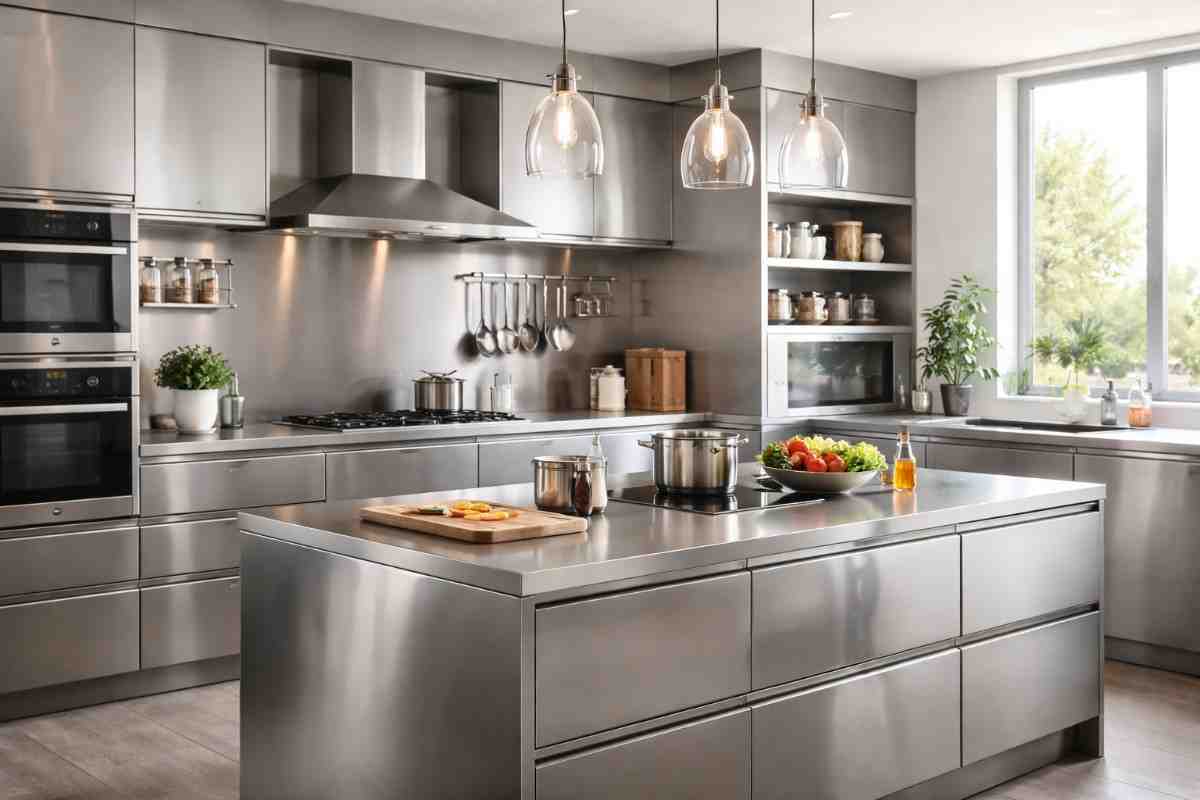
Kitchen design has changed a lot in recent years. Homeowners are now looking for kitchen materials that are durable, hygienic, and easy to maintain. Because of these needs, the stainless steel modular kitchen is becoming a popular choice in modern homes.
Traditionally, wooden kitchens were the most common option. However, many homeowners are now shifting to stainless steel because it offers better resistance to moisture, pests, and daily wear. Stainless steel kitchens are also known for their clean appearance and long lifespan.
In addition, modern modular designs allow homeowners to customise storage, layout, and functionality according to their space and cooking habits. This combination of durability and flexibility makes stainless steel kitchens a practical choice for both small and large homes.
This article explains what a stainless steel modular kitchen is and the main benefits of choosing one for modern homes.
A stainless steel modular kitchen is a kitchen system where cabinets, drawers, shelves, and storage units are made primarily from stainless steel instead of wood or plywood. These components are manufactured in modules and assembled together to create a complete kitchen layout.
A stainless steel modular kitchen refers to a kitchen setup that uses stainless steel cabinets, frames, and structures designed in modular units. These units can be arranged according to the available kitchen space.
The modular design allows for better organisation and easy installation.
A typical stainless steel kitchen usually includes:
Each component works together to create a functional and organised cooking space.
Traditional kitchens are usually built using wood, plywood, or particle boards. These materials may require regular maintenance and can be affected by moisture or termites.
A stainless steel modular kitchen differs because:
Because of these qualities, stainless steel kitchens are often considered a long-lasting option.
One of the biggest advantages of stainless steel is its strength. Steel cabinets and frames are designed to handle heavy usage without damage.
Unlike wood, stainless steel does not crack, warp, or weaken over time. This makes it suitable for busy households where the kitchen is used frequently.
A well-installed stainless steel kitchen can last for many years with minimal repairs.
Kitchens often deal with water, steam, and humidity. Wooden cabinets may absorb moisture and become damaged over time.
Stainless steel is naturally resistant to moisture and does not swell or deform. Because of this property, it performs well in areas where water exposure is common.
This makes stainless steel kitchens particularly suitable for humid climates.
Stainless steel surfaces are non-porous, which means they do not absorb liquids or food particles.
This makes the kitchen more hygienic because bacteria and stains are less likely to build up. Many professional kitchens and restaurants also use stainless steel for the same reason.
For households that prioritise cleanliness, this is an important advantage.
Another practical benefit of a stainless steel modular kitchen is easy maintenance.
Most stains and spills can be cleaned with a simple wipe using a damp cloth or mild cleaner. Unlike wooden surfaces, steel does not require special treatments or frequent polishing.
This saves time and effort in daily kitchen maintenance.
Cooking involves high temperatures, especially near stoves and ovens. Materials like wood or laminate may get damaged when exposed to heat for long periods.
Stainless steel is highly heat resistant. It can handle high temperatures without burning, cracking, or weakening.
Because of this property, stainless steel is considered a safe material for cooking areas.
Termites and insects are common problems in many homes, especially in wooden cabinets.
Since stainless steel is a metal, it does not attract termites or pests. This removes the need for chemical treatments or pest control for kitchen cabinets.
Over time, this also reduces maintenance costs.
Stainless steel kitchens are often associated with a clean and modern look.
The smooth metallic surface gives the kitchen a neat and organised appearance. This design works well with contemporary home interiors.
Many homeowners also combine stainless steel with other materials like glass or stone to create a balanced kitchen design.
Modular kitchens allow homeowners to customise their kitchen layout based on available space and personal needs.
In a stainless steel modular kitchen, cabinets and drawers can be arranged in different configurations such as:
This flexibility makes it easier to design a kitchen that improves both storage and workflow.
Stainless steel is a recyclable material, which makes it environmentally friendly compared to some other kitchen materials.
Steel can be reused and recycled without losing its strength or quality. Choosing stainless steel for a kitchen can therefore support more sustainable building practices.
For homeowners who care about sustainability, this can be an additional benefit.
At first glance, stainless steel kitchens may seem slightly more expensive than wooden options.
However, when considering the long-term value, they can be cost-effective because:
This reduces the need for repairs or replacements over time.
When choosing a kitchen design, many homeowners compare stainless steel kitchens with wooden modular kitchens.
Wooden kitchens may weaken over time due to moisture or daily wear. Stainless steel, on the other hand, remains stable and strong for many years.
Wood requires polishing and careful cleaning. Stainless steel surfaces can usually be cleaned quickly with simple wiping.
Stainless steel surfaces are non-porous and less likely to harbour bacteria. This makes them more hygienic for food preparation areas.
Although wooden kitchens may have a lower initial cost, they often require repairs or replacement. Stainless steel kitchens usually last longer and need fewer repairs.
Stainless steel kitchens can be used in different types of homes.
In compact spaces, stainless steel cabinets help maintain a clean and organised look. Their slim structure can also improve storage efficiency.
Many luxury homes use stainless steel kitchens because of their modern design and durability.
Stainless steel kitchens are also ideal for households where cooking happens frequently. Their durability helps them handle heavy daily usage.
Before installing a stainless steel kitchen, homeowners should consider a few practical factors.
Not all stainless steel is the same. Many kitchens use 304 grade stainless steel, which offers good resistance to corrosion and rust.
Proper planning is necessary to ensure that cabinets, drawers, and appliances fit well within the available space.
Stainless steel kitchens are available in different finishes, including:
Choosing the right finish helps match the kitchen with the rest of the home interior.
Installation should be handled by experienced professionals to ensure the modules are fitted correctly.
Proper installation improves durability and usability.
Many homeowners like to combine stainless steel with other materials to create a balanced look.
Matte finishes reduce reflections and give the kitchen a clean, modern appearance.
Glass cabinet doors can make the kitchen look lighter and more open.
Adding wooden elements or textures can create a warmer visual contrast while maintaining the durability of stainless steel.
Modern homeowners are increasingly choosing stainless steel kitchens because they combine functionality with durability. A stainless steel modular kitchen offers resistance to moisture, pests, and daily wear while maintaining a clean and organised appearance.
Its modular design also allows homeowners to customise storage and layout according to their needs. Whether used in small apartments or larger homes, stainless steel kitchens provide a reliable and long-lasting solution.
For people looking for a durable and hygienic kitchen setup, stainless steel modular kitchens remain a practical option.
Submit guest articles that reach decision-makers, influencers, and professionals. Yarabook offers a trusted platform for quality content, strong backlinks, and SEO-driven visibility. Pay. Publish. Promote.