

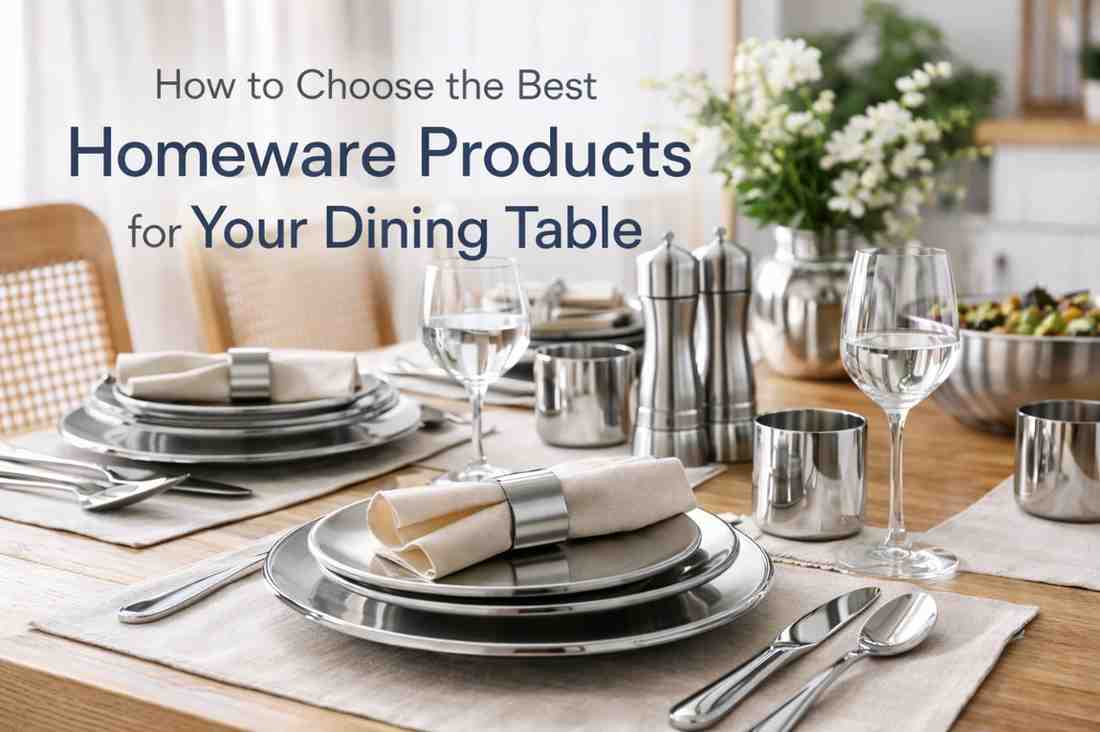
Dining is not just about food. The way a dining table is set also affects the overall experience of a meal. The plates, bowls, glasses, and other accessories placed on the table make dining more organised and comfortable. These items are commonly referred to as homeware products for dining.
Choosing the right dining homeware helps improve both functionality and appearance. Whether it is a daily family meal or a dinner with guests, the right products can make the table look neat and well arranged.
Many people buy dining products based only on appearance. However, durability, practicality, and ease of maintenance are equally important. Understanding the different types of dining homeware and how to choose them properly can help you build a dining setup that works well for everyday use.
A complete dining setup usually includes several types of items. Each item serves a different purpose and contributes to the overall dining experience.
Dinnerware forms the core of any dining table setup. These items are used for serving and eating food.
Common dinnerware pieces include:
Dinnerware sets are often available in different sizes depending on the number of people in a household.
Glassware is used for serving water, juices, or other beverages during meals. Choosing good-quality glassware improves both convenience and presentation.
Popular drinkware options include:
Durable glassware made from tempered glass is usually preferred for daily use.
Cutlery is another important part of dining table homeware. A standard set usually includes:
Stainless steel cutlery is widely used because it is strong, rust-resistant, and easy to maintain.
Serving dishes help place food in the centre of the table so everyone can easily access it. These items are useful when serving multiple dishes during meals.
Common serving items include:
Accessories complete the dining table setup. While they may seem like small additions, they help improve both hygiene and presentation.
Useful accessories include:
These accessories also help protect the dining table from stains and heat.
When selecting homeware for a dining table, several practical factors should be considered.
The material of the product determines how long it will last. Strong and durable materials are always better for regular use.
For example:
Choosing durable materials helps reduce the need for frequent replacements.
While durability is important, design also matters. The dining table should look organised and pleasant.
Neutral colours such as white, beige, or light grey are commonly preferred because they match easily with different table styles.
Dining products are used every day, so they should be easy to clean.
Look for products that:
Smooth surfaces and simple designs are usually easier to maintain.
Modern kitchens often rely on appliances like microwaves and dishwashers. Before buying dinnerware or bowls, it is important to check whether they are safe for these appliances.
Products labelled microwave-safe or dishwasher-safe can save time and effort during daily cleaning.
Storage space is another practical factor. Dining homeware that stacks neatly takes up less space in kitchen cabinets.
Stackable plates and bowls help keep the kitchen organised and make storage easier.
Different materials offer different advantages. Understanding these materials helps in selecting the right products.
Porcelain and bone china are commonly used for premium dinnerware. They are known for their smooth finish and elegant appearance.
Advantages include:
Stoneware and ceramic products are widely used in many households. They are thicker than porcelain and often feel heavier.
Benefits include:
Glassware is commonly used for drinkware and sometimes for plates or bowls.
Tempered glass products are stronger than regular glass and are less likely to break during daily use.
Stainless steel is the most common material used for spoons, forks, and knives.
Its advantages include:
Some dining accessories are made from wood or bamboo. These materials are commonly used for:
They add a natural look to the dining table.
Different households have different dining requirements. The choice of homeware should match these needs.
For daily meals, practicality is more important than appearance.
Everyday dining products should be:
Stoneware, tempered glass, and stainless steel are commonly used for daily dining.
Formal dining setups usually focus more on presentation.
These setups may include:
Formal setups are often used during special occasions or when hosting guests.
Small households usually do not require large dinnerware sets.
A 4–6 piece dinnerware set is often enough. Buying smaller sets also helps save storage space.
When guests visit, additional serving items may be required.
Useful items include:
Having a few extra pieces makes hosting easier.
A well-coordinated dining table looks more organised and inviting.
Neutral colours work well with most dining tables. White dinnerware is especially popular because it matches any décor.
Dark tables often pair well with light-coloured dinnerware.
It is not always necessary to buy perfectly matching sets. Mixing simple designs with patterned pieces can add variety to the table.
For example:
Modern homes often combine different styles. Traditional serving bowls can still work well with modern dinnerware.
The key is to keep the colours and shapes balanced.
Many people buy more dining products than they actually use. Understanding place settings can help avoid unnecessary purchases.
A standard place setting usually includes:
Each person at the table requires one place setting.
Dinnerware sets are usually sold in different sizes:
The choice depends on family size and how often guests visit.
Sometimes buying individual pieces is more practical. This allows you to replace broken items easily without buying a full set again.
It also allows more flexibility in choosing designs.
Avoiding common mistakes can help you choose better dining products.
Some products may look attractive but break easily. Always check material quality before purchasing.
Large dinnerware sets can take up significant cabinet space. Always consider where the products will be stored.
Many households rarely use large sets. Buying only what is necessary helps avoid clutter.
Always check whether dinnerware is safe for microwave or dishwasher use.
You do not need expensive products to improve the appearance of a dining table. Small changes can make a big difference.
Placemats help define each dining space and protect the table surface. Table runners can add colour and texture.
A simple centrepiece such as a bowl of fruit or flowers can make the table look more inviting.
Using too many colours can make the table look cluttered. Two or three matching colours usually work best.
Choosing the right homeware products for dining is about balancing practicality, durability, and appearance. A well-selected set of dinnerware, glassware, cutlery, and accessories can make everyday meals more comfortable and organised.
By considering material quality, ease of maintenance, storage space, and dining needs, it becomes easier to build a dining setup that works well for both daily meals and special occasions. Even simple additions like placemats or serving bowls can improve the overall look of a dining table.
Submit guest articles that reach decision-makers, influencers, and professionals. Yarabook offers a trusted platform for quality content, strong backlinks, and SEO-driven visibility. Pay. Publish. Promote.