

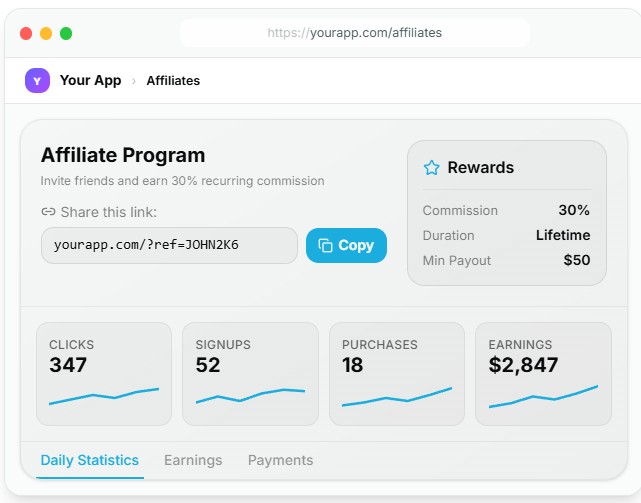
Software-as-a-Service companies face unique challenges when it comes to customer acquisition and sustainable growth. With increasing competition across virtually every software category and rising customer acquisition costs on traditional paid channels, SaaS founders continually search for scalable, cost-effective ways to attract qualified customers. Affiliate and referral programs have emerged as powerful growth channels that leverage existing customer networks, industry partnerships, and content creators to drive qualified traffic and conversions while maintaining favorable economics.
Unlike traditional advertising that requires continuous spending to maintain results, well-structured affiliate programs create compounding growth engines where partners continuously promote your product in exchange for performance-based commissions. This model aligns incentives between software companies and their promoters, ensuring that marketing spend directly correlates with actual customer acquisition rather than vanity metrics like impressions or clicks. Understanding how to design, launch, and optimize affiliate programs specifically for SaaS products can transform marketing effectiveness and unlock new revenue streams that scale alongside your business.
Affiliate marketing for software companies operates differently than traditional e-commerce affiliate programs. Rather than promoting one-time purchases, SaaS affiliates drive subscriptions that generate recurring revenue over extended customer lifetimes. This fundamental difference affects commission structures, program economics, and the types of partners who find SaaS programs attractive.
The recurring revenue nature of SaaS allows companies to offer generous commission structures that would be unsustainable for products sold once. A thirty percent recurring commission on a fifty-dollar monthly subscription costs fifteen dollars per month but generates thirty-five dollars in gross profit monthly for the software company. Over a twelve-month customer lifetime, that affiliate relationship drives four hundred twenty dollars in revenue while paying one hundred eighty dollars in commissions, creating a profitable customer acquisition channel.
Successful SaaS affiliate programs attract diverse partner types, each bringing unique strengths to promotional efforts. Content creators including bloggers, YouTubers, and podcasters build audiences around specific niches and recommend tools their followers will find valuable. These partners typically convert well because they’ve established trust and credibility within their communities.
Commission structure design significantly impacts both partner recruitment and program profitability. SaaS companies must balance attractiveness to potential affiliates against sustainable economics that support long-term program viability.
Recurring commission models where affiliates earn percentages of ongoing subscription revenue typically perform better for SaaS than one-time payments. When affiliates earn commissions monthly as long as referred customers maintain active subscriptions, they’re incentivized to promote quality fits rather than driving signups that quickly churn. This alignment benefits both parties—affiliates build sustainable income streams while software companies acquire customers with better retention characteristics.
Appropriate commission rates vary based on product pricing, customer lifetime value, gross margins, and competitive landscape. Common SaaS affiliate programs offer between twenty and forty percent recurring commissions, with some aggressive programs reaching fifty percent for initial periods.
Traditional affiliate program setup required significant technical resources, custom development work, and ongoing maintenance to track referrals accurately across user journeys. Modern SaaS companies benefit from specialized affiliate software that handles tracking, attribution, commission calculation, and payout management through pre-built integrations with popular payment processors.
Effective affiliate tracking must follow users from initial click through signup, trial periods, and conversion to paid subscriptions. This requires persistent cookies or alternative tracking mechanisms that survive across sessions and devices while respecting privacy regulations. Integration with subscription billing platforms ensures that recurring commission calculations remain accurate as customers upgrade, downgrade, or cancel subscriptions.
One critical implementation decision involves where affiliates access their dashboards and promotional materials. External platforms require affiliates to log into separate websites disconnected from your product, creating friction and reducing engagement. Many affiliates forget login credentials, struggle with unfamiliar interfaces, or simply abandon programs due to access complications.
Embedded affiliate dashboards that live directly within your product provide superior user experiences for existing customers who become affiliates. These integrated approaches eliminate separate logins, reduce abandonment, and feel like natural extensions of your product rather than third-party tools. The seamless experience increases affiliate activation rates and ongoing engagement compared to external portals.
How to create affiliate program? Building infrastructure represents only the first step toward affiliate program success. Active recruitment and ongoing partner support determine whether programs generate meaningful revenue or languish with minimal participation.
Start by converting your existing customer base into affiliates. Satisfied customers who already love your product make natural promoters, particularly if they serve audiences that match your ideal customer profile. Email campaigns, in-app notifications, and dedicated landing pages should clearly communicate program benefits and simplify the signup process.
Beyond existing customers, proactive outreach to potential partners accelerates program growth. Identify content creators, complementary tools, and industry influencers whose audiences align with your target market. Personalized outreach explaining why partnership makes sense for their specific audience converts better than generic recruitment messages.
Affiliate networks and directories help SaaS companies connect with experienced partners actively seeking new programs. Platforms like Refgrow include built-in partner networks where software companies can list their programs and get discovered by affiliates specifically interested in promoting SaaS products. These exchanges eliminate manual hunting for partners by creating marketplaces where both parties find relevant opportunities.
Successful affiliates need more than commission structures and tracking links. Comprehensive partner enablement includes promotional materials, product education, messaging guidance, and ongoing communication that helps affiliates effectively promote your software.
Create swipe files containing pre-written social media posts, email templates, and promotional copy that affiliates can customize for their audiences. These resources reduce friction for partners unsure how to discuss your product while ensuring messaging accuracy. Include various content types addressing different use cases, features, and customer personas so affiliates can select materials matching their audience interests.
Partners who deeply understand your product promote more effectively than those with superficial knowledge. Provide comprehensive onboarding materials including video walkthroughs, use case documentation, competitive comparisons, and ideal customer profiles. Some SaaS companies offer certification programs where affiliates complete training modules and demonstrate product expertise before receiving promotional approval.
Regular updates about new features, pricing changes, promotional campaigns, and strategic shifts keep affiliates informed and equipped to discuss your product accurately. Monthly newsletters, private Slack communities, or dedicated affiliate portals facilitate ongoing communication and relationship building.
Data-driven optimization separates high-performing affiliate programs from underperforming efforts. Comprehensive analytics tracking referral sources, conversion rates, customer quality, and lifetime value by affiliate help identify top partners and successful promotional strategies worth amplifying.
Monitor these key performance indicators to assess program health: total affiliate signups, active promoting partners, clicks generated, trial signups, paid conversions, average customer lifetime value by source, and total revenue attributable to affiliate channels. These metrics reveal whether programs generate positive returns and which partners deserve additional support or recognition.
Inevitable in any affiliate program, a small percentage of partners drive the majority of results while many participants generate minimal activity. The Pareto principle often applies with roughly twenty percent of affiliates producing eighty percent of referrals. Rather than treating all partners identically, segment by performance and provide differentiated support.
Top performers deserve dedicated account management, early access to new features, higher commission rates, and special promotional opportunities. These high-value relationships generate substantial revenue and warrant significant attention. Mid-tier performers might benefit from coaching, improved promotional materials, or incentive campaigns encouraging increased activity. Low-performing affiliates may need better product education or simply weren’t good fits initially.
Handling affiliate payments efficiently and reliably builds trust while reducing administrative burden. Manual payout processes become unwieldy as programs scale beyond a handful of partners. Automated systems that calculate commissions, generate invoices, and facilitate bulk payments save substantial time while ensuring accuracy and timeliness.
Most SaaS affiliate programs pay commissions monthly for the previous month’s earnings, typically with minimum thresholds like fifty or one hundred dollars to reduce transaction costs. Clear payment terms, transparent commission calculations, and reliable payout schedules keep partners satisfied and focused on promotion rather than payment concerns.
Global affiliate programs introduce complexity around payment methods, currency conversion, tax reporting, and regulatory compliance. Partners in different countries may prefer various payment processors including PayPal, Wise, bank transfers, or regional alternatives. Supporting multiple payout options improves partner satisfaction and enables global recruitment.
Tax implications vary by jurisdiction, with some regions requiring software companies to withhold taxes from affiliate payments or provide specific documentation. Automated invoicing systems that handle VAT compliance, generate necessary tax forms, and maintain proper records reduce compliance risks while simplifying operations.
Despite potential benefits, many SaaS affiliate programs fail to generate meaningful results due to avoidable mistakes. Understanding common pitfalls helps companies design programs positioned for success from launch.
Setting commission rates too low fails to attract quality partners who have numerous program options. While maintaining profitability matters, overly conservative rates result in programs nobody promotes. Research competitive programs and ensure your offering competes favorably for partner attention.
Launching affiliate programs then providing minimal ongoing support guarantees poor results. Partners need regular communication, updated promotional materials, product education, and responsive support when questions arise. Treating affiliates like valued partners rather than transactional relationships drives better performance and loyalty.
Complicated signup processes, confusing dashboards, or technical implementation issues create unnecessary friction that prevents potential affiliates from joining or reduces activity among existing partners. Streamlined experiences from initial discovery through ongoing promotion maximize participation and results.
Successful affiliate programs evolve alongside business growth, requiring periodic adjustments to commission structures, partner recruitment strategies, and operational processes. What works for early-stage startups differs from requirements of scaling companies with substantial affiliate networks.
As partner counts increase, automation becomes essential for maintaining efficiency. Tools that handle routine communications, commission calculations, payment processing, and performance reporting free teams to focus on strategic partner relationships and program optimization rather than administrative tasks.
The infrastructure supporting your affiliate program significantly impacts both operational efficiency and partner experience. Traditional affiliate software often costs hundreds of dollars monthly, charges transaction fees on top of subscriptions, or imposes revenue limits that restrict growth. These platforms frequently require weeks of setup time and technical expertise to integrate properly.
Modern solutions like Refgrow address these limitations by offering embedded widgets that integrate with single lines of code, eliminating separate login portals that frustrate affiliates. With pricing starting around thirty dollars monthly and zero transaction fees, these platforms make sophisticated affiliate programs accessible to bootstrapped startups and growing SaaS companies without enterprise budgets. Built-in partner networks help companies find affiliates immediately rather than spending months on manual recruitment.
Affiliate programs represent powerful growth channels for SaaS companies willing to invest in proper setup, partner enablement, and ongoing optimization. By aligning incentives with partners who share target audiences, software companies create compounding growth engines that scale efficiently while maintaining favorable customer acquisition economics.
Submit guest articles that reach decision-makers, influencers, and professionals. Yarabook offers a trusted platform for quality content, strong backlinks, and SEO-driven visibility. Pay. Publish. Promote.