

Running a bustling commercial kitchen, a large-scale catering business, or an industrial canteen comes with a unique set of challenges. One of the most significant bottlenecks in mass food production is preparing fresh, hot, and perfectly round chapatis. Relying on manual labor for this task is not only incredibly time-consuming but also leads to inconsistencies in size, thickness, and cooking quality.
Enter the modern bulk chapati making machine. This innovative equipment has transformed how commercial kitchens operate, turning a tedious manual process into a streamlined, highly efficient automated system. Among the top contenders in the market, the platinum flour mill chapati making machine stands out as a reliable, high-performance solution designed to tackle the most demanding culinary environments.
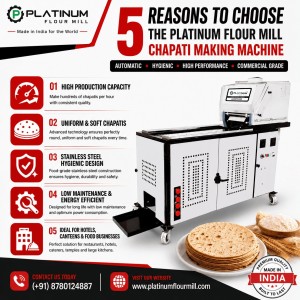
If you are upgrading your kitchen infrastructure or planning a new venture, choosing the right equipment is a critical decision. Below, we explore five compelling reasons why the Platinum series should be your ultimate choice for automated flatbread production.
When evaluating industrial roti making equipment, the first question most business owners ask is: how many rotis per hour for commercial use do I actually need? The answer varies depending on your audience, but scalability is the key to sustainable growth. The Platinum series offers a diverse range of models tailored to fit operations of any size, ensuring you never fall short during peak dining hours.
Whether you are serving a few hundred school children or thousands of factory workers, there is a specific model designed for your throughput requirements:
By offering these varied capacities, the Platinum range allows you to scale your kitchen operations efficiently without over-investing in machinery that exceeds your current needs.
One of the main criticisms of early automated flatbread makers was the noticeable drop in food quality. Edges would be too thick, centers would be undercooked, or the bread would turn out stiff and chewy. Today, advanced engineering has resolved these issues, placing a heavy emphasis on mimicking the traditional, homemade feel.
A major selling point of the Platinum series is its flawless uniform thickness and diameter control. Through precision-engineered pressing plates, the machine ensures that every single dough ball is flattened to the exact millimeter you specify. This uniformity is not just about aesthetics; it is crucial for even cooking.
To further enhance the baking process, the Platinum line offers specialized models, such as the Chapati Making Machine Ceramic Model and the Roti Making Machine Ceramic Model.
While the upfront cost of commercial kitchen machinery can seem daunting, the financial benefits over time are undeniable. Choosing the right automated system fundamentally alters your operational expenses, leading to a highly favorable return on investment for automated kitchen machinery.
Reducing labor costs in industrial kitchens is often the primary motivation for automation. Hand-rolling 1,000 chapatis requires a team of at least four to five skilled workers, not to mention the physical toll and potential for workplace injuries.
Another vital factor in overhead costs is the power consumption of commercial roti makers. The Platinum machines are engineered with energy-saving insulated panels that trap heat inside the baking chamber, preventing energy waste and keeping your kitchen cooler.
Furthermore, buyers can often choose their preferred heating method based on local utility costs. Analyzing gas heating vs electric heating efficiency is crucial:
In the food service industry, cleanliness is not just a preference; it is a strict legal requirement. Maintaining hygiene standards in mass food production requires machinery that is intentionally designed to be clean, safe, and impervious to contamination.
The entire framework of the Platinum machine features food grade stainless steel construction (typically SS304 or SS316). This material is non-corrosive, rust-proof, and does not react with the moisture or acidity found in dough. Stainless steel surfaces prevent bacterial buildup, ensuring that every batch of chapatis is safe for consumption.
True hygiene and quality control begin long before the chapati hits the baking plate. For kitchens that want ultimate control over their ingredients, integrating a commercial flour mill machine allows you to grind fresh wheat daily, avoiding preservatives found in pre-packaged flours.
From there, the freshly milled flour moves to the dough maker. A standard mixer won’t cut it for industrial volumes; you need a heavy duty dough kneader and divider.
The thought of introducing a massive piece of automated machinery into an existing kitchen can be intimidating. However, setting up a commercial chapati production line is surprisingly straightforward when you choose a well-designed system like the Platinum series.
These machines are designed with a modular approach. The layout can often be customized to fit straight lines or L-shaped kitchen footprints. The integration of the automatic dough ball making machine is seamless; you simply load the freshly kneaded dough into the hopper, and the machine extrudes, cuts, and rolls the dough into perfectly spherical balls. These balls are then automatically dropped onto the pressing plates.
No machine runs forever without a little TLC, but routine maintenance for industrial food processing units shouldn’t require a degree in mechanical engineering. The Platinum chapati makers are designed with the end-user in mind:
Transitioning to automated food production is a monumental step for any commercial kitchen, but the rewards are transformative. By investing in the platinum flour mill chapati making machine, you are not just buying a piece of equipment; you are investing in reliability, scalability, and long-term profitability.
From the entry-level machines to the colossal 2000-roti-per-hour powerhouses, these systems solve the most pressing challenges of industrial catering. They effortlessly manage uniform thickness, conquer uneven cooking, slash labor and utility costs, and uphold the strictest hygiene standards through their food-grade stainless steel construction
Submit guest articles that reach decision-makers, influencers, and professionals. Yarabook offers a trusted platform for quality content, strong backlinks, and SEO-driven visibility. Pay. Publish. Promote.