

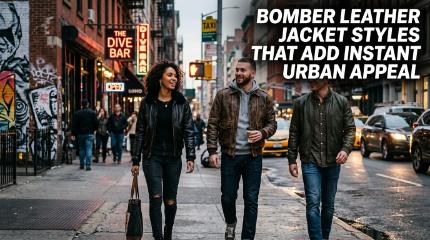
Few outerwear pieces capture the energy of city fashion quite like a bomber leather jacket. It has the right balance of rugged character, clean structure, and effortless attitude, making it easy to wear across different settings. Whether paired with denim and sneakers for a relaxed weekend outfit or layered over a knit and tailored trousers for a sharper look, a leather bomber can become one of the most versatile pieces in a modern wardrobe.
What makes the style particularly appealing is its ability to evolve without losing its identity. The classic bomber silhouette remains recognizable through its cropped proportions, ribbed edges, practical pockets, and strong shoulders, while contemporary versions experiment with finishes, colors, textures, and proportions. That combination gives wearers plenty of room to develop a personal style without abandoning the timeless appeal of leather.
Urban fashion is ultimately about finding pieces that work in real life. A well-designed bomber offers warmth, durability, visual impact, and easy styling in one garment. Understanding the different styles, fits, materials, and outfit combinations can help you choose a version that feels distinctive while remaining wearable season after season.
The bomber jacket has roots in functional outerwear, but its place in contemporary fashion comes from its adaptability. Leather adds another dimension to the familiar silhouette. Compared with lightweight nylon or polyester bombers, leather versions tend to look more substantial and develop a unique character as they age.
The combination of a structured body and casual proportions creates an interesting contrast. It can make a basic outfit appear intentional without requiring complicated layering. This is one reason the style continues to appear across streetwear, casual luxury, motorcycle-inspired fashion, and minimalist wardrobes.
Several details contribute to the bomber’s distinctive appearance:
The best part is that these details do not force you into one aesthetic. A sleek black bomber can complement a minimalist wardrobe, while a distressed brown design can reinforce a vintage or workwear-inspired look.
Contemporary womenswear offers plenty of ways to reinterpret the bomber silhouette. A Womens bomber leather jacket can range from a compact, fitted design to a relaxed oversized piece, allowing the wearer to decide whether the jacket should emphasize a polished silhouette or a more casual streetwear aesthetic.
For a refined everyday outfit, consider a streamlined bomber with straight-leg jeans and ankle boots. The combination keeps the proportions balanced while allowing the leather texture to provide the visual interest. For a more relaxed approach, an oversized bomber can be worn with wide-leg trousers, leggings, or casual denim and low-profile sneakers.
Color also makes a meaningful difference. Traditional black and brown are easy to integrate into an existing wardrobe, while burgundy, cream, dark green, or muted gray can provide personality without becoming difficult to style. Women who prefer a softer aesthetic can also look for jackets with subtle hardware, cleaner seams, or a slightly lighter leather finish.
Layering is another effective styling technique. During transitional weather, a bomber can sit over a fitted T-shirt, lightweight sweater, button-down shirt, or hoodie. The shorter silhouette keeps the outfit from appearing overly bulky, especially when paired with longer lower-body proportions.
Men’s fashion has embraced the bomber as a dependable bridge between casual and polished dressing. A Mens bomber leather jacket can provide the rugged character associated with traditional leather outerwear while retaining the relaxed proportions of a bomber.
For a classic urban combination, wear a black leather bomber with a white or gray T-shirt, dark denim, and leather sneakers or boots. The restrained color palette lets the texture and silhouette of the jacket do most of the work. If you want something more heritage-inspired, a brown bomber with raw or faded denim and sturdy boots creates a distinctly vintage appearance.
Smart-casual dressing offers another opportunity. Instead of reaching for a blazer, try a clean bomber over a fine-gauge sweater or Oxford shirt. Pair it with tapered chinos or wool trousers and understated footwear. This approach works particularly well when the jacket has minimal branding and a smooth, refined finish.
Fit should remain the priority. The jacket should provide enough room for comfortable layering without creating excessive volume around the torso. Sleeves should finish close to the wrist, while the waistband should maintain its shape rather than riding too high or hanging loosely.
Not every leather bomber needs to look pristine. Distressed finishes are particularly effective when you want your outfit to have a lived-in, rebellious quality. Carefully treated leather can feature variations in tone, subtle scuffing, faded surfaces, or vintage-inspired finishing that makes the jacket appear as though it has accumulated years of history.
Distressed bombers work naturally with casual clothing. Think faded denim, heavyweight T-shirts, canvas sneakers, rugged boots, flannel shirts, and textured knitwear. Because the jacket already carries considerable visual character, the rest of the outfit can remain relatively simple.
There is an important distinction between intentional distressing and poor construction, however. A convincing vintage finish should complement the leather rather than conceal defects. Look for consistent construction, secure stitching, quality zippers, and well-finished edges underneath the surface treatment.
Because the bomber is already a strong visual piece, styling mistakes often happen when too many competing elements are introduced. The goal is not to make every item in the outfit equally noticeable.
The most successful outfits often look deceptively simple. A quality jacket, well-fitting trousers, a clean base layer, and appropriate footwear can create a stronger impression than an outfit overloaded with trends.
Leather rewards consistent care. Unlike disposable seasonal fashion, a well-maintained leather jacket can remain relevant for years, and its appearance may become more interesting as the material develops natural variation.
Store the jacket on a broad, sturdy hanger that supports the shoulders. Avoid crushing it under heavy clothing or leaving it folded for extended periods. Keep it away from excessive heat, and follow the manufacturer’s recommendations for cleaning and conditioning rather than applying household products that may damage the finish.
It is equally important to let the jacket breathe. After wearing it in damp conditions, allow it to dry naturally in a well-ventilated area. Direct heat from radiators or hair dryers can cause leather to dry unevenly and potentially become brittle.
When cared for correctly, the jacket becomes more than an occasional fashion purchase. It becomes a reliable component of your wardrobe that can adapt as your personal style changes.
A bomber leather jacket is defined primarily by its distinctive silhouette, usually featuring ribbed cuffs and waistband, a shorter body, and a relaxed structure. It combines the durability and character of leather with the casual proportions associated with bomber outerwear.
Yes. Bomber silhouettes are highly adaptable and are available in designs ranging from fitted and streamlined to oversized and relaxed. The right choice depends on personal preference, desired proportions, and how the jacket will be incorporated into the rest of the wardrobe.
Black is generally the easiest color to style because it works with a broad range of neutrals, denim, and footwear. Brown is another versatile option, particularly for vintage, heritage, and earth-tone outfits.
Absolutely. Choose a clean, minimally detailed bomber and combine it with a fine knit, Oxford shirt, chinos, or tailored trousers. Refined footwear can further elevate the look.
The fit should allow comfortable movement and layering while maintaining the jacket’s recognizable shape. Shoulder placement, sleeve length, body volume, and waistband position are all important when evaluating fit.
Submit guest articles that reach decision-makers, influencers, and professionals. Yarabook offers a trusted platform for quality content, strong backlinks, and SEO-driven visibility. Pay. Publish. Promote.