

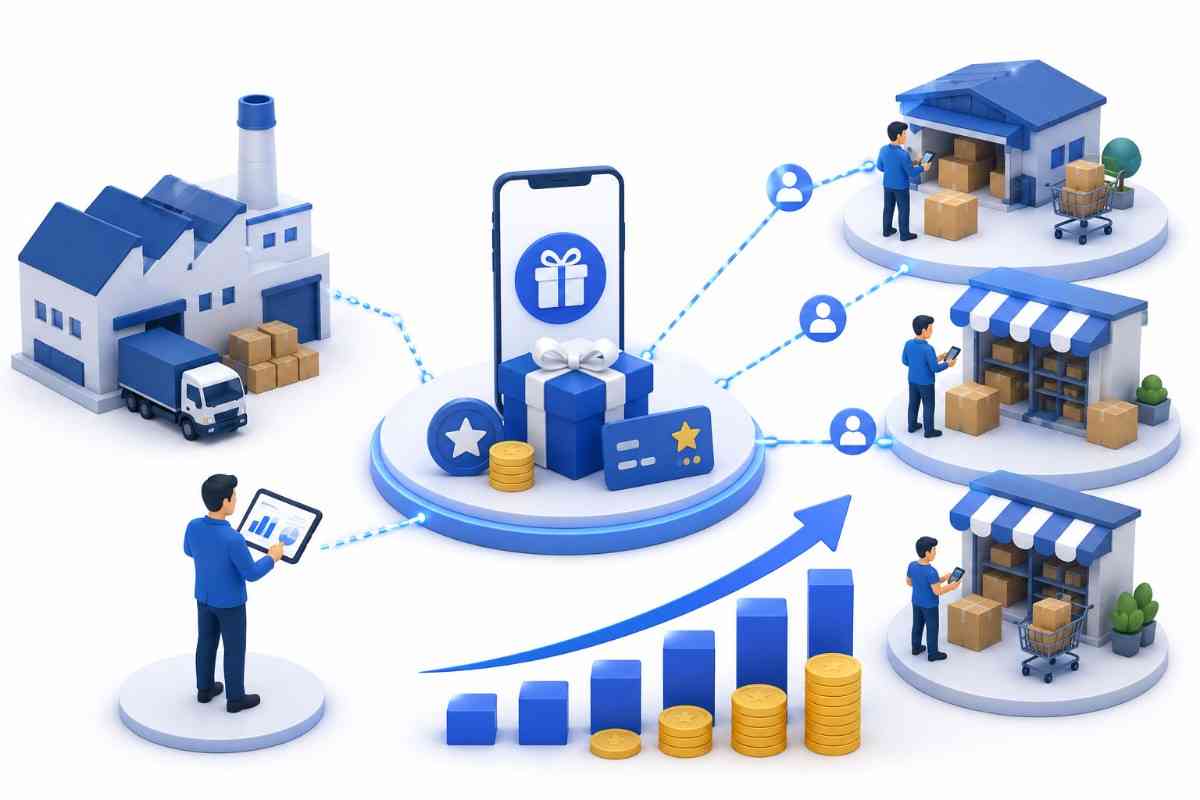
Successful channel partnerships are built on trust, recognition, and consistent value. Dealers are more likely to stay loyal to brands that invest in their growth, reward their performance, and treat them as strategic business partners rather than simply viewing them as customers. In today’s competitive B2B marketplace, manufacturers and distributors need more than competitive pricing or quality products to retain channel partners. They must create experiences that encourage dealers to remain engaged and committed over the long term. This is why a well-designed B2B channel loyalty program has become a strategic business investment instead of just another marketing initiative.
Unlike short-term promotional campaigns that deliver temporary sales increases, a B2B channel loyalty program focuses on building long-lasting relationships with dealers, distributors, and retailers. It encourages channel partners to prioritise your products, increase repeat purchases, recommend your brand to customers, and actively participate in business growth initiatives. When dealers consistently receive meaningful rewards, exclusive benefits, recognition, and ongoing support, they are far more likely to choose your brand over competitors. Businesses that implement structured loyalty strategies often achieve higher dealer retention, increased wallet share, stronger engagement, improved channel performance, and valuable business insights that support sustainable revenue growth.
Many organisations attempt to adapt consumer loyalty programs for their dealer networks. However, this approach rarely produces the desired results because B2B purchasing behaviour is fundamentally different from consumer buying behaviour. Understanding these differences is essential when designing an effective loyalty strategy.
Consumer purchases are generally made by a single individual, whereas B2B buying decisions involve multiple stakeholders within the dealer organisation. Dealer principals, procurement managers, inventory teams, sales representatives, finance departments, and service personnel all contribute to purchasing decisions. Each stakeholder has unique responsibilities and influences purchasing behaviour in different ways. Therefore, a successful B2B loyalty program should engage multiple participants rather than rewarding only one individual. By recognising the contributions of different team members, businesses can strengthen relationships across the entire dealer organisation and encourage greater brand advocacy.
Commercial factors such as pricing, margins, and profitability remain important, but they are not the only drivers of dealer loyalty. B2B relationships are also built on trust, recognition, responsive support, and long-term collaboration. Dealers appreciate brands that communicate regularly, provide product training, offer exclusive incentives, and acknowledge their achievements. Recognition through tier programs, achievement badges, awards, and preferred partner status often creates stronger emotional connections than financial incentives alone. Combining commercial rewards with meaningful recognition encourages dealers to build deeper and more sustainable relationships with your brand.
Another major difference is longevity. Dealer loyalty programs should not be viewed as one-time promotional campaigns designed to generate immediate sales. Instead, they should function as continuous engagement platforms that deliver ongoing value throughout the dealer lifecycle. Seasonal campaigns, personalised offers, educational content, bonus challenges, product launches, and regular communication keep dealers interested and motivated long after the initial program launch. Continuous engagement ensures that the program remains relevant and continues to influence purchasing behaviour year after year.
For organisations operating in India, regulatory compliance is another essential consideration. Dealer loyalty programs should be designed to comply with GST regulations, TDS requirements, and the Digital Personal Data Protection Act (DPDPA). Incorporating compliance into the platform from the beginning simplifies administration, reduces legal risks, and creates a seamless experience for both businesses and channel partners.
Although many companies invest heavily in dealer loyalty initiatives, not all programs achieve their objectives. In most cases, failure is not caused by insufficient investment but by poor program design. Businesses often create loyalty programs around internal objectives instead of understanding dealer expectations and behaviour.
Complicated earning rules, confusing reward structures, limited redemption options, and low-value incentives reduce participation and discourage long-term engagement. Dealers quickly lose interest if they cannot easily understand how to earn rewards or if the benefits do not justify their effort. Poor communication also contributes to low engagement, particularly when dealers are unaware of new campaigns, bonus opportunities, or available rewards.
Successful programs are simple, transparent, and easy to participate in. Dealers should clearly understand how rewards are earned, how they can be redeemed, and the value the program provides to their business. Regular communication, relevant incentives, and ongoing engagement help maintain enthusiasm and encourage continued participation.
A well-executed B2B channel loyalty program delivers measurable value beyond increasing repeat purchases. Dealers who actively participate often allocate a greater share of their purchases to brands that consistently reward their loyalty, resulting in increased wallet share and stronger revenue growth.
Modern loyalty platforms also provide valuable business intelligence by tracking purchasing behaviour, campaign participation, product preferences, and regional demand. These insights help businesses improve sales forecasting, inventory planning, dealer segmentation, and marketing strategies.
Dealer loyalty programs also reduce price sensitivity. Instead of choosing suppliers based solely on temporary discounts, engaged dealers consider the overall value of the relationship, including rewards, recognition, training, and ongoing support. Additionally, rewarding product training helps dealers improve product knowledge, recommend solutions more confidently, and deliver better customer experiences.
Finally, engagement analytics allow businesses to identify dealers whose participation or purchasing activity is declining. By identifying these at-risk dealers early, companies can proactively strengthen relationships before competitors capture additional market share.
Overall, a successful B2B channel loyalty program creates stronger dealer relationships, improves engagement, increases revenue opportunities, and establishes a long-term competitive advantage in today’s evolving marketplace.
Submit guest articles that reach decision-makers, influencers, and professionals. Yarabook offers a trusted platform for quality content, strong backlinks, and SEO-driven visibility. Pay. Publish. Promote.