

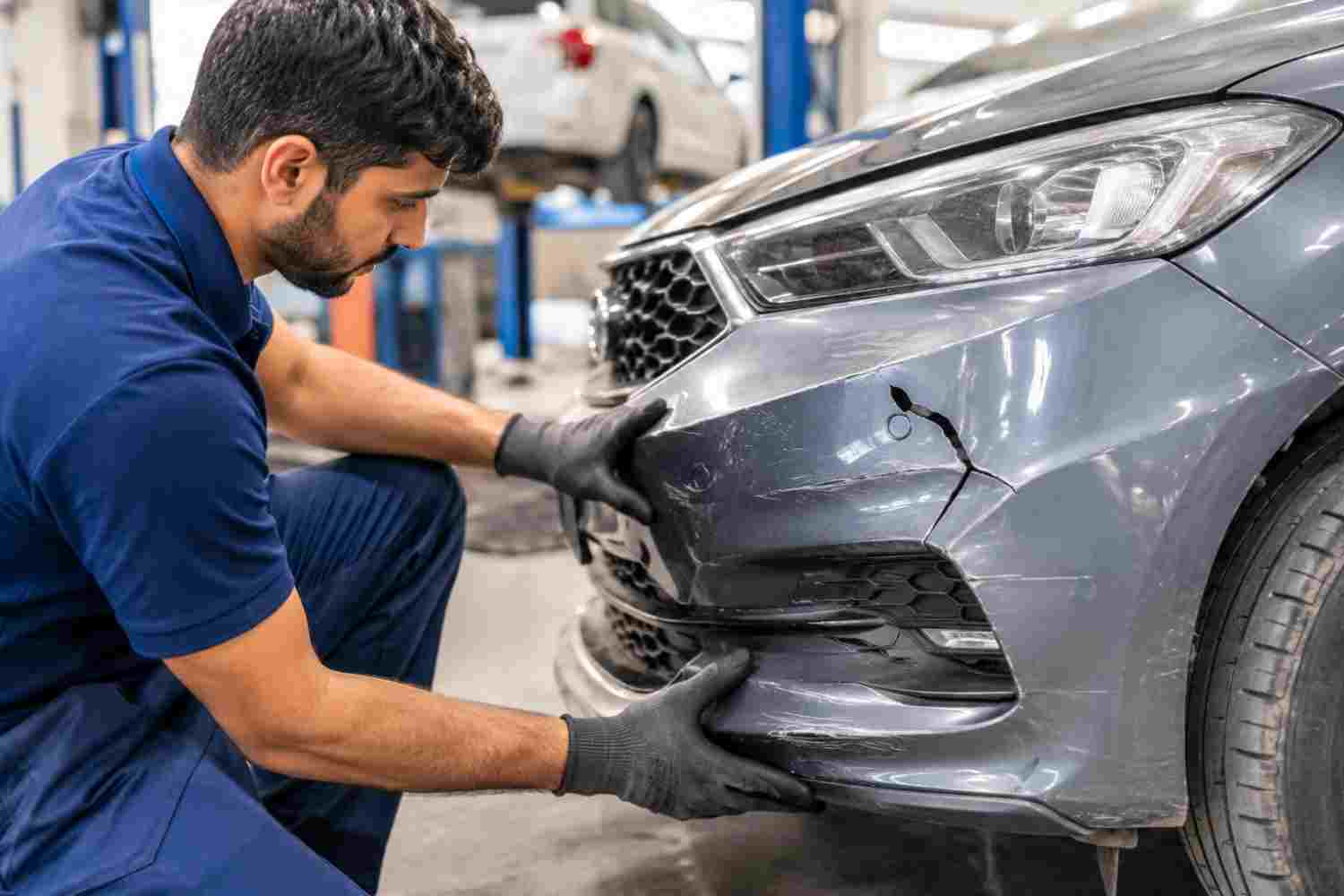
A scraped corner in a parking lot, a low-speed tap at a traffic light or a crack from a pothole can leave your bumper looking rough. Many drivers ignore the damage at first, assuming it’s only cosmetic. In reality, a damaged bumper can affect safety, sensor accuracy and resale value. This guide covers how bumper damage happens, when to repair or replace, how a professional fix works, what affects the cost and how to choose a dependable workshop.
Why Your Bumper Matters More Than You Think
Most people see a bumper as a cosmetic panel, but it does far more. Modern bumpers absorb low-speed impacts, protect the lights, radiator and body structure behind them, and keep parking sensors and cameras in position. If the bumper is cracked or loose, it may not perform properly in the next collision.
Bumper condition also affects resale value. Buyers and inspectors notice mismatched paint, uneven gaps and cracks immediately. Fixing the damage promptly keeps your vehicle looking well maintained and avoids bigger bills later.
Common Types of Bumper Damage
Understanding the damage helps you judge how complicated the fix will be. The most common problems include:
- Scratches and scuffs: Surface marks in the paint or clear coat, usually from tight parking or brushing a wall.
- Dents: Pushed-in areas, often from low-speed impacts. Many can be reshaped without replacing the panel.
- Cracks and splits: Plastic bumpers can crack from sharper impacts. Small cracks are often repairable, while large splits can weaken the whole panel.
- Broken mounting tabs: The clips and brackets holding the bumper in place can snap, causing sagging or uneven gaps.
- Peeling or fading paint: Often a sign of poor previous work or long sun exposure.
- Sensor and camera misalignment: Common on newer cars where parking sensors sit inside the bumper.
Each type calls for a different approach, which is why a proper inspection always comes first.
Repair or Replace: How to Decide
One of the first questions a technician will answer is whether your bumper can be saved. Neither option is automatically better. It depends on the damage.
Repair usually makes sense when:
- The damage is limited to scratches, scuffs or shallow dents.
- A crack is small and the surrounding plastic is solid.
- The mounting points are intact.
- The bumper still holds its original shape.
Replacement is usually better when:
- The plastic is shattered or has several large cracks.
- Mounting brackets are broken beyond repair.
- The bumper has warped and won’t hold its shape.
- The reinforcement or absorbers behind the cover are also damaged.
A good workshop will explain its recommendation and show you the damage rather than just quote a price. Repair is generally cheaper and quicker, but forcing a repair on a badly damaged bumper can lead to early failure or an uneven finish.
How Professional Bumper Repair Works
Knowing the steps helps you judge whether a shop is working to a proper standard. A thorough bumper fix typically follows this process.
1. Inspection and assessment
The technician examines the bumper, checks for hidden damage to the reinforcement bar, lights, sensors and brackets, and decides on repair or replacement.
2. Removal and preparation
The bumper is carefully removed, which allows access to both sides of the damage and prevents paint overspray on the rest of the car.
3. Structural and surface repair
Cracks are welded or bonded using materials suited to plastic. Dents are heated and reshaped, and low spots are filled and sanded smooth until the surface is level.
4. Priming and sanding
Primer creates a stable base and helps the new paint bond properly. Poor preparation is the most common cause of peeling later.
5. Color matching and painting
Technicians match the original paint code, accounting for fading on the rest of the car. Base coats and clear coat are applied in a controlled booth for a smooth, durable finish.
6. Reassembly and calibration
The bumper is refitted with even gaps and secure clips. Sensors, cameras and fog lights are reinstalled and tested.
7. Final quality check
A last inspection under good lighting confirms the color, texture and fit match the rest of the vehicle.
Finding the Right Workshop Close to You
Once you know what repair involves, the next step is finding someone to do it well. Most drivers begin by searching for car bumper repair near me, which brings up plenty of options, but quality varies widely. The search is only the starting point. What matters is how you compare the results.
Look for experience with your vehicle type. Different makes use different materials, sensors and paint systems. A shop familiar with your car is less likely to make mistakes.
Check the equipment. A proper spray booth, computerized color matching and plastic-welding tools signal a serious operation.
Read recent reviews and look at photos. Pay attention to comments about color match, turnaround time and whether the final price matched the quote.
Ask for a written estimate. It should list labor, parts and paint separately. Be cautious of quotes far below the others, as they may cut corners on preparation.
Ask about warranty. A confident workshop backs its paintwork and repairs with a guarantee, usually covering peeling, bubbling or fading.
Confirm the timeline. Minor repairs can often be done within a day, while replacements or complex paint jobs take longer. A clear schedule is a good sign.
Benefits of Fixing Bumper Damage Early
It’s tempting to ignore a small crack or scuff, but waiting often costs more. Early attention offers several advantages:
- Prevents worsening damage: Cracks spread with vibration and temperature changes, and a small split can become a full break.
- Protects against rust and moisture: If paint is chipped down to metal or exposed seams, corrosion can begin.
- Keeps safety systems working: A loose bumper can misalign sensors and affect parking aids.
- Maintains value: A clean, matching finish makes a car easier to sell at a better price.
- Saves money: A cosmetic repair now is generally cheaper than replacing a damaged assembly later.
What Affects the Cost
Prices differ from one workshop to another, but these are the main factors:
- Extent of damage: Light scuffs cost much less than cracks or structural repairs.
- Repair versus replacement: A new part adds to the bill, especially for premium or imported models.
- Paint type: Metallic, pearl and tri-coat finishes require more work than solid colors.
- Sensors and cameras: Recalibration adds time and cost on modern cars.
- Vehicle model: Luxury and rare models often have costlier parts.
- Workshop standards: Higher-quality facilities charge more but usually deliver longer-lasting results.
If the damage came from an accident, check your insurance policy. Some policies cover bumper repair, and a good workshop can supply the paperwork you need for a claim.
Can You Fix a Bumper Yourself?
DIY kits for scratches and minor scuffs can work if you’re patient and the damage is purely cosmetic. Touch-up pens, polishing compounds and filler can improve a small blemish. For cracks, deep dents, paint matching or anything involving sensors, a DIY attempt often leads to visible patches, mismatched color or a weak repair. Mistakes can also make professional correction more expensive. If the bumper affects safety systems or the damage is more than skin-deep, a professional is the safer choice.
Tips to Protect Your Bumper After the Repair
Once your bumper looks new again, a few habits help keep it that way:
- Park carefully and leave extra room beside walls and other vehicles.
- Avoid curbs and low obstacles, especially in tight spaces.
- Wash and wax the car regularly to protect the paint from sun and dust.
- Consider parking sensors or a rear camera if you often park in crowded areas.
- Keep a safe following distance to reduce the risk of low-speed collisions.
- Have minor damage checked promptly instead of waiting for it to worsen.
Questions to Ask Before You Hand Over Your Keys
Before agreeing to any work, a few direct questions can prevent disappointment:
- Will my bumper be repaired or replaced, and why?
- Is the paint matched to my vehicle’s original color code?
- How long will the job take?
- What does the warranty cover?
- Will sensors and cameras be tested after reassembly?
- Is the quote final, or could additional charges appear?
Clear, confident answers show the shop values transparency.
Final Thoughts
A damaged bumper is more than an eyesore. It affects safety, resale value and how well your car’s protective systems work. Whether the problem is a light scratch, a crack from a minor collision or a bumper hanging loose, getting it assessed quickly is the smartest move. Compare workshops, ask the right questions and choose one with proper equipment, experienced technicians and a solid warranty. With the right choice, your bumper can look and perform like new again.