

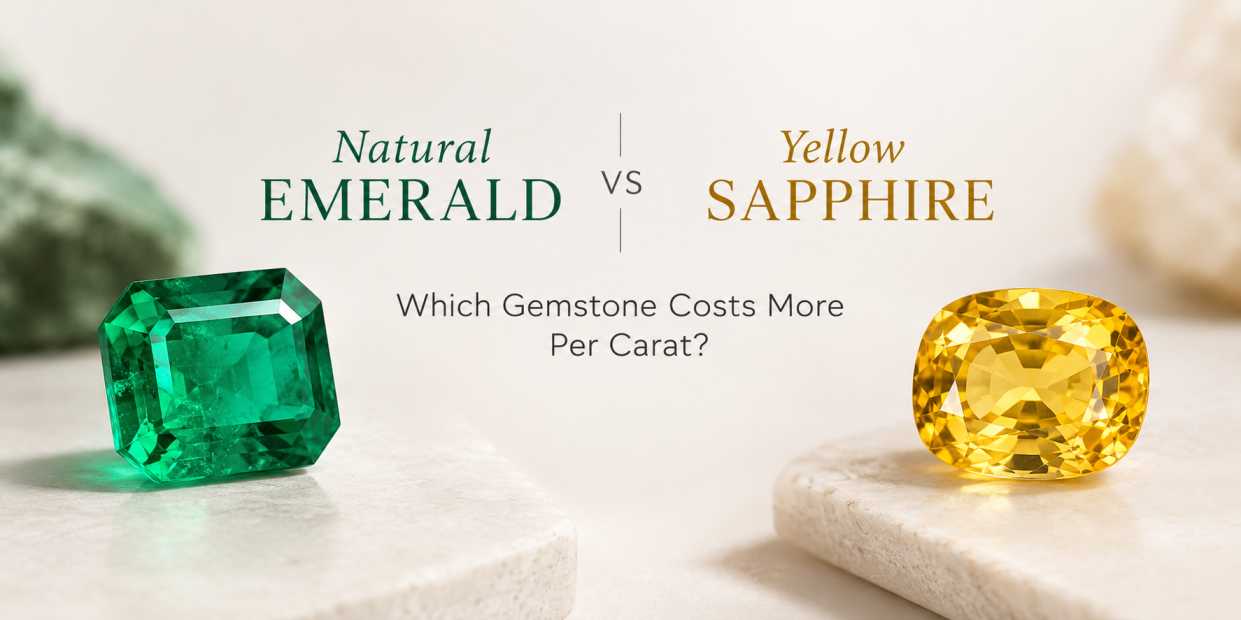
When comparing precious gemstones, price depends on much more than colour or weight. A vivid green emerald may cost more than a yellow sapphire, while a fine, untreated sapphire can outprice an emerald of similar size. If you are researching yellow sapphire price or comparing it with a natural emerald gemstone, the fairest approach is to compare stones with similar quality, treatment disclosure, and laboratory documentation.
Which Gemstone Is More Expensive Per Carat?
A high-quality natural emerald can cost more per carat than many yellow sapphires, especially when it has vivid green colour, good transparency and limited treatment. However, premium untreated yellow sapphires can also command very high prices. Quality matters more than category alone.
As a broad illustration, commercial stones may cost a few thousand rupees per carat, while fine, documented gems can reach tens of thousands or considerably more. Exceptional stones may exceed these ranges. Treat online price lists as estimates, not fixed market rates, because two stones of identical weight can differ greatly in value.
What Determines Natural Emerald Gemstone Prices?
1. Colour and transparency
Colour is a major value factor for a natural emerald gemstone. Rich, lively green with balanced saturation is generally more desirable than a pale, overly dark or dull appearance. Transparency also matters. Emeralds commonly contain natural inclusions, often called jardin, so a buyer should not expect every genuine emerald to look flawless. Inclusions that heavily cloud the stone or weaken its structure can reduce value.
2. Clarity and treatment
Many emeralds are oiled or otherwise treated to make surface-reaching fractures less visible. The treatment type and degree affect price. A stone with minor clarity enhancement may be attractive and commercially accepted, while significant filling can reduce value and create additional care considerations. Ask for clear disclosure rather than assuming that “natural” means “untreated.”
3. Origin and carat weight
Colombian emeralds have a strong reputation, but origin alone does not guarantee superior quality. Fine emeralds from other sources can also be valuable. Larger stones may cost more per carat when they retain excellent colour and transparency, because fine material becomes harder to find as size increases.
What Determines yellow sapphire price?
1. Colour and clarity
Yellow sapphire is a variety of corundum. Buyers often prefer a bright, evenly distributed yellow, though the ideal shade is personal. A lively stone with good transparency generally attracts more interest than one that appears brownish, dull or heavily included. Strong colour should still look appealing in ordinary lighting, not only under bright showroom lamps.
2. Heat treatment and origin
Heat treatment is common in sapphires and can improve their appearance. Untreated stones with attractive colour may command a premium, but treatment claims should be supported by a reputable gemological report. Sri Lanka, often called Ceylon in the trade, is a recognised source; however, a country label alone does not prove quality or justify a high price.
3. Cut, size and certification
A well-proportioned cut helps a sapphire return light and appear bright. Poor cutting can make a stone look dark or smaller than expected. Larger stones can carry a higher total price, but the per-carat rate depends on quality and market demand. Independent documentation is especially useful for costly purchases.
Which Gemstone Offers Better Value?
Value means getting the qualities you care about at a fair, transparent price. If you want a vivid green stone and accept natural inclusions, compare emeralds by colour, transparency and treatment disclosure. If you prefer a bright yellow gem for frequent wear, sapphire’s greater hardness may be practical. Neither gemstone is automatically a better investment, and resale prices are not guaranteed.
Before buying, compare stones of similar weight under the same lighting. Check measurements, not just carat weight, because different cuts can look different in size. Ask whether the stone is natural or laboratory-grown, what treatments were detected, and whether the report comes from an independent gemological laboratory. A seller’s certificate may describe the item, but it is not always equivalent to independent testing.
How to Buy Gemstones Online Safely
When you buy gemstones online, review the product photographs, video, dimensions, return policy and treatment details. Ask for an independent report for a high-value stone and confirm that the report number matches the document issued by the laboratory. Check whether the listed price is for the loose gem alone or includes a setting, taxes or shipping.
Avoid pressure tactics and prices that seem implausibly low for the claimed quality. Request natural-light images or a video showing the gem from multiple angles. Keep invoices and reports together, and understand the return conditions before placing an order. A trustworthy seller should answer reasonable questions without making guaranteed investment or astrological claims.
For a fair comparison, request the same details for both stones: exact weight, measurements, colour, clarity, treatment status and report number.
Consider the setting and how you plan to wear the gem. Clean either stone gently with mild soapy water only when the seller or gemologist confirms that the treatment allows it; avoid ultrasonic cleaners when treatment or durability is uncertain.
Get written answers before making your final purchase.
Frequently Asked Questions
1. Is emerald more expensive than yellow sapphire?
Sometimes. Fine emeralds can exceed many yellow sapphires in per-carat price, but premium untreated sapphires can cost more than lower-quality emeralds.
2. What is the average yellow sapphire price per carat?
There is no single average. Price varies with colour, clarity, treatment, origin, size and certification. Compare current listings of similar quality rather than relying on one headline rate.
3. Are natural emeralds always expensive?
No. Commercial emeralds with lighter colour, lower transparency or more extensive treatment can be relatively affordable. Fine colour and transparency increase value significantly.
4. Is yellow sapphire harder than emerald?
Yes. Yellow sapphire rates 9 on the Mohs hardness scale, while emerald is around 7.5–8. Both need sensible care, and emeralds may be more vulnerable to damage from knocks or existing fractures.
5. Should I choose emerald or yellow sapphire?
Choose based on preferred colour, budget, intended use and verified quality.
Final Verdict
Neither gemstone is always more expensive. Exceptional emeralds often reach higher prices than everyday yellow sapphires, but fine, untreated yellow sapphire can be costly too. Compare colour, clarity, treatment, origin, cut and independent documentation before deciding. The best purchase is a genuine, well-described gemstone that suits your budget and expectations.
Submit guest articles that reach decision-makers, influencers, and professionals. Yarabook offers a trusted platform for quality content, strong backlinks, and SEO-driven visibility. Pay. Publish. Promote.