

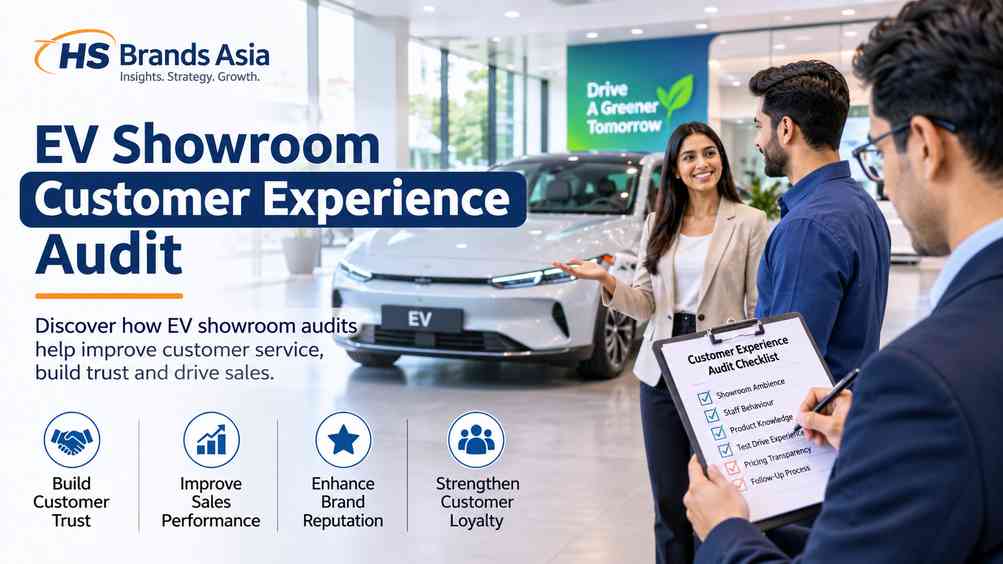
The electric vehicle market is changing the way people research, compare, and purchase automobiles. Today’s EV buyers want more than attractive designs and advanced technology. They also expect reliable product information, knowledgeable sales representatives, transparent pricing, and professional customer service.
For automotive brands, delivering a consistent experience across every dealership is becoming increasingly important. An EV Showroom Customer Experience Audit provides a structured way to evaluate dealership interactions, identify service gaps, and understand what customers experience during their buying journey.
By combining customer experience evaluations with mystery shopping and performance analysis, automotive businesses can make better decisions and improve dealership standards.
An EV Showroom Customer Experience Audit is a structured evaluation of the service and interactions customers receive when visiting an electric vehicle dealership.
It examines different stages of the buying journey, from the first enquiry to vehicle demonstrations, test drives, purchase discussions, and follow-up communication.
The objective is to understand whether dealership employees are meeting brand expectations and providing customers with the right information and assistance.
Rather than relying only on sales figures or customer complaints, an audit provides direct observations about the actual service experience.
Electric vehicles involve several considerations that may be unfamiliar to first-time buyers. Customers often want detailed explanations about battery capacity, driving range, charging facilities, maintenance, warranty coverage, and vehicle technology.
If dealership employees cannot answer these questions clearly, potential buyers may hesitate to make a purchase.
Regular evaluations help automotive brands:
Maintain consistent dealership service standards.
Identify employee training requirements.
Improve EV product knowledge.
Strengthen customer communication.
Understand differences in dealership performance.
Identify opportunities to improve customer satisfaction.
A better buying experience can help build customer confidence and support long-term brand relationships.
The showroom creates the customer’s first physical impression of the brand.
An evaluation should examine cleanliness, vehicle presentation, display arrangements, employee availability, and the overall showroom environment.
A professional and organised showroom makes it easier for customers to explore vehicles comfortably.
The way employees welcome customers can influence the entire interaction.
Auditors should observe whether visitors receive a timely greeting, whether employees communicate politely, and whether customers are offered appropriate assistance.
The objective is to create a welcoming experience without putting unnecessary pressure on potential buyers.
Product knowledge is particularly important in electric vehicle sales.
Sales representatives should be able to explain:
Battery capacity and driving range.
Charging methods and charging time.
Vehicle safety and technology features.
Warranty coverage.
Maintenance requirements.
Available models and specifications.
An audit helps identify whether employees provide accurate, understandable, and relevant information.
Every customer has different expectations and purchasing priorities.
Some buyers may need an EV for daily commuting, while others may be interested in long-distance travel, family requirements, or advanced technology.
The evaluation should assess whether sales representatives ask suitable questions and recommend vehicles based on customer needs rather than simply promoting a particular model.
Vehicle demonstrations allow customers to experience the product beyond its specifications.
Auditors can evaluate whether employees explain important features, demonstrate vehicle functions, arrange test drives properly, and answer questions during the interaction.
The test drive process should be organised, professional, and informative.
Clear purchase information helps customers make confident decisions.
Dealership employees should explain vehicle pricing, financing options, available promotions, delivery timelines, and warranty conditions accurately.
An evaluation can identify whether information is communicated consistently and whether customers receive answers to their financial and purchase-related questions.
The customer journey continues after the showroom visit.
Potential buyers may need additional information, financing details, or time to compare different models.
Auditors can examine whether dealership representatives follow up appropriately, respond to pending questions, and maintain professional communication.
The complete experience should be evaluated rather than focusing on individual interactions alone.
This includes the time taken to receive assistance, quality of communication, employee professionalism, accuracy of information, and the customer’s overall impression of the dealership.
Reviewing all these factors helps brands understand how individual service touchpoints contribute to the overall buying journey.
Mystery shopping is an effective method of evaluating dealership performance from a customer’s perspective.
Trained mystery shoppers interact with dealership employees while following realistic customer scenarios. They observe how the sales team responds to enquiries, explains products, handles objections, and manages the buying experience.
Depending on the evaluation programme, assessments can take place through:
Direct showroom visits.
Telephone enquiries.
Online interactions.
Video calls.
Customer follow-up communication.
The collected feedback provides businesses with an independent view of actual service quality.
It can also help identify differences between dealership locations and highlight areas that require additional attention.
An audit should not end with a report. Its real value comes from using the findings to improve business performance.
Automotive brands can follow a structured improvement process.
Step 1: Establish Evaluation Standards
Define the service expectations and key performance indicators that dealerships should follow.
Step 2: Collect Customer Experience Data
Conduct evaluations across selected customer touchpoints using appropriate audit methods.
Step 3: Analyse Performance Results
Review the findings to identify recurring service gaps, employee strengths, and operational weaknesses.
Step 4: Provide Targeted Training
Develop training programmes to improve product knowledge, customer handling, and communication skills.
Step 5: Monitor Progress
Conduct follow-up assessments to understand whether corrective actions are improving dealership performance.
This continuous approach helps automotive brands maintain service consistency and respond to changing customer expectations.
Improving internal dealership performance is important, but understanding competitor service standards can provide additional business insights.
Competitor benchmarking allows automotive brands to compare customer interactions, enquiry handling, showroom presentation, sales communication, and other service touchpoints.
These comparisons can help businesses identify their strengths, discover improvement opportunities, and understand how their customer experience differs from competing brands.
When combined with mystery shopping, competitor benchmarking provides a broader view of dealership performance in the market.
HS Brands Asia provides automotive mystery shopping and customer experience solutions to help businesses evaluate service quality and improve dealership performance.
Its automotive mystery shopping programmes can assess customer interactions across showroom visits, telephone enquiries, online communication, and other relevant touchpoints.
The company also offers:
Mystery Shopping: Evaluating real customer interactions and employee performance against defined service standards.
Customer Experience Management: Understanding customer experiences and identifying opportunities to improve satisfaction and loyalty.
Competitor Benchmarking: Comparing service practices and performance with competitors.
Market Intelligence: Gathering market insights to support informed business decisions.
Through customised evaluations and actionable reporting, HS Brands Asia helps automotive businesses understand what is happening at their customer touchpoints and identify practical areas for improvement.
Visit the official website:
The success of an electric vehicle dealership depends on more than the quality of the vehicles it sells. Professional customer handling, accurate product information, transparent communication, and consistent service all contribute to the buying experience.
An EV Showroom Customer Experience Audit helps automotive brands evaluate these factors, identify performance gaps, and develop better dealership practices.
By using mystery shopping, customer experience management, and competitor benchmarking, businesses can make informed improvements, strengthen customer confidence, and build more consistent dealership experiences.
Better customer experiences start with better evaluations.
Submit guest articles that reach decision-makers, influencers, and professionals. Yarabook offers a trusted platform for quality content, strong backlinks, and SEO-driven visibility. Pay. Publish. Promote.