

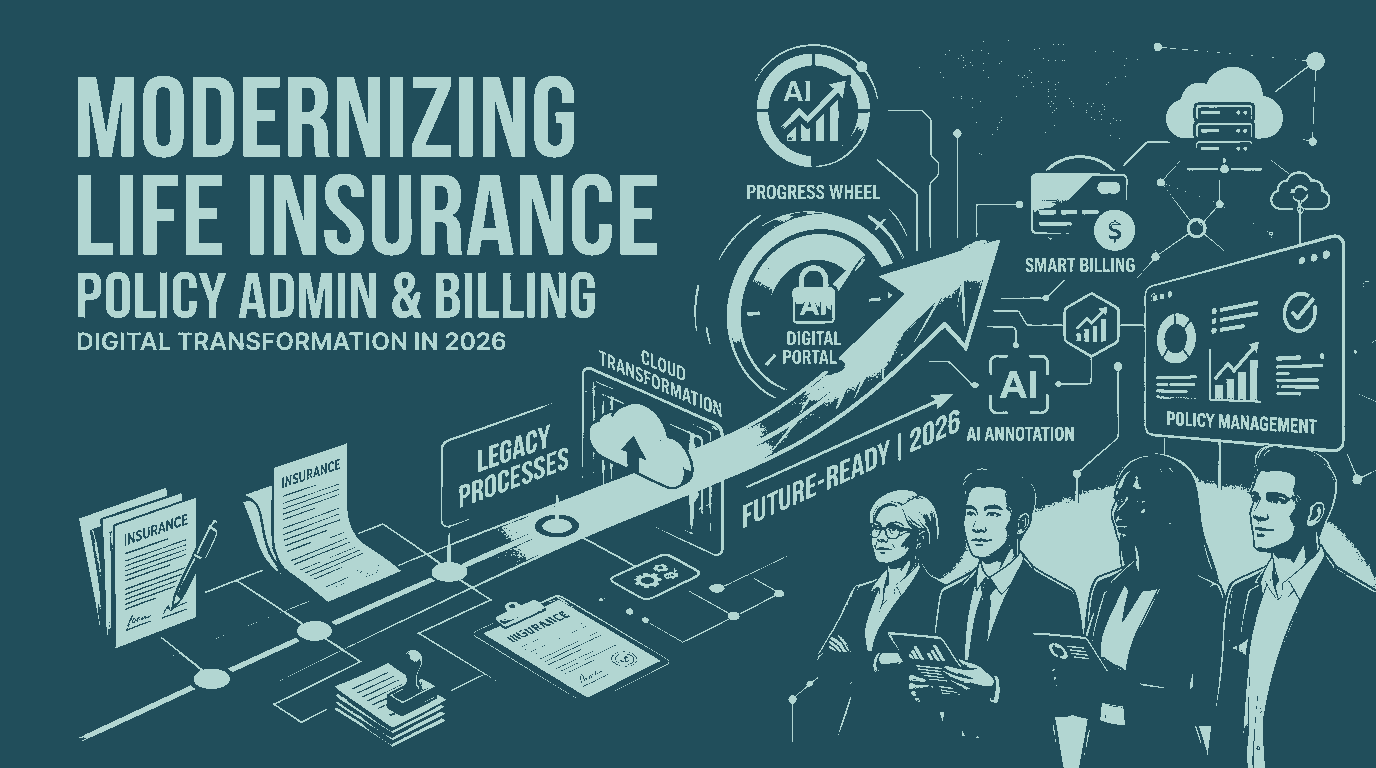
Organizations grow dependent on digital systems, but legacy infrastructure has emerged as a critical risk for life insurers trying to function efficiently and meet rising policyholder expectations. Carriers are required to manage complex, decades-long policy lifecycles, recurring premium collection, and strict regulatory reporting, all while keeping operational costs under control. No longer a back-office concern, core system modernization is now central to competitiveness and long-term business sustainability.
At a time when digital transformation, policyholder self-service demand, and regulatory complexity are all rising simultaneously, many carriers find they need life insurance policy administration systems software to manage the full policy lifecycle accurately and efficiently. A reliable platform built specifically for life insurance billing software helps insurers automate premium collection, reduce lapses, and eliminate the reconciliation gaps that plague legacy infrastructure.
Whether it is a mutual insurer, a national carrier, a group life provider, or an insurtech startup, modern core systems help retain policyholder trust, protect sensitive financial data, and ensure continued business growth. The following information explains what these systems are, why they matter, and which parts of the life insurance business depend on them most.
Policy administration software is the system of record that manages a life insurance policy from issuance through to maturity, surrender, or claim. It governs underwriting data, policy values, beneficiary changes, riders, dividends, and lapses across the entire policy lifecycle — which for life insurance can span 20, 30, or even 50+ years.
Because life insurance products are inherently long-duration and detail-sensitive, the underlying system has to be accurate over decades, not just at the point of sale. Carriers depend on life insurance policy administration systems software to maintain that accuracy automatically, rather than relying on manual updates and spreadsheet patches that introduce errors over time.
A modern platform reduces operational risk and ensures policy data stays accurate across every life event a policyholder goes through.
To maintain accuracy, compliance, and policyholder satisfaction, modern infrastructure is key. As policyholder expectations evolve toward digital-first experiences, carriers need systems capable of supporting real-time servicing rather than batch-processed updates.
Many insurers are turning to integrated life insurance policy administration systems software paired with dedicated billing platforms to modernize their entire policy lifecycle in one connected ecosystem.
Premium billing in life insurance is uniquely complex — flexible premium products, policy loans, dividend offsets, and grace period handling all affect what a policyholder actually owes each cycle. Getting this wrong has consequences:
This is exactly why insurers invest in dedicated life insurance billing software purpose-built to handle the calculation complexity that generic billing tools were never designed for.
Life insurers hold some of the most sensitive data that exists in financial services, including:
Modern life insurance policy administration systems is built with this sensitivity in mind, incorporating access controls and audit trails that legacy mainframe systems often lack.
Legacy policy admin platforms — many running on decades-old code — create operational fragility. A single unsupported batch job failure can delay premium notices, miscalculate cash values, or create compliance exposure on statutory filings.
Risk reduction strategies modern carriers rely on include:
This is the main reason carriers replacing legacy systems prioritize platforms offering both policy administration and life insurance billing software in a unified architecture rather than as disconnected modules.
Policyholders increasingly expect the same digital experience from their life insurer that they get from their bank — accurate statements, self-service portals, and instant updates after a life event.
Carriers running modern life and annuity policy administration systems are able to deliver real-time policy value updates, instant beneficiary changes, and accurate billing communication. Policyholders are far more likely to stay loyal to a carrier that gets their billing and policy details right, consistently, over decades.
Replacing legacy infrastructure forces insurers to streamline processes, documentation, and workflows that have often gone unexamined for years. The result is leaner operations and fewer manual interventions across underwriting, servicing, and claims.
Modernization programs typically improve:
There are benefits to modernization that extend well beyond IT cost savings. It strengthens compliance posture, improves policyholder retention, and increases long-term operational resilience.
Accurate, automated premium billing reduces unintended lapses caused by billing errors or missed grace period notifications — directly protecting in-force premium revenue.
Configurable life insurance policy administration systems software allows actuarial and product teams to launch new riders or product variations without lengthy core system development cycles.
Automated statutory reporting reduces the risk of compliance violations tied to grace periods, non-forfeiture options, and state-specific regulatory requirements.
Tightly integrated life insurance billing software eliminates reconciliation gaps between what’s billed, what’s collected, and what’s reflected in policy values — protecting both revenue and audit readiness.
Nearly every organization that issues or administers life insurance policies depends on accurate core infrastructure.
Direct issuers of whole life, term, universal, and variable life products rely on these systems for the entirety of the policy lifecycle, from issuance to claim.
Group carriers managing enrollment changes, billing reconciliation across employer groups, and high transaction volumes need life insurance billing software capable of handling complex multi-policyholder billing structures.
Reinsurance partners depend on accurate, structured policy data flowing from primary carriers’ life insurance policy administration systems to support treaty reporting and risk assessment.
New entrants building digital-first life insurance products need modern, API-first core systems from day one, rather than retrofitting legacy infrastructure later.
Modern core technology is an integral part of running a competitive life insurance business today. It helps carriers meet regulatory obligations, protect sensitive policyholder data, and operate efficiently across policy lifecycles that can span decades.
The rise in policyholder expectations and regulatory complexity has made it essential for insurers to invest in life insurance policy administration systems software backed by tightly integrated, purpose-built life insurance billing software. By modernizing both systems together rather than separately, carriers reduce reconciliation risk, lower lapse rates, and build the kind of policyholder trust that drives long-term retention.
The importance of getting this right extends across every segment of the life insurance business from direct carriers to group benefits providers to reinsurers all of whom depend on accurate, well-integrated core systems to protect their policyholders and their bottom line.
Submit guest articles that reach decision-makers, influencers, and professionals. Yarabook offers a trusted platform for quality content, strong backlinks, and SEO-driven visibility. Pay. Publish. Promote.