

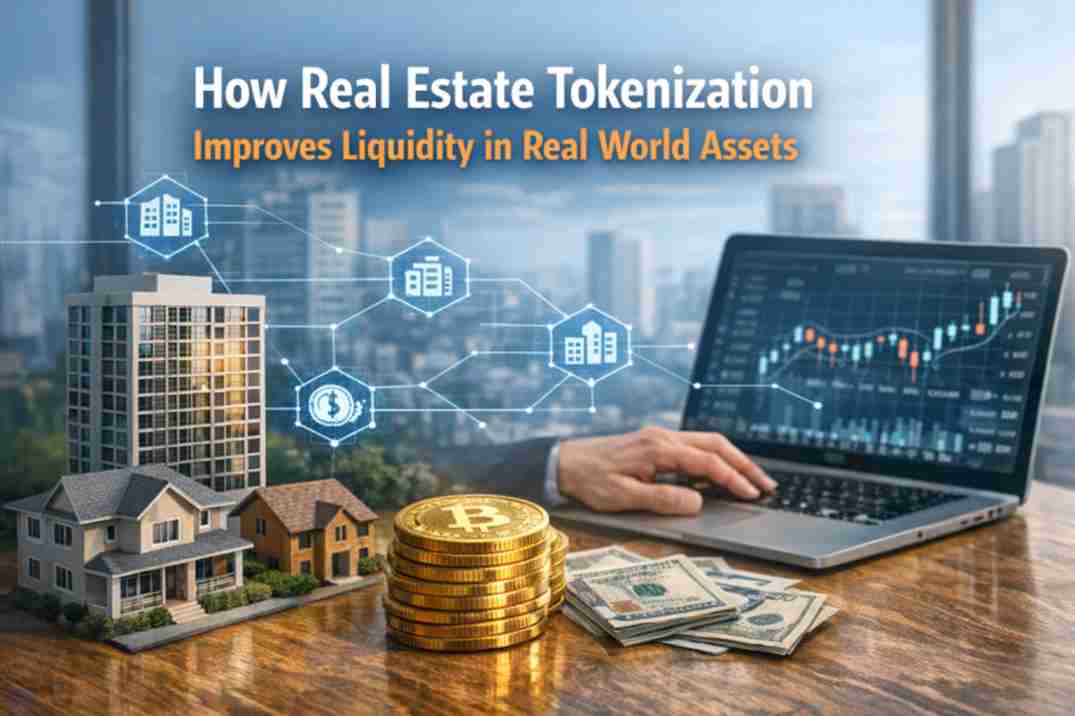
Real estate has historically been categorized as an illiquid asset class due to its high capital requirements, lengthy transaction cycles, and complex ownership structures. Unlike publicly traded equities or bonds, property investments are not easily divisible or rapidly transferable. However, the emergence of blockchain-based tokenization is redefining this paradigm. Real estate tokenization introduces fractional ownership, programmable assets, and enhanced market accessibility—collectively improving liquidity in real-world assets (RWAs).
Real estate tokenization refers to the process of converting ownership rights in a physical property into digital tokens recorded on a blockchain. These tokens represent fractional shares of the underlying asset and can be traded on compliant digital marketplaces. By leveraging distributed ledger technology (DLT), tokenization enables transparent, immutable, and efficient ownership transfer mechanisms.
Each token is backed by a legal framework, typically involving Special Purpose Vehicles (SPVs) or Real Estate Investment Trusts (REIT)-like structures, ensuring regulatory compliance and asset-backed value. Investors can hold, transfer, or trade these tokens in a manner similar to securities, significantly reducing entry barriers.
Traditional real estate markets are constrained by multiple inefficiencies:
These factors collectively result in capital being locked for extended periods, making real estate less flexible compared to other asset classes.
Tokenization introduces structural and technological efficiencies that directly address these limitations:
By dividing a property into multiple tokens, investors can purchase smaller units of ownership. This fractionalization increases the pool of potential investors, enabling higher transaction frequency and improved market depth.
Tokenized assets can be listed on digital asset exchanges or security token platforms. This creates an active secondary market where investors can buy and sell tokens without requiring full asset liquidation.
Smart contracts automate key processes such as ownership transfer, dividend distribution, and compliance checks. This reduces reliance on intermediaries and accelerates settlement cycles.
Blockchain-based platforms eliminate geographical barriers, allowing cross-border investments with minimal friction. Investors from different jurisdictions can participate, enhancing demand-side liquidity.
The liquidity benefits of tokenized real estate are not solely technological—they rely on a combination of legal, financial, and infrastructural elements:
While tokenization improves liquidity, certain challenges persist:
Liquidity is not solely a function of technology—it also depends on market participation, regulatory clarity, and institutional acceptance.
The convergence of blockchain, regulatory innovation, and financial infrastructure development is expected to further enhance liquidity in real estate markets. Institutional adoption is gradually increasing, with asset managers exploring tokenization as a viable mechanism for portfolio diversification and capital efficiency.
Moreover, integration with decentralized finance protocols may unlock additional liquidity layers, enabling lending, staking, and yield generation using tokenized real estate assets. As infrastructure matures, liquidity pools for RWAs could become as dynamic as traditional financial markets.
In this evolving ecosystem, platforms offering real estate tokenization development services are playing a crucial role in building compliant, scalable, and interoperable solutions that bridge traditional real estate with digital finance.
Real estate tokenization represents a fundamental shift in how property assets are owned, traded, and monetized. By enabling fractional ownership, facilitating secondary markets, and reducing transactional inefficiencies, tokenization significantly enhances liquidity in real-world assets. While challenges remain, the long-term trajectory indicates a more accessible, transparent, and liquid real estate market powered by blockchain technology.
Submit guest articles that reach decision-makers, influencers, and professionals. Yarabook offers a trusted platform for quality content, strong backlinks, and SEO-driven visibility. Pay. Publish. Promote.