

AI technology can save businesses valuable time or create costly delays. The difference often depends on the infrastructure supporting it. The right AI agent infrastructure helps businesses automate repetitive tasks, manage increasing workloads, and deliver better customer experiences without continuously increasing operational expenses.
As organisations grow, their AI systems must handle more requests, connect with additional applications, and maintain reliable performance. Scalable infrastructure provides the foundation businesses need to turn AI experiments into practical solutions that support long-term growth.
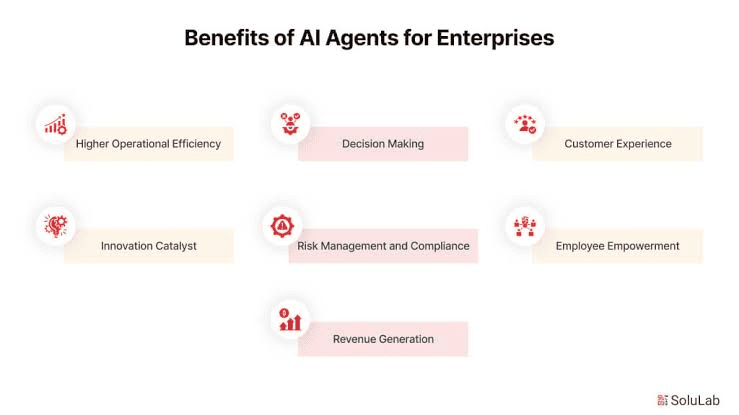
Scalable infrastructure enables organisations to integrate AI agents into daily operations and expand their capabilities as business requirements change. Here are five important benefits.
Operational Efficiency: Automate repetitive activities such as customer inquiries, data entry, and report generation to reduce manual effort and save employee time.
Productivity Boost: Allow AI agents to manage routine workflows so employees can focus on strategic planning, creative thinking, and problem-solving.
Increased Capacity: Handle more transactions, users, and complex workflows without redesigning the entire system whenever business demands increase.
Faster Customer Service: Answer common questions quickly and provide consistent support across multiple communication channels.
Optimised Return on Investment: Reuse infrastructure components, reduce duplicated development work, and manage operating costs as AI adoption expands.
These benefits demonstrate why scalability is more than a technical requirement. It helps businesses increase efficiency while maintaining service quality and controlling expenses.
Building scalable AI infrastructure requires careful planning. Businesses must consider their objectives, architecture, integrations, security, and performance monitoring to create systems that remain dependable as usage grows.
Start by identifying the business processes that consume significant time or resources. Common examples include processing customer requests, extracting information from documents, preparing reports, and updating business records.
Establish measurable goals before introducing automation. These might include reducing processing time, improving response speed, increasing task completion rates, or lowering operational costs.
Clear objectives help teams select valuable use cases and measure whether their AI investments deliver meaningful results. Starting with one well-defined workflow also makes testing and improvement easier before expanding automation across the organisation.
The infrastructure should support increasing workloads, additional AI agents, and changing business requirements. Consider runtime environments, model connectivity, memory management, task orchestration, and resource allocation when selecting an architecture.
A modular design allows teams to update individual components without rebuilding the entire system. It also makes adding new capabilities easier as business needs evolve.
Reliability is equally important. AI agents may encounter unavailable services, unexpected inputs, or failed tool calls. Appropriate error handling, retry mechanisms, fallback options, and human escalation help prevent these issues from disrupting essential workflows.
AI agents become more useful when they can access approved business applications and relevant information. Integrations with customer relationship management platforms, databases, document repositories, and communication tools can help agents complete tasks instead of simply generating recommendations.
Standardised approaches, such as the Model Context Protocol (MCP), can simplify connections between compatible AI applications and external tools or data sources.
However, every integration should be tested for reliability, permissions, and data accuracy. Restricting access to authorised systems and functions helps businesses maintain control while enabling agents to support existing workflows effectively.
As AI agents interact with business systems, security and governance become essential. Organisations should implement appropriate authentication, access restrictions, credential protection, and data handling policies.
Businesses must also define what each agent can and cannot do. For example, an agent that retrieves information may require fewer permissions than one authorised to modify customer records or initiate transactions.
Human approval should be required for sensitive or high-impact actions where appropriate. Clear escalation procedures help agents handle uncertain situations responsibly.
These safeguards reduce operational risks and allow businesses to expand automation without compromising accountability, privacy, or security.
Deploying an AI agent is only the beginning. Businesses need ongoing visibility into its behaviour, reliability, and operating costs to maintain consistent results.
AI agent observability helps teams track execution, tool calls, errors, response times, and resource consumption. These insights make it easier to identify bottlenecks, investigate failures, and improve workflows.
Monitor important metrics such as task completion rates, response accuracy, processing time, and cost per successful task. Regularly review performance against the original business objectives.
Continuous monitoring also helps teams identify when workloads increase or system behaviour changes. By using these insights to refine workflows and allocate resources, businesses can improve reliability and maintain a sustainable return on investment.
Scalable AI agent infrastructure is an investment in sustainable business growth. It helps organisations reduce repetitive work, improve productivity, manage increasing workloads, and deliver better customer experiences while maintaining control over costs and security.
The best approach is to begin with one impactful business process, establish measurable objectives, and evaluate the results. Once the workflow demonstrates consistent value, businesses can expand their AI capabilities gradually.
Kodeus AI helps businesses and developers build and operate production-ready AI applications with capabilities such as runtime, memory, identity, credentials, guardrails, and observability. By combining reliable architecture, secure integrations, appropriate governance, and effective AI agent observability, businesses can build AI systems that adapt to changing demands and deliver measurable value as they grow.
Submit guest articles that reach decision-makers, influencers, and professionals. Yarabook offers a trusted platform for quality content, strong backlinks, and SEO-driven visibility. Pay. Publish. Promote.