

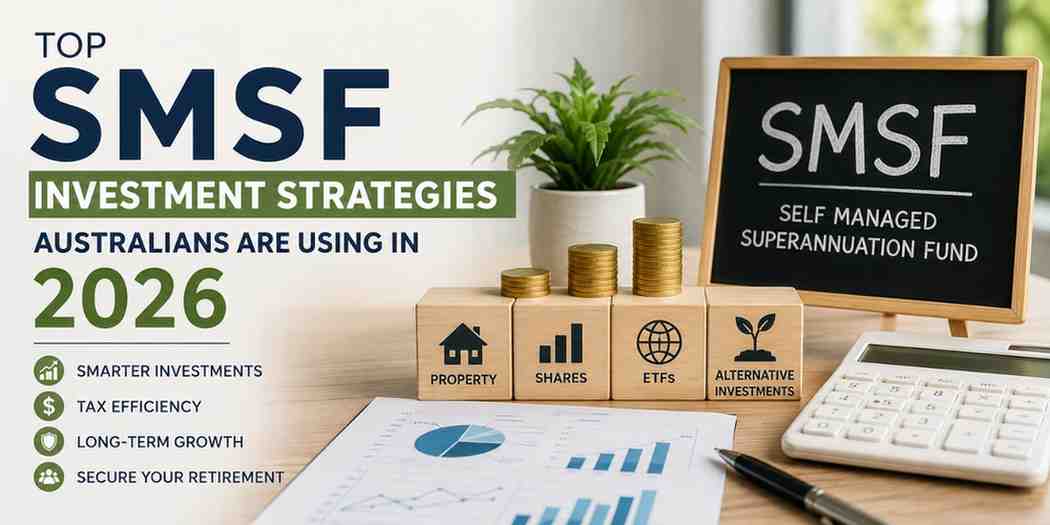
Retirement planning in Australia is evolving rapidly, and more investors are taking direct control of their superannuation to build long-term wealth. In 2026, Australians are focusing on smarter, diversified, and tax-efficient investment approaches to strengthen their retirement portfolios while adapting to changing economic conditions.
Higher living costs, global market uncertainty, and growing interest in alternative investments are reshaping how retirement funds are managed. Instead of relying only on traditional assets, trustees are exploring broader investment opportunities that can deliver both growth and financial stability.
This article explores the most popular investment strategies Australians are using in 2026 to maximise retirement savings and improve long-term financial outcomes.
Diversification Has Become a Core Investment Strategy
One of the biggest trends in retirement investing is diversification. Rather than placing all funds into one asset class, investors are spreading their portfolios across multiple investment categories to reduce risk and improve stability.
A diversified retirement portfolio may include:
- Australian shares
- International equities
- Commercial property
- Exchange-traded funds (ETFs)
- Fixed income assets
- Cash reserves
- Infrastructure investments
- Alternative assets
Diversification helps reduce exposure to market volatility while creating multiple income streams for retirement.
Many investors are also conducting regular portfolio reviews to rebalance their assets based on economic conditions and retirement goals.
Commercial Property Investments Continue to Grow
Commercial property remains one of the strongest investment trends among retirement-focused investors in Australia. Business owners and high-income earners are increasingly purchasing commercial properties as part of long-term wealth creation strategies.
Popular commercial property investments include:
- Office buildings
- Warehouses
- Medical centres
- Industrial properties
- Retail spaces
Commercial property can offer several advantages, including:
- Stable rental income
- Long-term capital growth
- Asset security
- Tax planning opportunities
- Business premises ownership flexibility
Some investors also lease commercial premises back to their businesses under strict regulatory rules, creating both operational and investment benefits.
Exchange-Traded Funds Are Becoming More Popular
Exchange-traded funds, commonly known as ETFs, are now widely used by Australian investors looking for cost-effective portfolio diversification.
Instead of relying heavily on individual stock selection, investors are choosing ETFs to gain exposure to broader markets and industries such as:
- Global technology
- Healthcare
- Energy
- Banking
- Emerging markets
- Dividend-focused investments
ETFs are attractive because they generally provide:
- Lower management costs
- Easier diversification
- Reduced investment risk
- Better liquidity
- Simplified portfolio management
Passive investing strategies through ETFs continue gaining momentum in 2026 as investors seek long-term stability over speculative trading.
Sustainable and ESG Investing Is Rising
Environmental, Social, and Governance (ESG) investing has become increasingly important for Australian investors.
Many individuals now prefer investments that align with ethical and sustainability-focused values while still offering long-term growth potential.
Popular ESG sectors include:
- Renewable energy
- Clean technology
- Sustainable infrastructure
- Ethical managed funds
- Green property developments
Sustainable investing is expected to continue growing as environmental regulations strengthen globally and investors become more socially conscious.
International Investments Are Expanding
Australian investors are increasingly looking beyond domestic markets to access global growth opportunities.
International investments can help provide exposure to industries and markets that may not be heavily represented in Australia.
Popular global investment areas include:
- US technology companies
- Asian growth markets
- European infrastructure projects
- International dividend stocks
- Global property funds
Global diversification also helps reduce reliance on the Australian economy and can strengthen long-term portfolio resilience.
Alternative Investments Are Attracting Attention
Alternative assets are becoming an important part of modern investment portfolios.
Many investors are now allocating a portion of their retirement savings into alternative investment categories such as:
- Cryptocurrency
- Gold and precious metals
- Private equity
- Agricultural investments
- Infrastructure assets
These investments can provide diversification benefits and inflation protection, although they often involve higher risks and greater market volatility.
Careful research and professional financial guidance are essential before investing in alternative assets.
Income-Focused Investment Strategies Are Increasing
As more Australians approach retirement age, generating consistent income has become a major priority.
Income-focused investment strategies typically include:
- Dividend-paying shares
- Rental income properties
- Fixed-interest investments
- High-yield ETFs
- Infrastructure income funds
Reliable cash flow can help retirees manage living expenses without needing to sell long-term assets during uncertain market conditions.
This strategy is especially valuable for investors entering retirement pension phases.
Many retirees also work closely with a retirement financial advisor perth professional to create sustainable long-term income strategies.
Borrowing Strategies Are Being Used More Carefully
Borrowing for investment purposes remains part of many long-term wealth strategies, although investors are becoming more cautious due to interest rate pressures.
Borrowing is commonly used for:
- Commercial property acquisitions
- Long-term property investments
- Asset growth strategies
Before using borrowing strategies, investors should carefully assess:
- Interest rate risks
- Loan repayment capacity
- Cash flow stability
- Market conditions
Professional advice is strongly recommended when structuring leveraged investments.
Tax Efficiency Is Driving Investment Decisions
Tax planning remains one of the most important factors influencing investment decisions in 2026.
Australians are increasingly focusing on strategies that legally minimise tax obligations while maximising retirement savings.
Common tax-effective strategies include:
- Capital gains tax planning
- Contribution timing strategies
- Franking credit utilisation
- Retirement transition planning
- Portfolio restructuring
Many investors are also focusing on succession and estate planning to ensure wealth is transferred efficiently across future generations.
Professional advice related to
smsf estate planning in perth
can help families structure investments and retirement assets more effectively.
Technology Is Transforming Investment Management
Technology is playing a major role in how Australians manage retirement investments.
Modern investors now use digital tools for:
- Portfolio monitoring
- Investment analysis
- Automated reporting
- Compliance tracking
- Financial forecasting
Cloud-based financial platforms have made it easier to access real-time investment information and manage portfolios more efficiently.
Automation also helps reduce administrative workloads and improve financial transparency.
Risk Management Is More Important Than Ever
Economic uncertainty, inflation, and global financial instability have increased the importance of risk management.
Successful investors are focusing on strategies such as:
- Maintaining portfolio diversification
- Keeping adequate cash reserves
- Conducting regular investment reviews
- Monitoring market conditions
- Reviewing insurance coverage
Risk management plays a critical role in protecting retirement savings during volatile market periods.
Building a strong Self Managed Superannuation Fund strategy requires careful planning, ongoing reviews, and compliance awareness.
Why Professional Guidance Matters
Investment regulations and tax rules continue to evolve, making professional guidance increasingly valuable.
Working with experienced financial and accounting professionals can help investors with:
- Investment structuring
- Tax planning
- Compliance management
- Retirement planning
- Estate planning
- Portfolio reviews
Expert support can also reduce the risk of costly financial mistakes and improve long-term retirement outcomes.
Final Thoughts
Investment strategies in 2026 are becoming more diversified, technology-driven, and focused on long-term financial security. Australians are increasingly exploring global investments, commercial property, sustainable assets, and income-generating opportunities to strengthen retirement portfolios.
At the same time, managing investment risk and maintaining tax efficiency remain essential for long-term success.
With proper planning, diversification, and professional guidance, investors can build stronger retirement strategies that support both financial growth and long-term stability in an increasingly complex economic environment.