

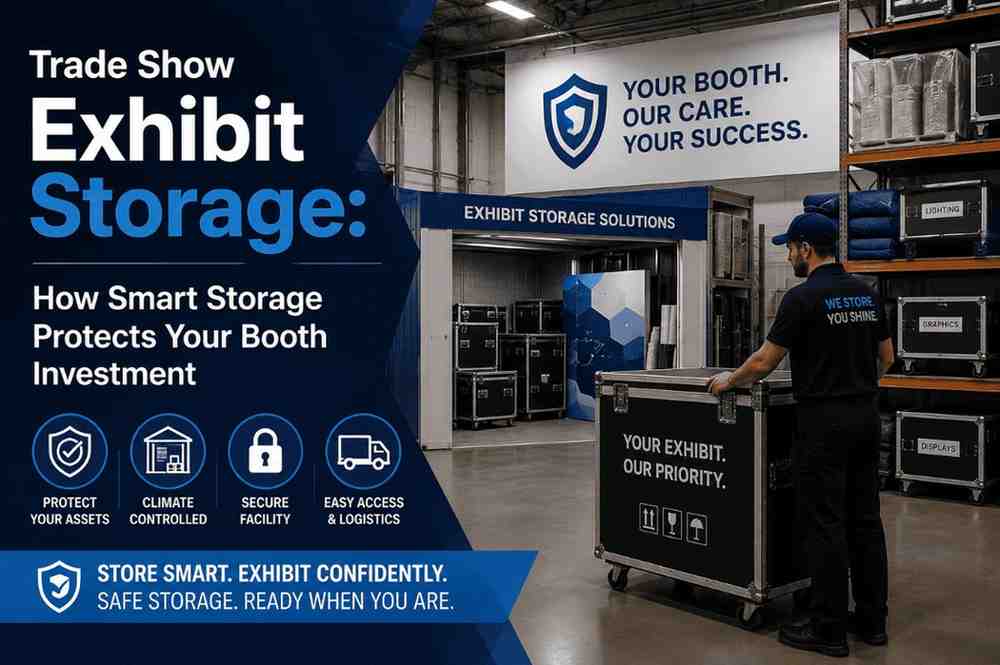
A trade show booth may only be on display for a few days, but its value extends far beyond a single event. Custom structures, modular components, branded graphics, lighting systems, furniture, AV equipment, and product displays all represent a significant investment. What happens to these assets between shows can directly affect their condition, lifespan, and readiness for the next event.
That is where trade show exhibit storage becomes an important part of a successful exhibiting strategy.
For companies participating in multiple events across the United States, professional exhibit storage is not simply about finding warehouse space. It involves protecting booth assets, maintaining accurate inventory, preparing for future events, and coordinating logistics so the exhibit is ready when and where it is needed.
Trade show exhibit storage refers to the organised warehousing and management of exhibit materials between events. Depending on the booth and exhibiting schedule, stored assets may include:
Unlike general storage, professional trade show booth storage should account for the unique needs of exhibit components. Many booth materials are custom-built, fragile, oversized, or difficult to replace quickly.
The goal is not just to keep them somewhere until the next show. The goal is to keep them organized, protected, and ready for reuse.
After a busy trade show, it can be tempting to pack everything quickly and deal with it later. Unfortunately, poor storage practices can create expensive problems before the next event.
Graphics may become creased. Hardware can go missing. painted surfaces may get scratched. Electronic equipment can be damaged. Crates may be stored without accurate labels. Months later, the next event team may discover these issues only when the booth is already being prepared for shipment.
A structured storage process helps reduce these risks.
Custom trade show booths are built from a wide range of materials, including wood, aluminum, fabric, acrylic, laminate, glass, and electronic components. Each requires appropriate handling.
Professional exhibit storage can help protect booth assets from:
Careful storage extends the usable life of exhibit materials and reduces avoidable repair or replacement costs.
One of the most common challenges exhibitors face is not knowing exactly what they have in storage.
A booth may include hundreds of individual pieces, from major wall panels to small connectors, cables, brackets, and fasteners. If inventory is poorly managed, even one missing component can delay installation.
An organized trade show exhibit warehouse should use clear labeling and inventory procedures to track:
Good organization makes future planning much easier.
The best time to identify booth damage is after the current event—not days before the next one.
When an exhibit returns to storage, it can be reviewed for:
This creates an opportunity to address problems early.
Instead of opening a crate shortly before the next event and discovering a damaged graphic, exhibitors can plan repairs and updates in advance.
Many companies assume exhibit storage simply means renting space in a warehouse. In reality, effective storage should support the entire event lifecycle.
For frequent exhibitors, storage may connect directly with:
This is particularly important for brands attending events in different U.S. cities throughout the year.
For example, a company may exhibit in Las Vegas in January, Chicago in March, Orlando in June, and New York later in the year. The booth may require different configurations, graphics, or product displays for each event.
A well-managed storage strategy helps ensure the correct components are prepared for each destination.
Not every warehouse is suitable for storing valuable exhibit assets. When evaluating a storage partner, consider the following factors.
Ask how the facility controls access and protects stored materials. Valuable booth assets should not be left in an unmanaged space with unnecessary exposure to damage or loss.
A reliable storage process should make it easier to understand what is currently in the warehouse.
This may include:
Accurate inventory reduces confusion when planning future events.
Exhibit materials are different from standard commercial goods. Large graphics, custom structures, delicate finishes, unusual shapes, and reusable booth systems require appropriate handling.
A team familiar with trade show exhibits is more likely to understand how components should be packed, moved, and stored.
Storage becomes more valuable when damaged or outdated components can be identified and addressed between events.
Services may include:
This can help extend the life of an existing exhibit.
If your booth travels frequently, storage and shipping should work together.
A strong storage partner can help coordinate:
This reduces the need to manage storage and logistics as completely separate tasks.
Even experienced exhibitors can make storage decisions that create future problems.
One common mistake is storing wet or dirty booth materials immediately after a show. Flooring, fabric, and other components should be checked before long-term storage.
Another mistake is keeping outdated promotional materials indefinitely. Old brochures, damaged graphics, and expired campaign assets can consume space and create confusion.
Poor labeling is also a major issue. A crate marked only with a company name may not provide enough information months later. Labels should clearly identify contents, booth configuration, or relevant event details.
Other mistakes include:
A consistent post-show process can prevent many of these issues.
Professional storage comes with a cost, but poor storage can be far more expensive.
Consider the potential expense of:
Good storage and inventory management can reduce these avoidable costs.
It can also support exhibit reuse. Instead of rebuilding a booth for every event, companies may be able to store and reconfigure existing components for different booth sizes.
A modular exhibit, for example, might be used as a 10′ x 20′ booth at one event and adapted into a larger island configuration at another. Proper storage ensures those reusable components remain accessible and in good condition.
Companies with busy event calendars need more than basic warehousing.
A multi-show exhibit program may involve:
In these situations, inventory visibility becomes essential.
Knowing which assets are available, which are currently in transit, and which require maintenance helps event teams make better decisions.
This is where integrated trade show exhibit storage and logistics can provide real operational value.
Purple Exhibits supports exhibitors with coordinated trade show solutions that can include exhibit storage and warehousing, booth logistics, custom exhibit services, installation and dismantle support, and preparation for upcoming events.
The right storage strategy helps keep exhibit components secure, organized, documented, and ready for reuse. It also creates opportunities to identify damage early, update graphics, manage inventory, and coordinate future shipping more efficiently.
For companies attending multiple trade shows across the United States, professional trade show booth storage is not simply about where the exhibit sits between events. It is about keeping valuable assets ready for what comes next.
A well-managed booth should not only look impressive on the show floor. It should also be protected, maintained, and prepared to perform again at the next event.
Submit guest articles that reach decision-makers, influencers, and professionals. Yarabook offers a trusted platform for quality content, strong backlinks, and SEO-driven visibility. Pay. Publish. Promote.