

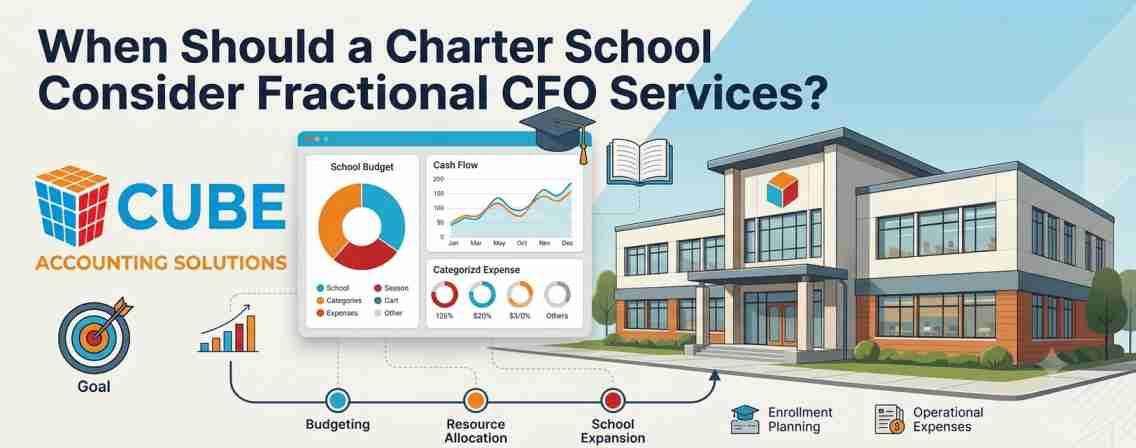
Running a charter school involves more than providing a good education. School leaders must manage budgets, pay staff, maintain facilities, purchase supplies, and plan for future needs while using available funds responsibly.
Funding changes, rising expenses, or unexpected enrollment shifts can make financial planning difficult. Even when an annual budget looks balanced, a school may face cash shortages if funding arrives later than expected.
A fractional chief financial officer (CFO) can help school leaders understand their finances, plan for expenses, and make informed decisions without hiring a full-time CFO. Recognizing when this support is needed can help a charter school prepare for financial challenges and plan for sustainable growth.
Charter schools must balance educational priorities with financial responsibilities. They need sufficient funds for teachers, technology, facilities, classroom materials, and student services.
Strong financial planning helps leaders answer important questions:
Clear financial information helps leaders make decisions based on realistic estimates rather than assumptions.
Funding may arrive on a specific schedule, while payroll, utilities, rent, and other expenses must be paid regularly. Delayed funding can create short-term cash shortages even when the school appears financially stable.
A CFO can prepare cash flow forecasts showing when money is expected to arrive and when payments are due. This helps leaders identify potential shortfalls early and plan how to manage them.
Changes in student numbers can affect funding, staffing, classroom space, and operating costs. Lower enrollment may require spending adjustments, while rapid growth can create additional expenses.
A CFO can compare different enrollment scenarios and estimate their financial impact. This allows school leaders to prepare for possible changes before making long-term commitments.
Comparing actual results with the budget helps leaders understand whether spending is on track. However, higher expenses may come from several sources, including substitute teachers, transportation, utilities, or repairs.
A CFO can identify the reasons for these differences and help determine whether spending needs to change or the budget should be updated. Reviewing actual results also helps the school prepare more realistic budgets for future years.
Opening another campus, adding grade levels, or introducing a new program can create significant financial commitments.
Before expanding, leaders need to estimate staffing, facilities, equipment, technology, and ongoing operating costs. A CFO can compare options and assess how different enrollment or cost scenarios may affect the school’s finances.
This analysis gives school leaders and governing board members useful information before they commit resources.
Accounting reports may contain accurate numbers but still be difficult to use for planning. Leaders need to understand what has changed, why it matters, and whether action is required.
A CFO can organize financial information into clear reports covering revenue, expenses, cash flow, and budget differences. These reports help school leaders identify concerns and respond before they become more difficult to manage.
Fractional CFO for charter schools can provide financial leadership on a part-time or ongoing basis, depending on the school’s needs.
Support may include:
The specific services depend on the school’s size, existing finance team, and planning needs. A fractional CFO can work alongside accounting staff, with responsibilities clearly defined.
A school budget should reflect its educational priorities as well as its financial limits. Leaders may want to introduce tutoring, improve classroom technology, or expand student services, but each decision has costs.
A CFO can help assess initial expenses, ongoing costs, available funding, and the potential impact on other programs. This allows leaders to compare options before committing funds and consider what changes may be needed if revenue falls short.
Charter school boards need reliable financial information to oversee operations and approve major decisions.
A CFO can help prepare reports that explain the school’s financial position, highlight changes, and identify issues that need attention. For example, if expenses are increasing faster than expected, board members can review whether the increase is temporary or likely to continue.
Clear reporting supports informed oversight without overwhelming board members with unnecessary detail. Reports should also follow the school’s applicable accounting and reporting requirements.
Some charter schools have complex operations that require full-time financial leadership. Others need help with budgeting, forecasting, or financial analysis but do not need a full-time CFO.
A fractional arrangement may suit schools that want additional financial guidance while keeping their existing accounting team. It can also be useful during enrollment changes, expansion, or financial planning.
Before choosing this option, leaders should consider:
A fractional CFO does not replace accurate accounting records, internal controls, or required financial oversight.
Charter schools benefit from accurate financial records, clear reporting, and realistic plans for future spending.
Cube Accounting Solutions is a professional accounting and financial services firm based in Santa Ana, California, serving organizations and businesses across the United States. Its services include Accounting Services, Tax Services, Fractional CFO Services, and Staff Augmentation / Managed Staffing Services.
For organizations that need additional financial planning and reporting support, Cube can help improve financial visibility and provide information to support better decisions.
Before hiring outside financial support, school leaders should identify their needs and the decisions they want help making.
Consider asking:
The professional should understand the school’s financial structure and work within its applicable rules and oversight requirements.
A charter school may benefit from outside financial leadership when cash flow becomes difficult to predict, enrollment changes affect the budget, or leaders need clearer information before making major decisions.
Fractional CFO for charter schools can help improve budgeting, strengthen financial reporting, and support planning for future expenses. This guidance can give school leaders a clearer understanding of available resources while keeping educational priorities in focus.
To explore whether this support fits your organization’s needs, contact Cube Accounting Solutions about Fractional CFO for charter schools.
Submit guest articles that reach decision-makers, influencers, and professionals. Yarabook offers a trusted platform for quality content, strong backlinks, and SEO-driven visibility. Pay. Publish. Promote.