Workplace safety is a concern for more than just the law or operations. It is a fundamental way to protect your staff, to minimize disruption, and to establish trust with your staff, customers, and partners along the supply chain.
As an organization expands, its processes can become more complex. More teams may be added, new equipment or locations may be included, and contractors may be engaged. New responsibilities can make the scope of an organization’s activities more blurred. Without an established safety management system, health and safety risks may be missed or may be managed in a completely different way at various team locations.
A structured approach to workplace safety
An occupational health and safety management system offers an organization a way to explicitly identify hazards and assess and control the risks. This results in the assignment of responsibility and checks to determine if the controls are effective. The overarching goal is to make safety an integral part of every decision in an organization rather than something that is only considered after the fact following a safety related incident.
The system should correspond with the organization’s work, people, locations, and risks. A construction site, logistics operation, and manufacturing facility will each present unique risks from an office-based operation. Therefore, a useful system cannot be a generic system.
Where ISO 45001 fits
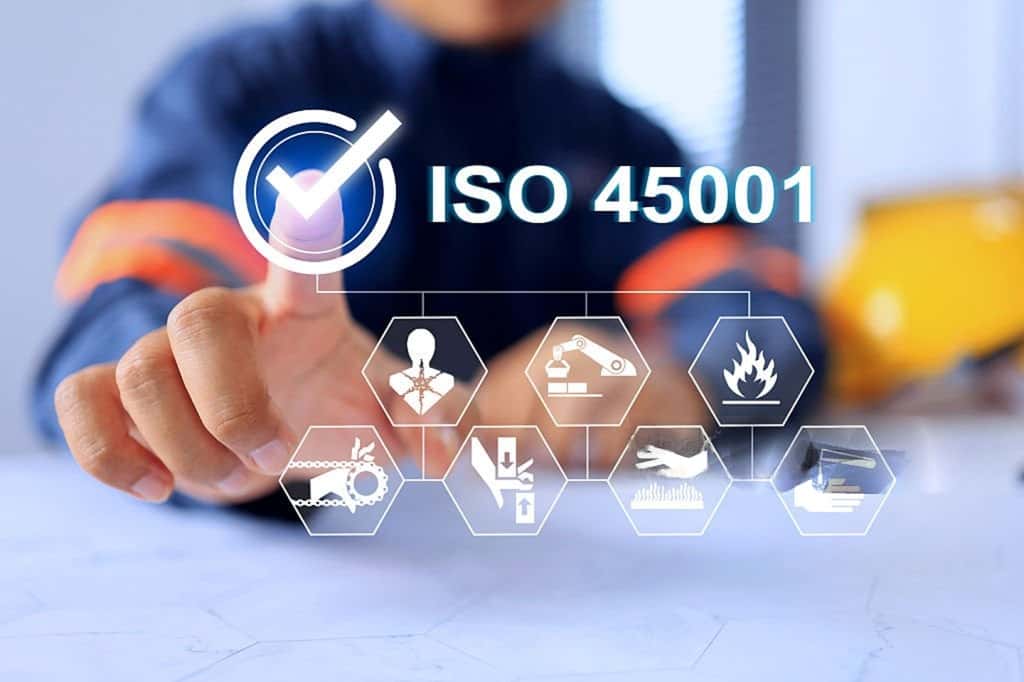
ISO 45001 is designed for all types of businesses and occupational health and safety management systems. ISO 45001 can describe the methodology for building an occupational health and safety management system to manage occupational health and safety risks, as well as improve safety performance continuously.
The ISO 45001 standard is applicable to different industries throughout the world, ranging from manufacturing, construction, logistics, service sectors, and office-based activities. The main value of the standard is not simply in documentation, but in providing a structured approach to identifying risks, establishing controls, and responding to changes in the workplace.Ranging from factories, construction, logistics, services, to offices. The main value of this standard is not in filling out forms; it is in structuring risks for leaders, executives, and employees. It is in creating controls and managing valuable solutions for changes and updates in the workplace.
Key elements of an effective OH&S management system
Although every organisation’s system is different, effective arrangements often include the following elements:
- Clear responsibilities for safety and health at each relevant level.
- Hazard identification, risk assessment, and planned controls.
- Worker consultation and participation, including ways to report concerns.
- Training, competence, and awareness appropriate to the work being carried out.
- Incident reporting, investigation, corrective action, and follow-up.
- Internal reviews that check whether controls remain suitable and effective. Employee involvement matters because employees often see risks first-hand. Their feedback can help organisations spot practical improvements and strengthen controls before a problem occurs.
Why regular review is essential
Everything is subject to change. Because of new machinery, new materials, new suppliers, different locations, and different processes, working conditions can change and introduce new risks. Regular risks assessments are important to identify new risks and address them.
Safety performance should be analyzed with facts rather than with guesses. Records of activities, inspections, training, and management reviews can provide useful information to project Directors and Managers as to the adequacy of the safety management system.
What an ISO 45001 certification audit assesses
An
ISO 45001 certification audit is an examination of an organization’s occupational health and safety management system against the standard and the agreed upon certification scope. During an audit, objective evidence is evaluated to see how system processes are implemented and maintained.
Certification will not eliminate an organization’s obligation to fulfill applicable legal and regulatory requirements. Certification does help to create a planned, risk-based approach to the management of workplace safety and provides the assurance that the system has been evaluated by a third party.
Final thought
Effective safety management systems thrive on consistency. For a growing business, this means establishing a system that is practical, easy to understand, and capable of adapting as operations evolve. Clear responsibilities, appropriate controls, regular reviews, and effective corrective actions can help ensure that occupational health and safety remains an integral part of everyday activities.
As organisations expand, workplace conditions, processes, equipment, and responsibilities may change. Regular monitoring and review can help identify emerging risks and determine whether existing controls continue to remain suitable and effective. Employee participation, clear communication, and appropriate awareness can also contribute to identifying potential safety concerns before they develop into more significant problems.
A structured approach to occupational health and safety can support consistent practices across different teams and locations. By reviewing performance, responding to incidents, addressing identified issues, and following up on corrective actions, organisations can support continual improvement and maintain a safer workplace environment as their operations grow.
For more information about BMG Certification and its independent ISO certification, audit, and assessment services, visit our website.