

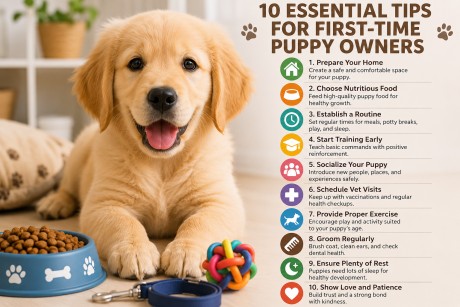
Bringing a puppy home can quickly become one of the most rewarding experiences for a pet owner. Puppies are playful, curious, affectionate, and full of energy, but they also need guidance and dependable care. During their early months, the habits and routines they develop can influence their behavior and well-being as they grow.
If you are preparing to welcome your first puppy, understanding the basics of responsible ownership can make the transition much easier. Here are ten important tips every first-time puppy owner should know.
Before bringing your puppy home, make the environment safe and comfortable. Puppies naturally explore their surroundings with their mouths, so small objects, electrical cables, cleaning products, medicines, and other potentially dangerous items should be kept out of reach.
Create a dedicated area where your puppy can sleep and relax. A comfortable bed, water bowl, food bowl, appropriate toys, and puppy-safe bedding can help the new arrival settle into the household.
It is also useful to establish boundaries from the beginning. Decide which areas of the home are accessible to the puppy and make sure everyone in the household follows the same rules.
Nutrition plays an important role in a puppy’s growth and development. Puppies have different nutritional requirements from adult dogs because their bodies are developing rapidly.
Choose a complete puppy food appropriate for your puppy’s size, age, and breed characteristics. Follow the feeding recommendations provided by the manufacturer and your veterinarian rather than simply filling the bowl whenever it becomes empty.
Fresh, clean drinking water should always be available. Avoid giving puppies foods that may be harmful to dogs, and do not make major dietary changes suddenly because abrupt changes can cause digestive problems.
Puppies generally benefit from predictable daily routines. Regular times for meals, bathroom breaks, play, training, rest, and bedtime can help them understand what to expect.
A consistent routine can also make house training easier. Take the puppy outside or to its designated bathroom area regularly, particularly after waking, eating, drinking, and playing.
Accidents are normal during the early stages. Instead of punishing a puppy, calmly clean the area and continue reinforcing the desired behavior.
Training should start as soon as your puppy becomes comfortable in its new home. You do not need complicated exercises at first. Begin with simple commands such as sit, stay, come, and leave it.
Positive reinforcement is an effective way to encourage good behavior. When your puppy responds correctly, reward it with praise, affection, or an appropriate treat.
Keep training sessions short and enjoyable. Puppies have limited attention spans, so several brief sessions can be more productive than one long session.
Early training also helps establish communication between you and your dog and can strengthen the relationship between owner and pet.
Socialization helps puppies become familiar with different people, environments, sounds, and experiences. A well-socialized puppy may be better prepared to handle new situations as it grows.
Introduce new experiences gradually and positively. For example, a puppy can become familiar with household sounds, different surfaces, car rides, friendly people, and appropriate animals.
However, owners should take veterinary advice about exposure to unfamiliar dogs and public areas while the puppy is completing its vaccination schedule. Safe socialization is about creating positive experiences without unnecessarily exposing a young puppy to health risks.
Regular veterinary care is an important part of responsible puppy ownership. A veterinarian can assess your puppy’s development and recommend an appropriate vaccination, parasite-control, nutrition, and preventive-care schedule.
Your veterinarian can also answer questions about your puppy’s weight, teeth, diet, exercise, and behavior.
Pay attention to changes in appetite, energy, digestion, breathing, or general behavior. If something seems unusual, contact a veterinary professional rather than attempting to diagnose the problem yourself.
Keeping vaccination and veterinary records organized can also make future appointments easier.
Puppies have plenty of energy, but their bodies are still developing. Exercise should therefore be appropriate for their age, size, breed, and physical development.
Short periods of supervised play can provide both physical activity and mental stimulation. Games involving suitable toys can help puppies explore their environment and interact with their owners.
Avoid forcing a young puppy into strenuous exercise. Ask your veterinarian about appropriate activity levels, particularly for larger breeds or puppies with specific physical requirements.
Mental stimulation is just as valuable as physical activity. Simple training games, food puzzles designed for puppies, and supervised exploration can help keep a young dog engaged.
Grooming is not only about appearance. Regular brushing can help keep a puppy’s coat clean while also helping the puppy become comfortable with handling.
Depending on the breed, grooming requirements can vary considerably. Some dogs need frequent brushing, while others require more specialized coat care.
Puppy owners should also gradually introduce handling of the paws, ears, mouth, and teeth. This can make future grooming and veterinary examinations less stressful.
Ask your veterinarian about an appropriate dental-care routine and suitable products for your puppy. Avoid using human dental products unless a veterinary professional specifically recommends them.
Playful puppies can seem as though they have unlimited energy, but they also need substantial rest. Sleep supports normal growth and helps puppies recover from their active periods.
Provide a quiet, comfortable place where your puppy can sleep without constant interruptions. Young puppies may need frequent naps throughout the day.
If your puppy becomes unusually tired, refuses food, or shows other concerning symptoms, seek veterinary advice. Normal puppy sleepiness should not be confused with signs of illness.
Perhaps the most important part of raising a puppy is developing trust. Your new companion is entering an unfamiliar environment and needs time to understand its new family and surroundings.
Use patience when your puppy makes mistakes. Avoid harsh punishment, shouting, or frightening behavior. Instead, guide the puppy toward the behavior you want and reward positive choices.
Spend quality time together through play, gentle grooming, training, and quiet companionship. These everyday interactions can help your puppy feel secure and strengthen your relationship.
Raising a puppy requires commitment, but the effort is worthwhile. A safe home, nutritious food, preventive veterinary care, appropriate exercise, positive training, socialization, grooming, and plenty of affection can provide a strong foundation for a healthy life.
Every puppy develops at its own pace. Some learn quickly, while others need additional time and repetition. First-time owners should focus on consistency rather than expecting perfection.
Most importantly, responsible pet ownership is a long-term commitment. Your puppy will depend on you for food, safety, healthcare, companionship, and guidance throughout its life.
With patience and responsible care, those challenging puppy days can become the foundation of a wonderful relationship between you and your dog.
Submit guest articles that reach decision-makers, influencers, and professionals. Yarabook offers a trusted platform for quality content, strong backlinks, and SEO-driven visibility. Pay. Publish. Promote.