

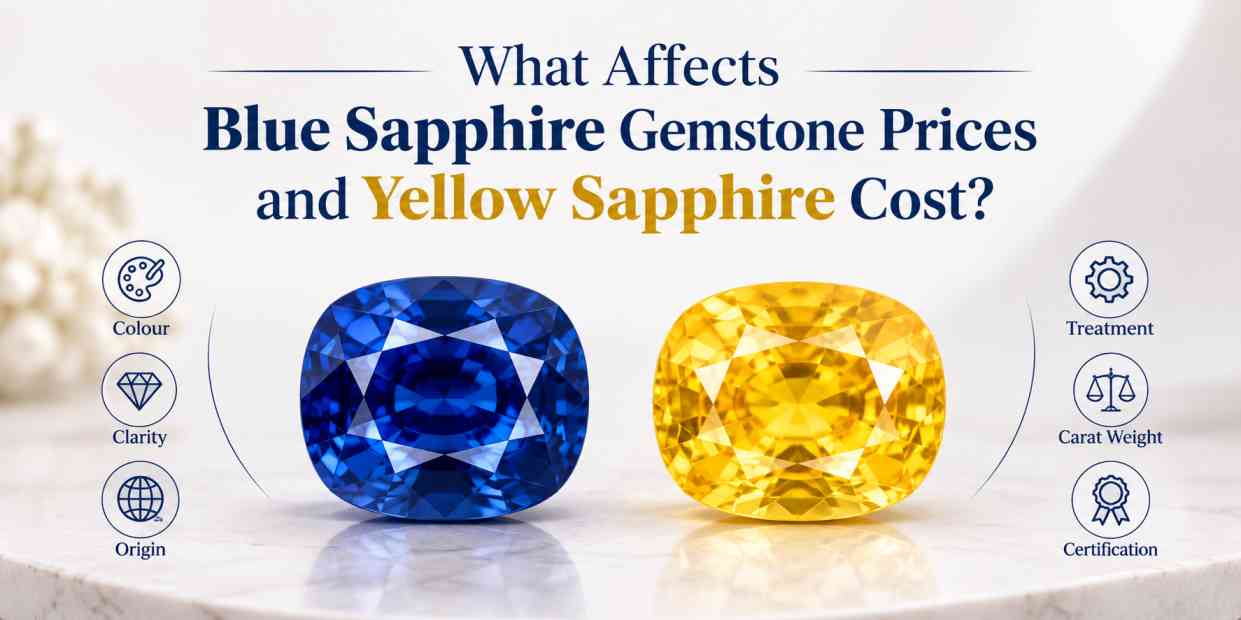
Gemstone prices vary, even when two stones look similar. Colour, clarity, origin, treatment, carat weight and certification all influence value. These factors matter when comparing a blue sapphire gemstone with yellow sapphire, because each variety has distinct quality characteristics and market demand. Understanding them helps you judge value rather than choosing by appearance or price alone.
This guide explains what affects blue sapphire prices and Yellow Sapphire Cost, and how to compare options confidently.
Blue sapphire is a variety of corundum. Its price is not fixed by weight alone. Two sapphires of equal carat weight may have very different values because their colour, clarity, treatment and appearance differ.
Colour is one of the most important value factors. Buyers often prefer a rich, vivid blue that looks balanced in different lighting. A stone that is too dark may appear inky, while a pale stone may look less lively. Uneven colour zoning can also affect appeal.
No single shade guarantees the highest price. Examine the sapphire in natural and indoor light, not edited photographs.
Natural sapphires commonly contain inclusions. Tiny ones do not automatically mean poor quality, but large, dark or surface-reaching inclusions can reduce transparency and appeal. A loupe inspection and independent report can help assess the stone. Do not assume a flawless-looking gem is untreated without documentation.
Sapphires come from several locations, and certain origins may attract premiums because of reputation or rarity. However, origin alone does not establish quality. Look for a reputable laboratory report if origin matters to your purchase.
Heat treatment is commonly used to improve sapphire colour or clarity. It is accepted in the trade, but a treated stone may cost less than a comparable unheated sapphire. Fracture filling or diffusion can affect value more significantly. Ask about treatments in writing and compare like with like.
Larger fine-quality sapphires are less common, so price per carat can rise with weight. Yet a heavier stone is not automatically better. A deep cut may add weight while making the gem look smaller face-up. Check measurements, proportions and whether the shape suits your setting.
Yellow sapphire, also called Pukhraj, is another corundum variety. Its cost depends on many of the same factors, but buyers assess its yellow hue, brightness and colour uniformity.
A desirable yellow sapphire generally has an attractive, lively tone. Buyers may prefer lemon, golden or deeper yellow shades. Very pale colour, brownish tones or uneven patches can reduce appeal. Strong saturation is useful only when the stone remains bright rather than appearing too dark.
Clarity matters too. A transparent stone with unobtrusive inclusions may be more appealing than a cloudy gem. Compare stones under consistent lighting.
Yellow sapphires vary by source and quality. Origin should be supported by evidence, and heat treatment disclosed.
Carat weight also affects cost. Larger stones with attractive colour and clarity are harder to find. Compare face-up size, cut and overall beauty instead of choosing solely by weight.
There is no universal rule that blue sapphire always costs more than yellow sapphire, or vice versa. Fine blue stones can command high prices, especially when colour, origin and treatment status are desirable. Yellow sapphires also range from accessible commercial qualities to rare, fine gems.
For a fair comparison, match stones by carat weight, colour, clarity, treatment and certification. Ask for the price per carat and total price. A low price may reflect inclusions, weaker colour, treatment or an unattractive cut; it is not necessarily a bargain.
Set a budget and inspect clear photographs or the stone under neutral lighting. Ask for weight, dimensions, treatment disclosure, return policy and any laboratory report.
A certificate can help identify a gem and disclose treatments, but it does not guarantee a fair price. Check that it belongs to the exact stone being offered.
If you are unsure which stone or specification suits your needs, a free gemstone recommendation online service can help you explore options. Treat recommendations as guidance, not a substitute for checking quality, treatment disclosures and documentation. Choose a seller who answers questions clearly and provides a transparent return policy.
The price of a blue sapphire gemstone and the Yellow Sapphire Cost depend on colour, clarity, origin, treatment, cut, weight and reliable identification. No single factor tells the whole story. Compare stones with similar characteristics, verify important claims and choose a gem that fits your budget.
Colour is often the most influential factor, particularly hue, saturation and consistency. Clarity, treatment, origin, cut and carat weight also affect value, so assess the complete stone.
Prices vary because stones differ in colour, transparency, inclusions, treatment, origin, cut and size. Certification and seller disclosure help buyers understand what they are paying for.
An unheated sapphire of comparable quality may command a premium because it has not received heat enhancement. The difference depends on natural quality, demand and laboratory evidence.
No. Weight measures mass, not beauty or quality. A smaller stone with better colour, clarity and cut may look more attractive and offer better value than a heavier, poorly proportioned gem.
Buy from a transparent seller and request an independent gemological report where appropriate. Visual inspection or home tests cannot reliably establish natural origin, treatment status or value.
Submit guest articles that reach decision-makers, influencers, and professionals. Yarabook offers a trusted platform for quality content, strong backlinks, and SEO-driven visibility. Pay. Publish. Promote.