

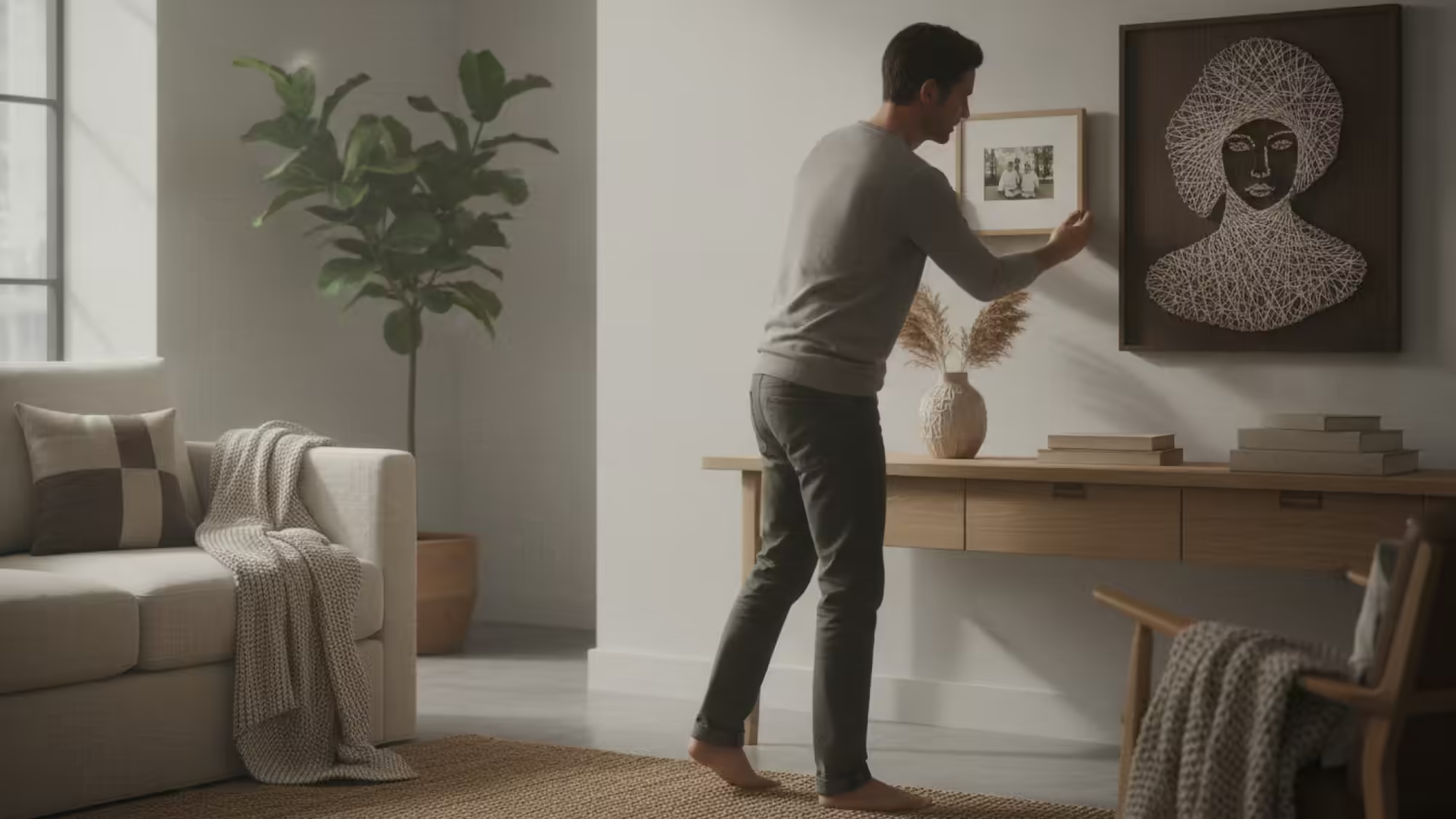
Your camera roll may hold some of your most meaningful moments, yet those images are easy to overlook once they disappear into cloud storage. Turning one carefully chosen photograph into a physical object gives the memory a place in daily life and adds more personality to your home than generic décor.
A carefully chosen photograph can become a personal focal point rather than remaining in digital storage.
The right format depends on the photograph and the story behind it. A formal portrait might suit a traditional frame, while holiday snapshots could become a gallery wall, photo book, or handmade project.
Not every attractive photograph works equally well as personalized artwork. Before choosing a format, assess whether the subject will remain clear when the image is cropped, simplified, printed, or recreated by hand.
Use the original image file when possible. Zoom in to inspect faces, edges, and deep shadows before deciding how large or detailed the finished piece should be.
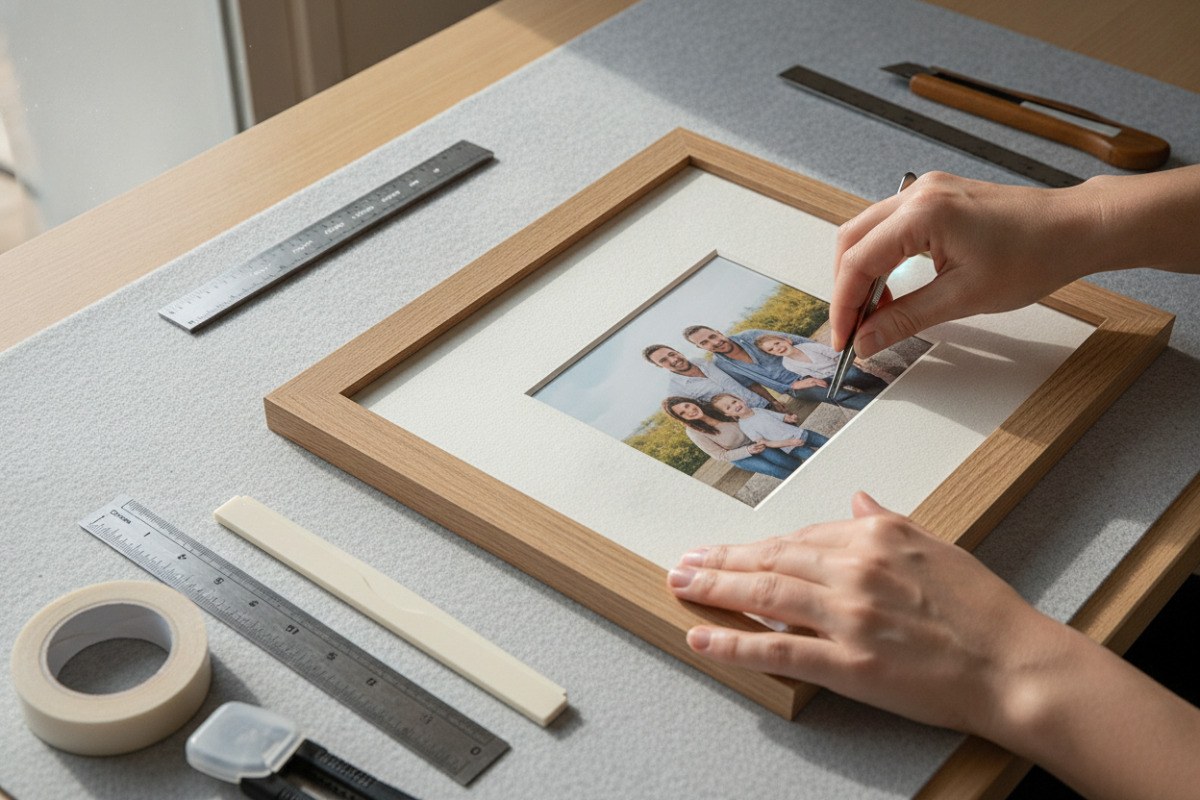
A considered frame and mat can give a meaningful photograph greater visual presence.
Professional framing is a straightforward way to elevate a photograph without changing its character. A mat can give a busy image visual breathing room, while the frame material can connect it to the room. Natural wood often complements outdoor and family photographs, whereas a slim dark frame can make a high-contrast portrait feel more graphic.
Choose the print size according to the viewing distance. A small image encourages close inspection on a desk or shelf, while a larger print can become the focal point above a sofa, bed, or console.
A gallery wall works well when several photographs share a theme. You might combine different generations of family portraits, document one memorable trip, or show the same place across several seasons. The images do not need to match, but a repeated frame finish, mat color, or editing style will help them feel connected.
Plan the arrangement on the floor before placing anything on the wall. Start with the strongest image, build outward, and keep the gaps between frames reasonably consistent. Mixing portrait and landscape orientations creates variety without sacrificing order.
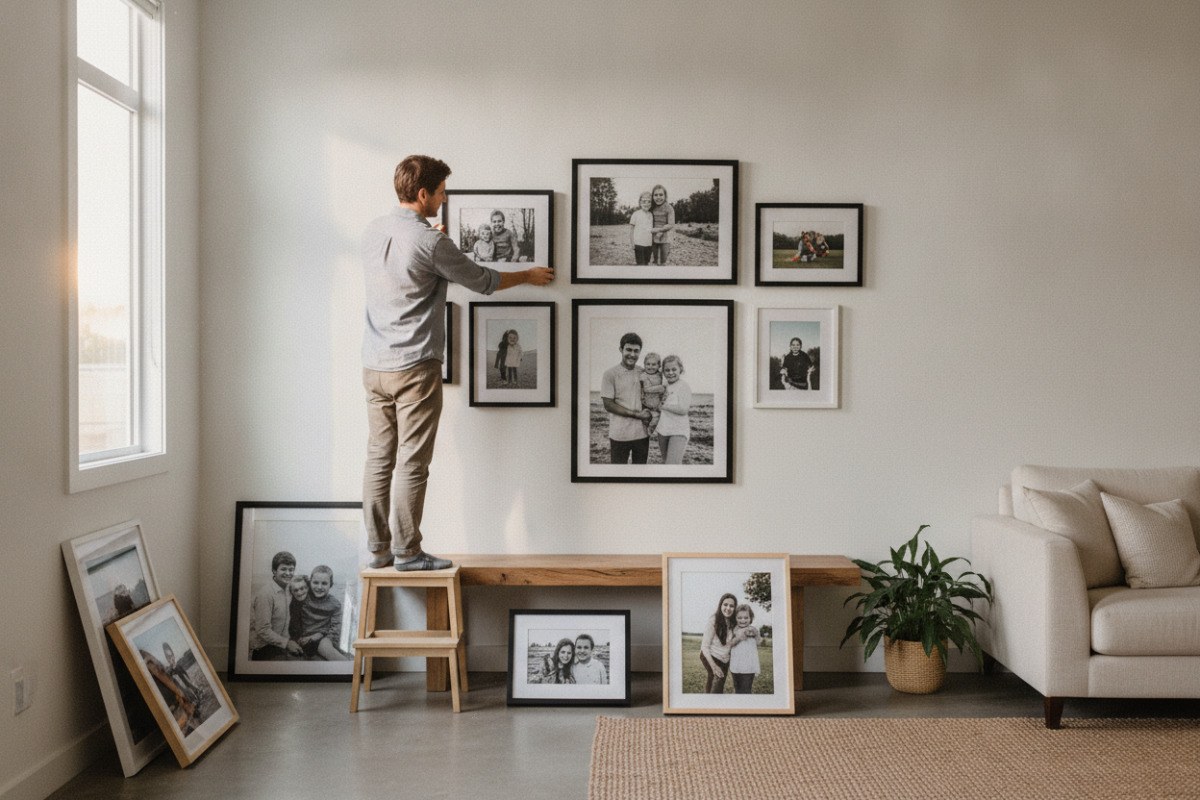
Consistent spacing and a shared visual theme help different photographs feel connected.
String Art is created by stretching thread between arranged nails until overlapping lines gradually form a recognizable image. Strong contrast, a clear silhouette, and an uncluttered background help the subject remain legible when photographic details are translated into lines.
If you want to turn a personal photograph into a hands-on project, you can explore string art through Spatar, where an uploaded image can be previewed and converted into an individual winding guide.
The handmade process gives the finished portrait visible depth and texture. A limited thread palette can emphasize the pattern of the lines, while a simple frame or unadorned board allows the face to remain the focus.
A photo book is useful when the memory depends on sequence rather than a single image. Arrange a journey chronologically, follow a child through different stages, or gather photographs from an annual family tradition. Include establishing images, candid details, and a few strong portraits so that the pages have rhythm.
Avoid filling every available space. One photograph across a full page can carry more emotional weight than several small images competing for attention. Short captions can preserve names, places, and context that may otherwise be forgotten.
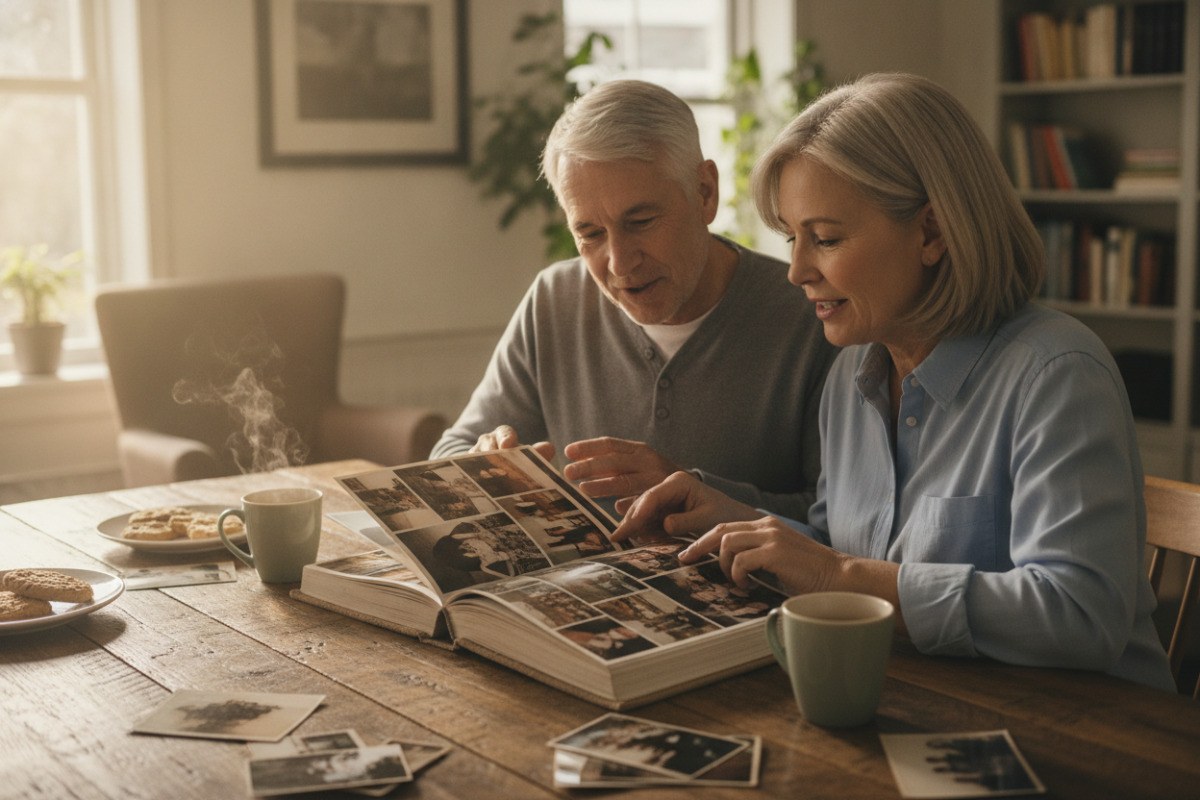
A photo book can preserve the sequence and context behind a shared memory.
A digital illustration or minimalist portrait can remove distractions from a complicated snapshot. Line art emphasizes outlines, a silhouette focuses on shape, and a restrained flat-color portrait can retain distinguishing details without reproducing every element of the original scene.
Decide which features make the person recognizable before simplifying the image. Glasses, hairstyle, posture, or a familiar expression may matter more than minor background details. The finished illustration can then be printed and framed like other artwork.
A collage is a practical choice when no single photograph tells the complete story. Use one dominant image as the visual anchor, then surround it with smaller supporting photographs. For example, a family portrait could be paired with candid images from the same celebration.
A photo mosaic uses many small images to create a larger overall form when viewed from a distance. Whichever approach you choose, limit competing colors and test the layout at its intended size. Tiny faces and crowded edges can make the result difficult to read.
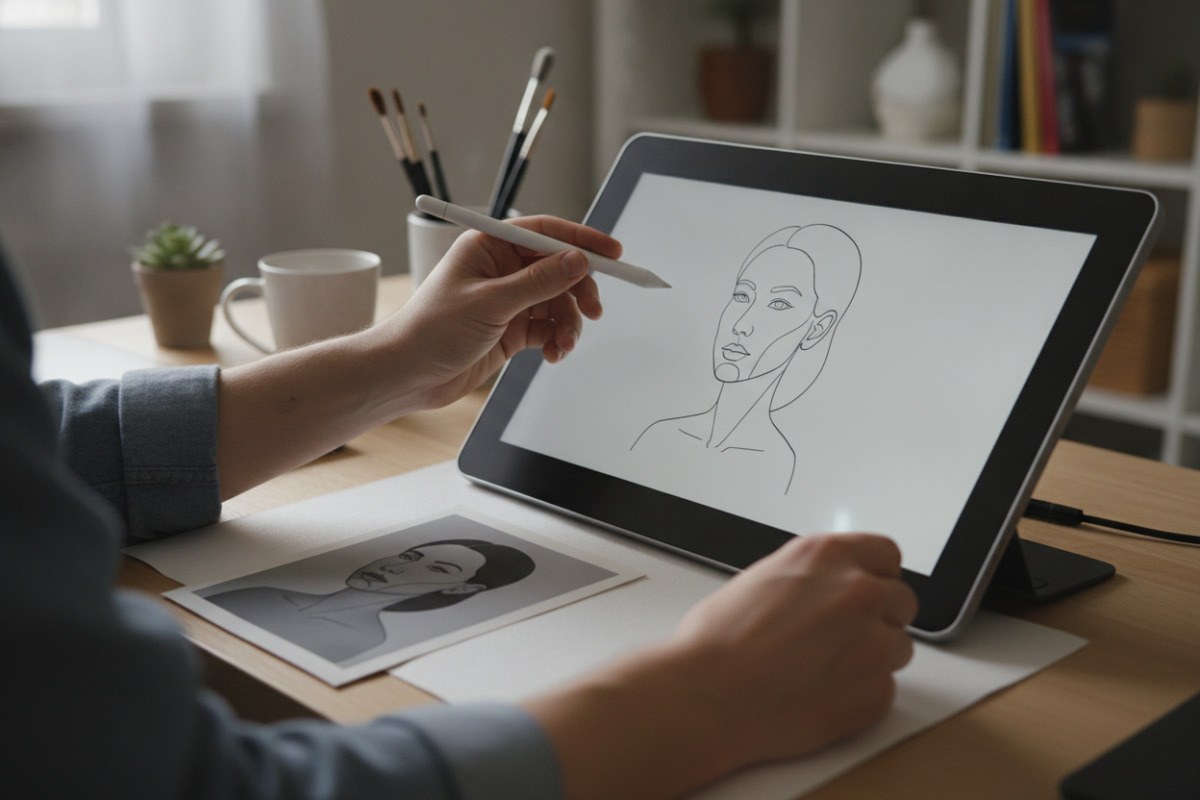
Minimalist illustration can retain recognizable features while removing background distractions.
Photographs can also become functional or decorative keepsakes. Possibilities include a printed ceramic tile, fabric cushion, ornament, keepsake box, or an engraved wood or metal plaque. Engraving reduces an image to a narrower range of light and dark marks, so a clear face and uncomplicated background are especially helpful.
Choose an object that relates naturally to the memory. A travel photograph might suit a small display piece, while an informal family image could work on an item used in a shared living space.
Match the scale and mood of the artwork to its surroundings. A large gallery wall suits an open communal area, while an intimate portrait may feel more appropriate in a hallway, bedroom, or reading corner. Repeating one or two colors from the room can help a personal image sit comfortably beside existing furniture and artwork.
Keep the original digital file and a separate backup even after creating a physical version. Position printed and handmade pieces away from persistent moisture and harsh direct light, and dust textured work carefully so that it remains part of the home for years to come.
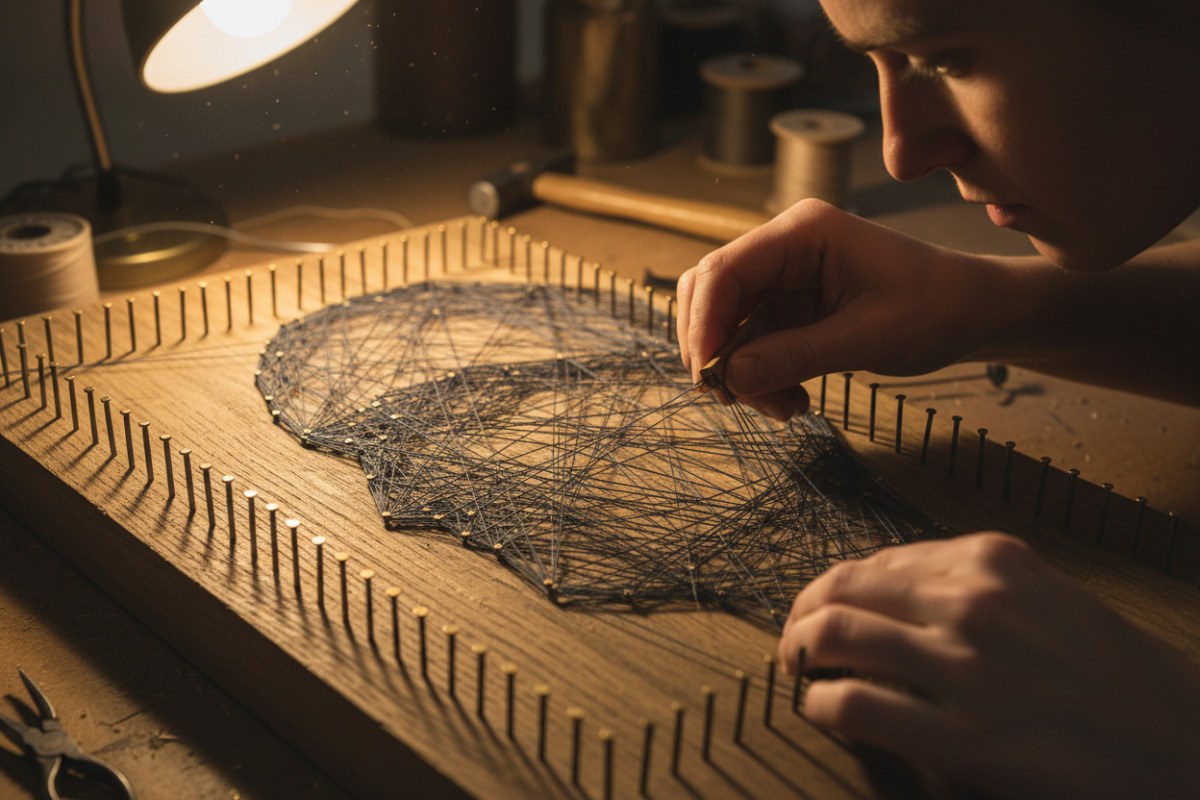
Overlapping thread lines gradually build a textured portrait from a personal image.
You do not need to transform every photograph you take. Select one image that still makes you pause, choose a format suited to its subject, and give it a thoughtful place in your home. Giving an important memory a physical form can make it more visible in everyday life instead of leaving it forgotten among thousands of digital files.
Clearly lit close or medium-distance images with one main subject, recognizable features, and a simple background provide the most flexibility.
Yes, although the available detail matters. A careful, high-quality scan of the original print generally offers more flexibility than a compressed copy or phone screenshot.
No. Different frames can work together when they share a finish, color family, mat style, or consistent spacing.
Choose according to the subject and display area. Portrait orientation suits upright figures and narrow walls, while landscape images fit wider spaces.
Give each arrangement a clear focal point, limit competing colors, and leave enough empty wall space around the finished piece.
Submit guest articles that reach decision-makers, influencers, and professionals. Yarabook offers a trusted platform for quality content, strong backlinks, and SEO-driven visibility. Pay. Publish. Promote.