

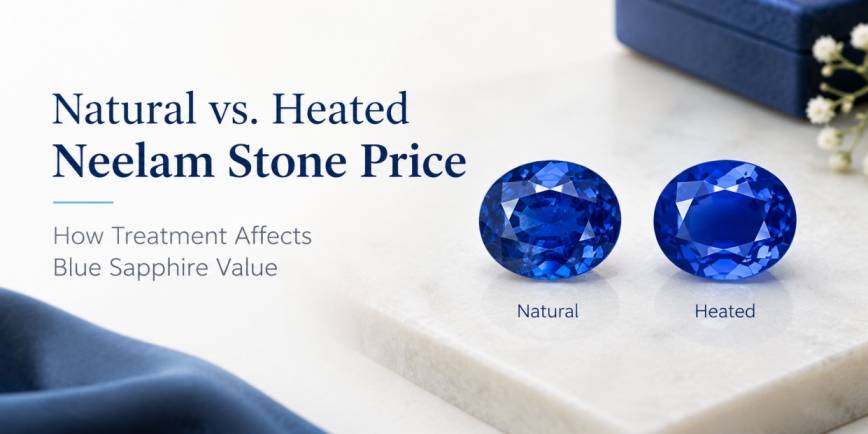
The neelam gem price can vary significantly depending on a gemstone’s colour, clarity, origin, carat weight, and treatment history. Two blue sapphires may look similar at first glance but have very different prices because one has undergone heat treatment while the other remains unheated. Understanding these differences helps buyers make informed decisions when choosing a genuine blue sapphire.
Neelam, also known as blue sapphire, is valued for its rich blue colour, durability, and traditional astrological significance. Before purchasing one, it is important to understand how gemstone treatments influence appearance, market value, certification, and long-term desirability.
A natural blue sapphire forms naturally within the Earth. However, natural gemstones can undergo different treatments after mining to improve their appearance.
An unheated Neelam is a natural sapphire that has not undergone heat treatment to improve its colour or clarity. Such stones may command higher prices when they possess attractive colour, good transparency, and strong overall quality.
However, being unheated does not automatically make a sapphire expensive. A pale, heavily included unheated stone may cost less than a beautiful, heat-treated sapphire.
Heat treatment involves exposing a gemstone to controlled high temperatures to improve certain visual characteristics. This established industry practice can enhance colour or reduce the visibility of some inclusions.
A heat-treated blue sapphire stone can still be a genuine natural gemstone. Heat treatment does not mean that the stone is synthetic, although it can influence its market value.
The most important difference between heated and unheated sapphires is often their market value, provided other quality factors are comparable.
Unheated sapphires can attract premium prices when their colour, clarity, size, and origin are desirable. Fine-quality stones from sought-after sources may be particularly valuable because attractive material without evidence of heat treatment can be relatively scarce.
Buyers should nevertheless evaluate the complete gemstone rather than paying a premium simply because a seller describes it as unheated. Reliable laboratory documentation is important when the treatment status significantly affects the asking price.
Heat-treated sapphires are generally more affordable than comparable unheated stones of similar quality. Treatment can make attractive blue sapphires accessible to buyers working with different budgets.
For many purchasers, a well-cut, heat-treated natural sapphire offers a practical balance between appearance and price. Its suitability depends on individual preferences, the disclosed treatment, and the stone’s overall quality.
Treatment is only one part of gemstone valuation. A large, intensely blue unheated sapphire with excellent transparency may be substantially more valuable than a smaller or less attractive heated stone.
Similarly, origin can influence prices, but a geographic label alone does not establish superior quality. Buyers should compare documented characteristics before deciding whether a price is reasonable.
Understanding these additional factors makes price comparisons more meaningful.
Colour is a major consideration when evaluating sapphires. Rich, attractive blue tones with balanced saturation can increase desirability. Extremely dark stones may appear less lively, while lighter stones can appeal to buyers seeking a softer appearance.
Clarity also matters. Natural inclusions are common, but their size, position, and visibility affect appearance and value. A well-executed cut helps the gemstone display its colour and brilliance effectively.
Larger, high-quality sapphires are generally less common than smaller stones with comparable characteristics. Consequently, the price per carat may increase considerably at higher weights.
Origin can influence market demand, particularly for stones associated with Kashmir, Sri Lanka, or Madagascar. However, origin claims should be supported by appropriate evidence when they are used to justify a premium.
An independent gemological report can help buyers understand whether a sapphire is natural, whether detectable treatments are present, and which other characteristics the laboratory has assessed.
Reports vary in scope, and not every laboratory can determine every geographic origin or treatment conclusively. Always check the issuing laboratory and report details rather than relying solely on a seller’s description.
Start by deciding your budget and comparing stones with similar carat weights, colour, and clarity. Ask whether the sapphire is heated, unheated, or otherwise treated, and request supporting documentation where appropriate.
If appearance and affordability are your main priorities, a disclosed heat-treated natural sapphire may be suitable. If you specifically want an unheated stone, be prepared to compare fewer options and verify the treatment claim carefully.
When you buy gems online, review clear photographs, available videos, return conditions, certification details, and the seller’s disclosure policy. Avoid making decisions based only on dramatic discounts or claims that a particular stone guarantees financial success, health benefits, or astrological results.
Buyers interested in astrological suitability can also seek a free gem recommendation before selecting a stone. Treat such guidance as personal or traditional advice rather than a scientifically established guarantee, and evaluate gemstone quality separately from astrological claims.
No. Unheated sapphires can command a premium when quality is comparable, but colour, clarity, size, origin, and overall appearance also influence value. A poor-quality unheated stone may cost less than a fine heat-treated sapphire.
Request an independent gemological report that addresses treatment status. Visual inspection alone cannot reliably establish whether a sapphire has been heat-treated, so laboratory assessment is preferable for valuable purchases.
No. Heat treatment does not automatically make a natural sapphire fake. It is a recognised gemstone enhancement. However, synthetic sapphires are different from natural sapphires, and sellers should clearly disclose relevant treatments and whether a stone is natural or laboratory-grown.
The neelam gem price depends on several interacting factors, and treatment status is only one of them. Unheated sapphires may command higher prices when their quality and rarity justify a premium, while heat-treated stones can offer attractive alternatives at more accessible prices. Compare quality, request reliable documentation, and choose a sapphire that fits your budget and preferences rather than relying on treatment labels alone.
Submit guest articles that reach decision-makers, influencers, and professionals. Yarabook offers a trusted platform for quality content, strong backlinks, and SEO-driven visibility. Pay. Publish. Promote.