

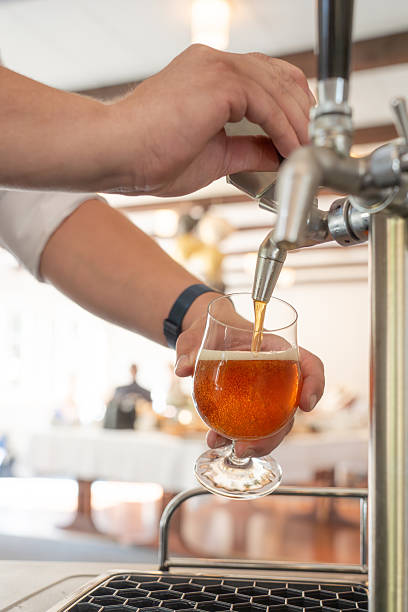
The Beer Dispensers Market is evolving as restaurants, bars, hotels, breweries, entertainment venues, and other commercial establishments look for better ways to serve draft beer efficiently. Modern dispensing equipment can improve serving consistency, reduce operational effort, and create an engaging customer experience. As beverage businesses focus on service quality and operational efficiency, demand for advanced beer dispensing solutions continues to create attractive opportunities for manufacturers, distributors, retailers, and service providers.
The industry is also benefiting from changes in consumer preferences. Customers increasingly appreciate fresh draft beverages, convenient service, attractive dispensing setups, and wider beverage selections. These developments are encouraging businesses to upgrade traditional serving systems and explore equipment that combines functionality, design, temperature management, and ease of maintenance.
Bars and restaurants represent an important opportunity for beer dispenser manufacturers. Establishments serving high volumes of draft beer require reliable systems that can support consistent dispensing throughout operating hours.
Businesses are increasingly interested in dispensing equipment that occupies less space, is easy to clean, and can be integrated into existing beverage counters. Compact systems can be particularly attractive to smaller restaurants and bars where available space is limited.
Manufacturers can capture additional demand by developing different capacities and configurations. Offering solutions for small restaurants, busy pubs, premium bars, and large hospitality facilities allows companies to address a wider customer base.
The continued development of craft brewing and specialty beverage businesses is creating opportunities for specialized dispensing solutions. Breweries and taprooms often need multiple dispensing points to showcase different products and provide customers with a varied beverage experience.
This creates opportunities for manufacturers to develop flexible multi-tap systems, customizable dispensing towers, and equipment designed for different serving environments. Businesses can also benefit from solutions that simplify product changes and improve temperature control.
Customized dispensing systems can become an important competitive advantage for breweries seeking to create a distinctive identity within their serving spaces.
Technology is becoming an important area of opportunity within the Beer Dispensers Market. Smart dispensing equipment can incorporate features designed to improve monitoring, temperature management, maintenance, and operational efficiency.
Digital controls and monitoring capabilities may help businesses manage dispensing conditions more effectively. Connected systems can also provide useful operational information, allowing operators to identify maintenance requirements and monitor equipment performance.
Manufacturers investing in smart technologies can differentiate their products from conventional dispensing equipment. As commercial operators become more comfortable with connected appliances, intelligent beer dispensing systems may gain greater attention.
Energy efficiency is becoming increasingly important for commercial beverage businesses. Beer dispensers operate regularly in restaurants, bars, hotels, and entertainment facilities, making operating costs an important purchasing consideration.
Manufacturers can develop opportunities by offering systems designed to minimize unnecessary energy consumption while maintaining appropriate beverage temperatures. Efficient cooling technologies, improved insulation, and optimized components can make equipment more attractive to cost-conscious operators.
Energy-efficient products can also support businesses that are seeking to improve their overall sustainability practices without compromising beverage service quality.
Hotels, resorts, clubs, event venues, and catering businesses provide another significant opportunity. These establishments often serve beverages during conferences, celebrations, sporting events, social gatherings, and other functions.
Portable and flexible dispensing systems can be particularly useful for temporary events. Equipment that is simple to transport, install, operate, and clean can help hospitality businesses manage beverage service across different locations.
Manufacturers can target this segment by developing equipment with flexible configurations and durable construction. Rental companies may also create additional demand by purchasing dispensing systems for event-based applications.
Customization can help manufacturers serve customers with specific operational and branding requirements. Businesses may want dispensing systems that match their interior design, counter configuration, serving capacity, or beverage portfolio.
Customized towers, tap configurations, finishes, sizes, and installation options can create additional revenue opportunities. Manufacturers that provide design consultation and installation services can potentially build stronger relationships with commercial customers.
Customization can also support premium positioning, allowing suppliers to serve establishments that prioritize visual presentation alongside technical performance.
Business opportunities extend beyond equipment manufacturing. Distributors, wholesalers, installers, maintenance providers, and replacement-part suppliers can participate in the expanding ecosystem.
Beer dispensing systems require proper installation, cleaning, servicing, and component replacement to maintain reliable performance. This creates recurring opportunities for businesses that provide technical support and maintenance services.
Companies can strengthen customer relationships by offering service contracts, replacement components, cleaning solutions, installation assistance, and equipment upgrades.
Online sales channels are creating another route for reaching customers. Smaller establishments and individual buyers can compare equipment specifications, capacities, features, and prices online before making purchasing decisions.
Manufacturers and distributors can use digital platforms to showcase product ranges and provide detailed information about installation, maintenance, and compatibility. Direct-to-customer sales can also help businesses reach niche markets that may not be served effectively through traditional distribution networks.
A strong online presence combined with responsive customer support can become an important growth strategy.
Developing hospitality sectors can provide new opportunities for Beer Dispensers Market participants. As restaurants, hotels, entertainment venues, and modern beverage establishments expand in emerging economies, demand for commercial beverage equipment can increase.
Local distributors and manufacturers can benefit by understanding regional customer requirements and offering products suited to local operating conditions. Affordable models, efficient servicing, and readily available replacement components can help businesses establish stronger market positions.
Hygiene is a critical consideration for beverage dispensing equipment. Businesses need systems that can be cleaned regularly and maintained without excessive downtime.
This creates opportunities for manufacturers to improve product designs with accessible components, simplified cleaning procedures, and materials suitable for frequent commercial use. Equipment that reduces maintenance complexity can appeal strongly to busy foodservice operators.
Hygiene-focused innovation can therefore become an important part of product development and marketing strategies.
The Beer Dispensers Market is expected to offer diverse opportunities as beverage businesses continue to prioritize service efficiency, customer experience, equipment reliability, and operating costs. Growth is likely to involve both traditional dispensing systems and technology-enabled solutions.
The strongest opportunities may emerge for companies that combine efficient product design with customization, smart features, energy-conscious operation, dependable after-sales support, and flexible distribution.
Overall, Beer Dispensers Market Business Opportunities extend across manufacturing, hospitality, retail, technology, installation, maintenance, and distribution. Companies that understand the changing needs of beverage-serving businesses can develop differentiated solutions and establish sustainable positions in this evolving industry.
Submit guest articles that reach decision-makers, influencers, and professionals. Yarabook offers a trusted platform for quality content, strong backlinks, and SEO-driven visibility. Pay. Publish. Promote.