

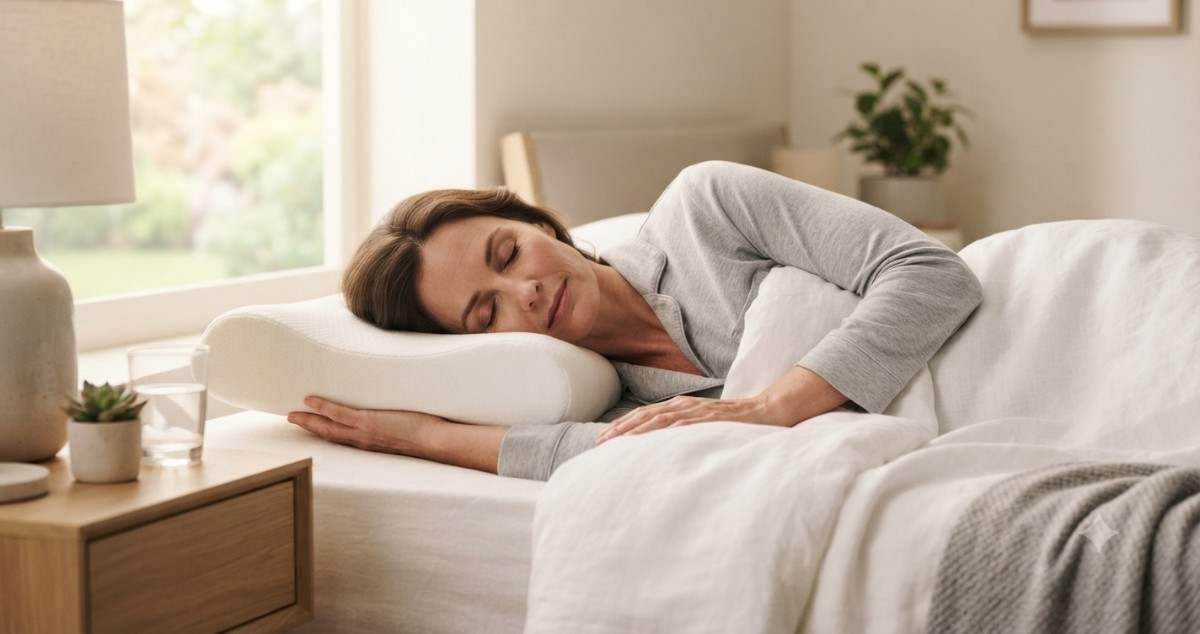
Waking up with a tight neck, stiff shoulders, or a dull headache can make the beginning of the day uncomfortable. While there are several possible reasons for morning headaches, sleeping posture and pillow support are worth examining, especially when discomfort seems to occur repeatedly after a night of sleep.
A pillow does more than provide a soft place to rest your head. It influences how your head, neck, and shoulders are positioned while you sleep. If the pillow does not suit your body or preferred sleeping position, you may spend hours in an uncomfortable posture. Understanding this relationship can help you make better decisions about your sleep environment.
Tension-type headaches are commonly described as a dull, pressing, or tightening sensation around the forehead, temples, or back of the head. Some people also experience tenderness around the neck and shoulder muscles.
Muscle tension and poor sleep comfort may contribute to discomfort for some individuals, but headaches can have many causes. Stress, fatigue, dehydration, irregular sleep schedules, and other health factors may also play a role.
Your sleeping environment is one area you can evaluate. If you regularly wake up with neck stiffness or shoulder discomfort, consider whether your pillow provides suitable support throughout the night.
A pillow cannot diagnose or treat a headache condition. However, choosing bedding that supports a comfortable sleeping posture may help reduce one potential source of nighttime discomfort.
Pillow height, also called loft, determines how far your head is elevated from the mattress. The appropriate height depends on your sleeping position, shoulder width, body shape, and mattress firmness.
A pillow that is too high may push the head upward, while one that is too low may allow it to tilt downward. Either situation can feel uncomfortable, particularly when maintained for several hours.
For side sleepers, the pillow generally needs to fill the space between the mattress and the side of the head. Back sleepers often prefer a lower profile that supports the natural curve of the neck without pushing the chin toward the chest.
There is no single pillow height that works for everyone. Instead of choosing based only on thickness, pay attention to how your head and neck feel when you lie in your normal sleeping position.
Side sleeping creates a specific support requirement because the shoulder separates the head from the mattress. The distance between these two points varies from person to person.
If a pillow compresses too much, the head may sink closer to the mattress. If it is excessively thick, the head may be pushed upward. Finding a comfortable balance can help side sleepers maintain a more natural position.
Pillow shape also matters. Some designs include contoured edges or additional space around the shoulder area, while others use adjustable filling to accommodate different preferences.
People exploring specialized support for side sleeping can consider a cutton side sleeper pillow. When comparing options, look at the pillow’s shape, material, adjustability, and whether its dimensions suit your body and mattress.
The most useful test is how comfortably your head and neck rest on the pillow without requiring frequent repositioning.
An unsuitable pillow may contribute to an uncomfortable sleeping posture. For example, a pillow that loses its shape during the night may provide inconsistent support. Similarly, a pillow that feels comfortable initially may become uncomfortable after several hours.
Some signs that your current pillow may not be suitable include:
Frequently waking up to reposition your head.
Feeling that your neck is tilted when lying down.
Experiencing shoulder pressure while sleeping on your side.
Noticing that your pillow becomes flat or uneven during the night.
Feeling more comfortable when using a different pillow.
These signs do not establish the cause of a headache, but they can help identify whether your bedding deserves attention.
If headaches are frequent, severe, changing in pattern, or accompanied by symptoms such as weakness, vision changes, confusion, or fever, seek medical advice promptly. A sudden, extremely severe headache requires emergency assessment.
Temperature is another factor that can influence sleep comfort. Some people feel uncomfortable when heat builds up around their head and neck, especially during warmer seasons or in bedrooms with limited airflow.
Excessive warmth may lead to sweating, repeated movement, and interruptions to sleep. Although cooling materials cannot guarantee better sleep or prevent headaches, they may improve comfort for people who tend to sleep hot.
A cooling pillow may be an option worth exploring if temperature is one of your main concerns. When comparing cooling pillows, consider the cover fabric, filling, breathability, and how the pillow feels after several hours of use.
You can also make simple changes to your sleeping environment. Use breathable pillowcases, maintain a comfortable room temperature, and choose bedding appropriate for the season.
One challenge with traditional pillows is that their height and firmness may not suit every sleeper. A pillow that feels too full may create unwanted elevation, while a pillow with insufficient filling may not provide the desired support.
Adjustable pillows offer another approach. Depending on their design, sleepers can add or remove filling to change the pillow’s loft and feel.
This flexibility can be useful when experimenting with different sleeping positions or adapting to a new mattress. It also allows individuals to make gradual adjustments instead of immediately replacing the entire pillow.
For those interested in modifying pillow volume, latex additional fill is one option to investigate. Before adding any filling, check that it is compatible with the pillow’s construction and follow the manufacturer’s instructions.
The objective should be comfortable support rather than making the pillow as firm or as high as possible.
Morning headaches and neck discomfort can sometimes occur alongside broader sleep difficulties. However, it is important not to assume that every sleep problem comes from the pillow.
Difficulty falling asleep, repeated waking, snoring, irregular sleep schedules, stress, and certain health conditions can all affect sleep quality. A pillow adjustment may improve physical comfort, but it will not address every possible underlying cause.
If you regularly experience sleep problems, consider tracking your sleep habits for a couple of weeks. Note when you go to bed, how often you wake up, your preferred sleeping position, and whether you notice discomfort in the morning.
This information may help you recognize patterns and provide useful details when discussing persistent symptoms with a healthcare professional.
Along with selecting a suitable pillow, a few practical habits can help create a more comfortable sleep environment.
Maintain a consistent sleep schedule: Going to bed and waking up at similar times can support a more regular routine.
Review your sleeping position: Notice whether your head feels tilted or your shoulders experience pressure when you lie down.
Choose comfortable bedding: Breathable pillow covers and sheets can help manage heat and moisture.
Pay attention to stress: Relaxing activities before bedtime may help you transition into sleep more comfortably.
Replace worn-out pillows: Flattened or uneven pillows may no longer provide the level of support you prefer.
Avoid relying on one solution: Persistent headaches or sleep disturbances deserve proper evaluation rather than repeated changes to bedding alone.
Tension headaches and morning neck discomfort can have several possible causes, and pillow choice is only one factor to consider. However, the relationship between sleeping posture, pillow height, and physical comfort makes your pillow a useful starting point when reviewing your nighttime routine.
Side sleepers may need additional loft, people who sleep hot may prefer cooling materials, and adjustable filling can help personalize pillow height. The best choice depends on your body, sleeping position, mattress, and comfort preferences.
Rather than assuming that a particular pillow will eliminate headaches, focus on finding a sleep surface that supports a comfortable and natural resting position. If headaches continue or become more frequent, consult a healthcare professional to identify the underlying cause and determine the appropriate next steps.
Submit guest articles that reach decision-makers, influencers, and professionals. Yarabook offers a trusted platform for quality content, strong backlinks, and SEO-driven visibility. Pay. Publish. Promote.