

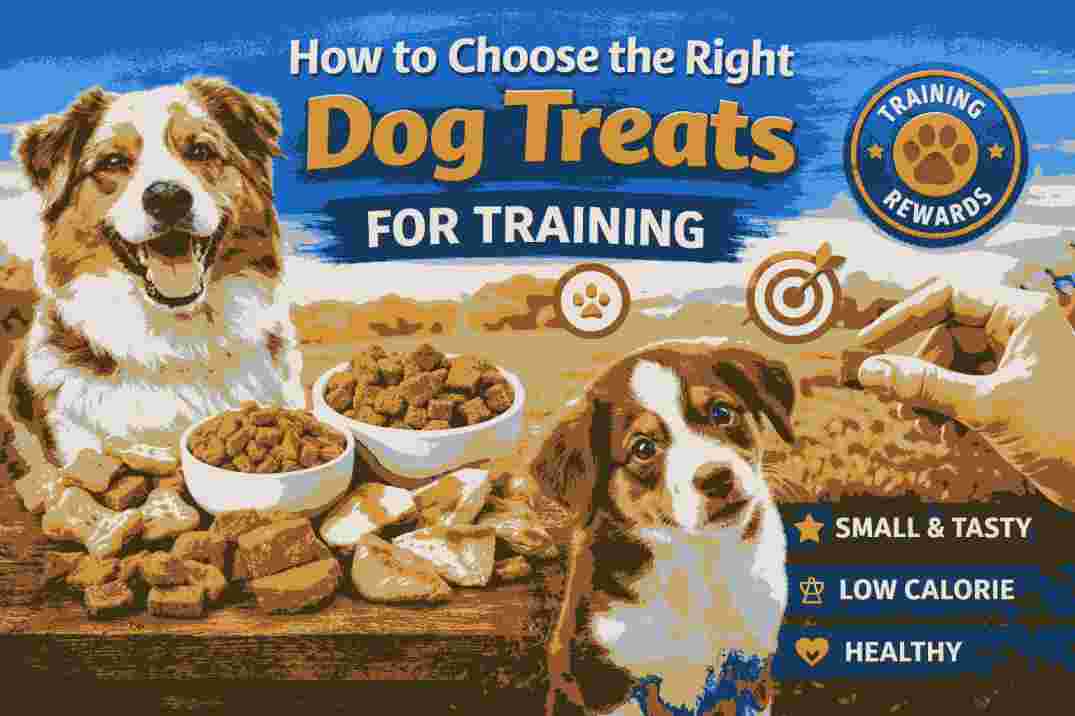
Training your dog is an essential part of building a happy and well-behaved companion. Whether you are teaching basic commands, correcting unwanted behaviour, or reinforcing good habits, dog treats are one of the most effective tools you can use.
However, not all treats are created equal. The right treats can speed up learning and improve focus, while the wrong ones can lead to distractions, weight gain, or poor results. In this guide, we will explore how to choose the right dog treats for training and rewards, with practical tips tailored for Australian dog owners.
Dogs learn best through positive reinforcement, which means rewarding good behaviour to encourage it to happen again. Treats are powerful because they provide instant motivation and make training enjoyable for your dog.
Using treats effectively can:
The key is to choose treats that are both appealing and suitable for frequent use.
Not every treat works well during training. The best training treats share a few important qualities:
Training involves frequent rewards, so treats should be small enough for your dog to eat quickly without interrupting the session.
Soft treats are ideal because they can be consumed quickly, allowing your dog to stay focused on the next command.
Dogs respond better to treats with strong flavours and aromas, such as chicken, beef, or liver.
Since treats are given often during training, choosing low-calorie options helps prevent weight gain.
Look for treats made from natural ingredients without artificial colours, flavours, or preservatives.
Understanding the different types of treats can help you make better decisions:
These are specifically designed for training. They are small, moist, and easy to chew.
Best for: Daily training sessions
Why they work: Quick to eat and highly motivating
These treats are extra tasty and are used for more challenging tasks or distractions.
Examples: Freeze-dried liver, cooked chicken
Best for: Advanced training or recall training
Natural treats contain fewer ingredients and are often healthier.
Best for: Dogs with sensitivities
Why they work: Gentle on digestion
These are better suited for occasional rewards rather than active training.
Best for: After training sessions
Why they work: Provide satisfaction but take longer to eat
Choosing the right treat depends on your dog’s individual needs. Here are the most important factors to consider:
Smaller dogs need smaller treats, while puppies require softer options that are easy on their teeth.
Use regular treats for simple commands and high-value treats for difficult tasks or distractions.
Always check the label. Avoid treats with fillers, artificial additives, and excessive sugar.
If your dog has allergies, choose grain-free or limited-ingredient treats.
Training sessions can involve many rewards, so it is important to keep calories in check.
Australian pet owners have access to a wide range of high-quality treats. Some of the best options include:
These options are popular due to their balance of taste, nutrition, and effectiveness.
Even the best treats will not deliver results unless used properly. Here are some proven training tips:
Always give the treat right after the desired behaviour. This helps your dog make the connection.
Break treats into smaller pieces to avoid overfeeding and extend training sessions.
Reward the same behaviour every time to reinforce learning.
Mix regular and high-value treats to keep your dog interested and motivated.
As your dog learns commands, slowly reduce treat use and replace it with praise or toys.
Avoid these common errors when choosing and using dog treats:
Treats should make up no more than 10 percent of your dog’s daily calorie intake. Maintaining balance is essential for your dog’s long-term health.
Dog owners in Australia are becoming more conscious of what they feed their pets. Some key trends include:
These trends reflect a shift toward healthier and more responsible pet care.
Choosing the right dog treats for training and rewards can make a significant difference in your dog’s behaviour and overall well-being. The best treats are small, soft, nutritious, and highly appealing, helping your dog stay focused and motivated.
By selecting high-quality treats and using them effectively, you can create a positive training experience that strengthens your bond and leads to long-term success.
Soft, small, and low-calorie treats such as chicken or liver treats are ideal for training.
Yes, kibble can work for basic training, but high-value treats are more effective for difficult tasks.
Treats should be given frequently at the beginning and gradually reduced as your dog learns.
Natural treats are often healthier because they contain fewer additives and higher-quality ingredients.
Avoid artificial colours, flavours, preservatives, and high sugar content.
Submit guest articles that reach decision-makers, influencers, and professionals. Yarabook offers a trusted platform for quality content, strong backlinks, and SEO-driven visibility. Pay. Publish. Promote.