

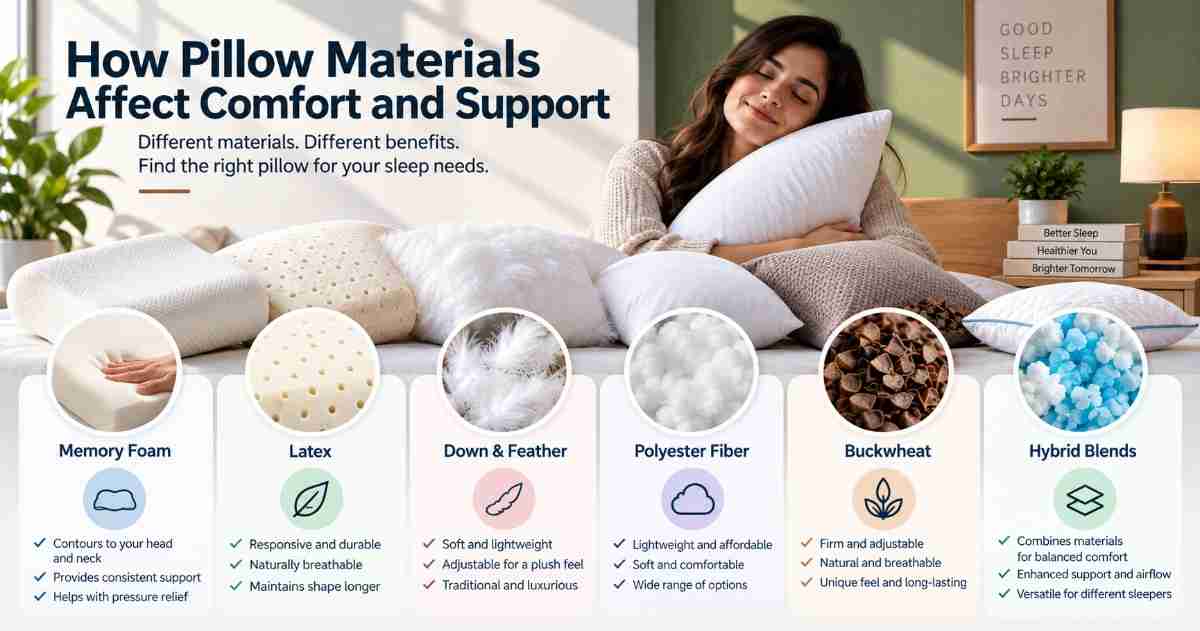
When choosing a pillow, many shoppers focus on its shape, price, or advertised firmness. However, the material inside the pillow can have an equally important influence on how it feels and performs over time.
Different materials respond to pressure in different ways. Some compress quickly, some retain their shape, and others offer a more responsive or flexible feel. Material selection can affect support, airflow, maintenance, durability, and overall comfort.
Understanding these differences can help shoppers make a more informed decision instead of choosing a pillow based only on its appearance or marketing description.
Memory foam is widely used in pillows designed to provide structured support. It responds to body heat and pressure, allowing the material to conform to the shape of the head and neck.
One of the main characteristics of memory foam is its ability to maintain a consistent form. This can be useful for people who prefer a pillow that does not flatten immediately during use.
However, memory foam pillows can vary significantly. Some have a solid foam construction, while others use shredded foam that may offer a more adjustable feel. Density, ventilation, and cover material can also influence the experience.
Some memory foam products may retain heat, although certain designs include ventilation channels, breathable covers, or other features intended to improve airflow.
Latex pillows are known for their responsive feel and ability to recover their shape after pressure is removed. Compared with some slower-response foams, latex may feel more springy and less conforming.
Natural and synthetic latex products can have different characteristics, so shoppers should review the product description carefully. Latex may appeal to people who prefer a supportive surface that does not feel excessively compressed.
Latex can also be durable when properly maintained. However, its firmness, weight, and feel may not suit everyone. The best choice depends on personal preferences and the level of cushioning a person expects.
Down and feather pillows have been used for generations and are often associated with a soft, traditional sleeping experience. Down generally provides a lightweight, fluffy feel, while feather fillings may offer more structure.
These pillows can often be fluffed or reshaped, which may appeal to people who like to adjust their pillow manually. However, they may require more frequent maintenance to maintain an even shape.
The support level can also change as the filling shifts during the night. People who need a more structured pillow may prefer a design with a denser internal construction or a combination of materials.
When considering down or feather products, shoppers should also review the filling details, cover construction, cleaning instructions, and any relevant sourcing information.
Synthetic fiber-filled pillows are available in many shapes, sizes, and firmness levels. They are often lightweight and may be more affordable than some specialty materials.
Fiber fillings can provide a soft and flexible feel, but the level of support and shape retention depends on the quality and construction of the product. Some fiber pillows may compress over time or require regular fluffing.
These pillows can be a practical choice for people who prefer a traditional feel or want an option that is easy to replace. Before buying, check whether the pillow is machine washable, whether it can be dried safely, and how the filling is distributed.
Some pillows use specialty fillings such as buckwheat hulls, millet, or other natural materials. These fillings may provide a distinct feel and can sometimes be adjusted by adding or removing material.
Buckwheat pillows, for example, tend to have a firmer, more structured feel and may produce sound when the filling shifts. They can appeal to people who prefer a highly adjustable pillow, but they may not be suitable for someone looking for a soft or quiet sleeping surface.
Specialty materials should be evaluated based on their texture, weight, noise level, maintenance needs, and personal comfort preferences.
The internal material is only one part of a pillow’s design. Shape, thickness, cover fabric, stitching, and construction can change how the material performs.
A solid foam pillow may feel different from a shredded foam pillow, even when both use memory foam. Similarly, a fiber-filled pillow with a supportive gusset may perform differently from a simple, flat fiber cushion.
For side sleepers, material selection should be considered alongside pillow height and shape. People researching the best pillow for side sleepers with neck pain should look at the overall design, support characteristics, and personal fit rather than assuming that one material works for everyone.
A pillow may support comfort, but it should not be presented as a treatment or cure for neck pain. Persistent or severe discomfort should be discussed with a qualified healthcare professional.
A pillow’s material can influence how it should be maintained. Some pillows have removable, washable covers, while others require spot cleaning or specialized care.
Before purchasing, review the care instructions carefully. Check whether the pillow can be washed, whether it needs to be aired out, and whether it should be protected with a pillow protector.
Durability also depends on usage, cleaning, humidity, and the quality of construction. Even a high-quality pillow may eventually need replacement if it loses its shape, develops visible wear, or no longer feels comfortable.
When comparing pillow materials, consider the following questions:
Answering these questions can help you compare products more objectively and avoid selecting a pillow based only on a promotional claim.
Pillow materials influence more than softness. They can affect shape retention, responsiveness, airflow, maintenance, durability, and the way a pillow supports the head and neck.
Memory foam, latex, down, feather, synthetic fiber, and specialty fillings each offer different characteristics. The right choice depends on personal preferences, sleeping position, budget, and the type of comfort a person expects.
By understanding the material inside a pillow and evaluating the complete design, shoppers can make a more informed decision and choose a product that better suits their individual needs.
Submit guest articles that reach decision-makers, influencers, and professionals. Yarabook offers a trusted platform for quality content, strong backlinks, and SEO-driven visibility. Pay. Publish. Promote.