

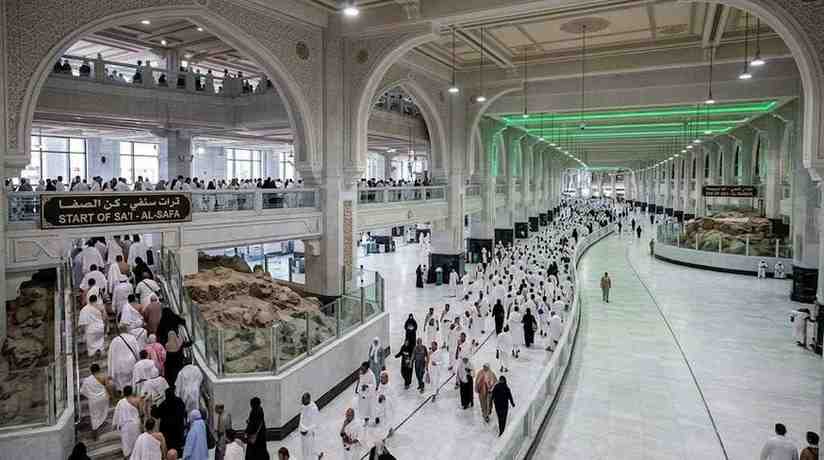
One of the most meaningful rituals of Hajj and Umrah is Sa’i, the journey between the hills of Safa and Marwah in Makkah. Every year, millions of Muslims perform this ritual while following the example of Prophet Muhammad S.A.W and remembering the remarkable story of Hajar and her son Ismail A.S. For Muslims preparing for pilgrimage, including those researching all-inclusive Umrah Packages, understanding the history behind Sa’i can make the journey more meaningful.
But why do pilgrims travel between Safa and Marwah seven times? Why was this particular number established, and what can Muslims learn from the story behind this ritual?
To understand the answer, we need to go back to the time of Prophet Ibrahim A.S and the difficult journey of Hajar.
Safa and Marwah are two small hills located within Masjid al-Haram in Makkah. The walking between them is called Sa’i, and it forms an important part of the pilgrimage rituals of Hajj and Umrah.
Allah mentions both places directly in the Qur’an:
“Indeed, as-Safa and al-Marwah are among the symbols of Allah. So whoever makes Hajj to the House or performs Umrah, there is no blame upon him for walking between them.”
Qur’an 2:158
Today, the two hills are incorporated into the Mas’a, the designated area where pilgrims perform Sa’i. The route has been developed to accommodate the huge number of pilgrims who visit Makkah throughout the year.
Although the modern setting is very different from the landscape of ancient Makkah, the ritual remains connected to the story of Hajar.
The story of Sa’i begins when Prophet Ibrahim A.S brought Hajar and her infant son Ismail A.S to a barren valley in Makkah.
According to an authentic narration in Sahih al-Bukhari, Ibrahim A.S left Hajar and Ismail in the valley with some water and dates. When their supplies eventually ran out, Ismail became thirsty.
Hajar began looking for someone who could help them. She climbed Safa and looked across the valley, hoping to see a person or source of help. When she saw nothing, she descended and travelled to Marwah, where she searched again.
She continued going back and forth between the two hills. The narration states that she repeated this journey seven times. After this, the Angel Jibril A.S appeared, and the water of Zamzam began to emerge near Ismail A.S. This event became closely connected with the ritual of Sa’i performed by Muslims during Hajj and Umrah.
The simplest answer is that seven journeys are part of the established ritual of Sa’i. The authentic narration describing Hajar’s search tells us that she travelled between Safa and Marwah seven times. Prophet Muhammad S.A.W later performed Sa’i and established its correct method for his followers.
Therefore, Muslims do not choose the number seven themselves. It is part of the worship taught through the Qur’an and Sunnah.
Some aspects of worship have wisdom that we can understand, while other details are followed because Allah and His Messenger S.A.W established them. Muslims do not need to know every possible reason behind an act of worship before following it.
The important point is that the seven journeys connect the pilgrim with the tradition of Hajar and the Sunnah of Prophet Muhammad S.A.W.
First-time pilgrims sometimes become confused about what counts as one journey.
The easiest way to remember it is:
Therefore, Sa’i starts at Safa and finishes at Marwah.
This is different from Tawaf, where pilgrims complete seven circuits around the Kaaba. Understanding the difference before arriving in Makkah can prevent confusion during the pilgrimage.
The story of Hajar contains a powerful lesson about Tawakkul, or trusting Allah. Hajar was in an extremely difficult situation. She had a thirsty infant and no visible source of water. Yet she did not give up.
She trusted Allah while actively searching for a solution. This is an important distinction. Tawakkul does not mean refusing to take action. Hajar demonstrated that a person can depend upon Allah while making every reasonable effort.
Her story is therefore relevant far beyond pilgrimage. Muslims facing difficulties in their own lives can remember that trusting Allah and taking action can go together.
The journey between Safa and Marwah was not a calm walk for Hajar. She was desperately searching for help and water for her child. According to the narration in Sahih al-Bukhari, she moved quickly between the two hills as she searched the valley.
This is why the ritual includes a section where male pilgrims move at a faster pace between the two green markers.
The Prophet Muhammad S.A.W also moved quickly through this section during Sa’i. Women do not need to run and continue at their normal walking pace. The faster movement serves as a reminder of Hajar’s determination and the urgency of her search.
Hajar’s circumstances appeared extremely difficult, but she continued to trust Allah. Her story reminds Muslims that hardship does not mean that Allah has abandoned them.
Hajar did not simply wait for help. She searched for it. Her actions teach Muslims that relying upon Allah should be accompanied by sincere effort.
Hajar continued searching even though she could not see where help would come from. Then Allah provided Zamzam from a place she could not have expected. This reflects a broader Islamic lesson: relief can arrive through means that a person never anticipated.
Hajar’s search was a desperate act by a mother trying to protect her child. Yet Allah honoured her struggle by making her journey part of the rituals of Hajj and Umrah. Millions of Muslims continue to follow her footsteps centuries later.
Umrah can be especially meaningful during Ramadan because Muslims are already focused on worship, fasting, Qur’an recitation, dua and seeking closeness to Allah.
Many pilgrims therefore choose to travel to Makkah during this month. People considering Ramadan Umrah Packages should remember that the spiritual purpose of the journey remains more important than the travel arrangements themselves.
Performing Sa’i during Ramadan gives pilgrims another opportunity to reflect on Hajar’s patience and dependence upon Allah.
The ritual also reminds Muslims that worship is not always easy. It can require physical effort, patience and perseverance.
Sa’i is an essential part of the Umrah pilgrimage according to the established teachings of Islam. The Qur’an specifically mentions Safa and Marwah as among the symbols of Allah and refers to those performing Hajj or Umrah going between them.
The Sunnah of Prophet Muhammad S.A.W further explains how pilgrims should perform Sa’i.
This is why Muslims should learn the basic steps of Umrah before travelling to Makkah. Understanding the rituals beforehand can help pilgrims concentrate more fully on worship instead of trying to understand the procedure for the first time during a busy pilgrimage.
During Sa’i, pilgrims should remember that they are performing an act of worship. They can use the time to make dua, remember Allah and reflect upon the story of Hajar.
There is no requirement to recite a particular fixed dua for every individual lap. Pilgrims may make sincere personal supplications and engage in dhikr.
They should also remain patient with other pilgrims. The Mas’a can become extremely busy, particularly during peak pilgrimage periods. Pushing, shouting or deliberately causing difficulty for others goes against the spirit of patience and good character that Muslims should maintain during worship.
The seven journeys between Safa and Marwah represent more than simply covering a physical distance. They connect Muslims with the experience of Hajar, the family of Prophet Ibrahim A.S and the history of Makkah.
Each movement between the two hills can remind pilgrims of the importance of continuing to seek Allah’s help while also making an effort. The story of Zamzam that follows Hajar’s search provides a powerful reminder that Allah can bring relief from places a person does not expect.
Submit guest articles that reach decision-makers, influencers, and professionals. Yarabook offers a trusted platform for quality content, strong backlinks, and SEO-driven visibility. Pay. Publish. Promote.