

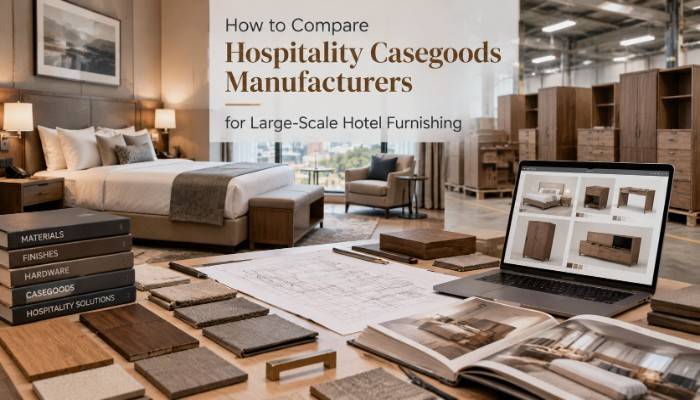
Choosing among hospitality casegoods manufacturers is one of the most consequential decisions a hotel development team will make. Casegoods shape both guest comfort and long term operating costs, so the stakes are higher than most owners initially expect. Large scale furnishing projects involve dressers, nightstands, headboards, desks and wardrobes that must survive years of daily wear. A single wrong choice at the manufacturer level multiplies across every floor and every guest room in a property. Owners, architects and procurement teams often compare vendors on price alone, and that habit tends to backfire later. Material quality, production capacity and after sale support matter just as much for a smooth rollout. This guide walks through the factors that separate dependable partners from risky ones, so your team can furnish confidently. Working with an experienced hospitality casegoods manufacturers partner also reduces the coordination burden your internal design and procurement staff must carry themselves.
A hotel renovation or new build depends on furniture that arrives on schedule and holds up under constant use. This is exactly why hospitality casegoods manufacturers play such a central role in overall project success. Their output touches every guest room, so consistency across hundreds of units becomes the real test. Brands with strict design standards, such as major hotel flags, expect casegoods to match specifications precisely.
When these elements align, a property opens on time and guests notice a polished, cohesive room. That’s exactly what every owner and general contractor is actually paying for.
Comparing hospitality casegoods manufacturers becomes easier once your team agrees on a clear shortlist of factors. These factors should predict real performance rather than rely on a glossy catalog alone. Factory capacity, material sourcing, quality control and communication style shape how smoothly an order moves toward an installed room. Skipping this evaluation step often leads to disputes once production is already underway.
Teams that score vendors against these factors before signing a contract report far fewer surprises once production actually begins.
Material choice determines how long hotel furniture actually lasts once it reaches a busy property. This is where casegoods furniture manufacturers separate themselves from general suppliers who mainly serve residential markets. Commercial grade plywood, moisture resistant laminates and reinforced joinery all cost more upfront. Yet they reduce replacement cycles across a property that sees far heavier use than any home.
A manufacturer that’s willing to share test reports and sample cuttings before production starts is signaling genuine confidence in its materials.
Every hotel casegoods manufacturer quotes a lead time somewhere early in the sales conversation. That number only matters once you understand the factory behind it and its current workload. A facility running near full capacity may still promise a fast turnaround to win the order. It can then struggle once your project competes with several other large hotel accounts for the same lines.
Asking for a detailed production calendar, rather than one delivery date, gives your team a realistic view of arrival.
Standard catalog pieces rarely match a hotel brand’s exact design vision from the start. This is why custom hospitality casegood programs have become common across renovations and new builds alike. Custom work allows a property to fit furniture into unusual room layouts and awkward corners. It also matches proprietary finishes and brand mandated specifications that off the shelf lines just can’t satisfy.
The tradeoff is longer development time upfront, so brands should plan custom design rounds into the overall schedule early.
Certifications tell you whether hospitality casegood manufacturers actually follow the standards they claim to meet. This matters more than a simple compliance statement printed in a glossy sales brochure. Look for documentation covering formaldehyde emissions, structural testing and responsible sourcing practices. Hotel brands increasingly require this proof for their own sustainability reporting and guest facing commitments.
A manufacturer that keeps this paperwork organized and ready usually runs a tighter operation across the rest of production too.
Hotel Casegoods can come from domestic factories, overseas facilities or a hybrid model that blends local finishing with imported parts. Each sourcing approach carries distinct tradeoffs that are worth comparing side by side before your team commits.
|
Manufacturer Type |
Typical Lead Time |
Customization Level |
Relative Cost |
|
Domestic |
6 to 10 weeks |
High |
Higher |
|
Overseas |
12 to 20 weeks |
Moderate |
Lower |
|
Hybrid |
8 to 14 weeks |
High |
Moderate |
None of these models is universally better than the others, since every project has its own priorities. The right fit depends on your timeline, your budget and how much design flexibility the brand truly requires.
Comparing hospitality casegoods manufacturers purely on unit price often hides costs that surface much later. Shipping, tariffs, warranty terms and expected replacement cycles all factor into the true total cost. A slightly higher unit price can still deliver better long term value for an owner. This is especially true once hospitality furniture is already installed across an entire property.
Requesting a full cost breakdown, rather than one bottom line figure, helps procurement teams compare vendors on honest terms.
Some warning signs appear early and predict trouble well before a single piece ships. A careful casegood manufacturer selection process should watch for these signs from the first meeting onward. Vague answers about factory location and reluctance to provide references are common early signals. So is pressure to sign a contract before any physical samples arrive for review.
Trusting your team’s instincts here saves far more money than any short term discount a risky vendor might offer.
Selecting among hospitality casegoods manufacturers comes down to matching real capabilities with your project’s scale and timeline. Price matters, yet material quality, certifications, production capacity and communication decide whether a rollout goes smoothly. Visit a factory whenever possible, and request full sample rooms before committing to a large order. Insist on a detailed production schedule rather than accepting a single delivery promise from any vendor. Hotel owners and developers who apply this level of diligence report smoother installations and far fewer defects. Their furniture also holds up well across many years of daily guest use across every property.
Submit guest articles that reach decision-makers, influencers, and professionals. Yarabook offers a trusted platform for quality content, strong backlinks, and SEO-driven visibility. Pay. Publish. Promote.