

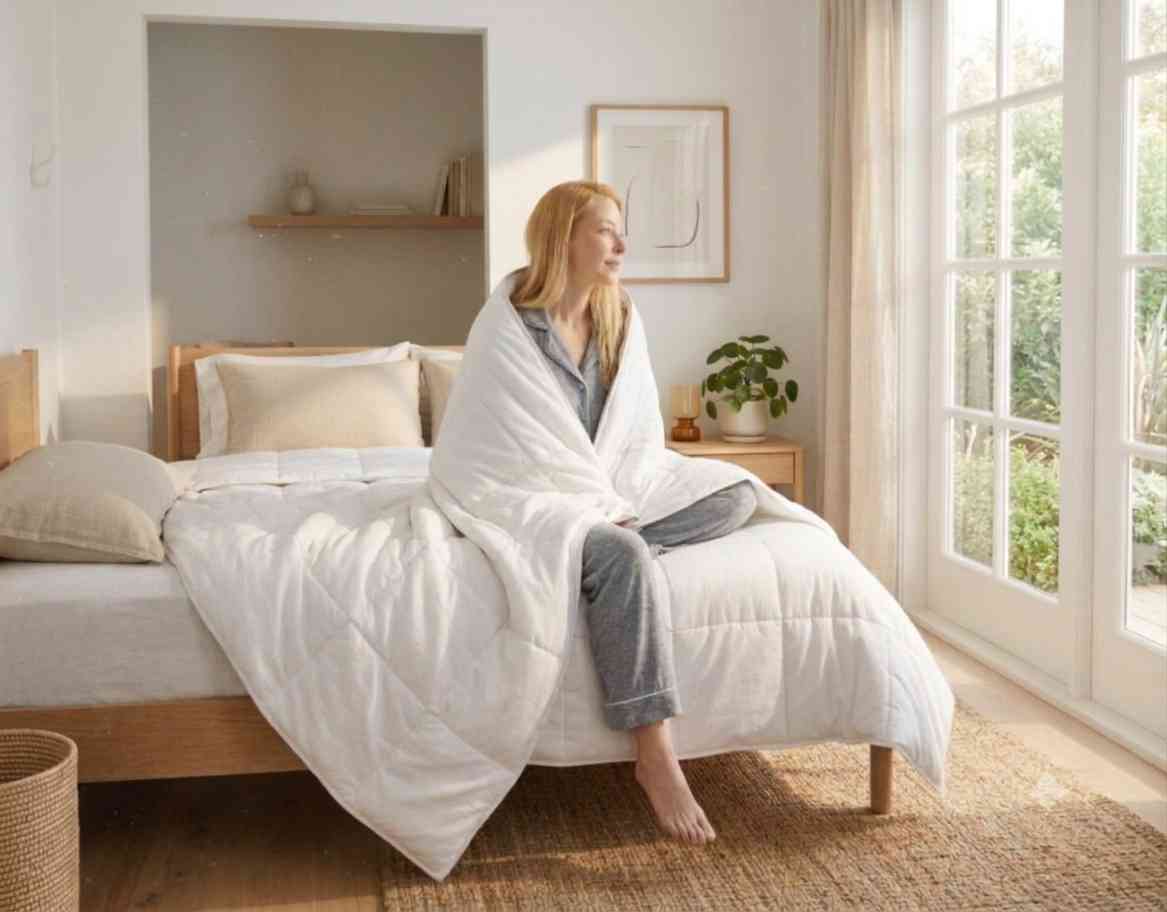
Choosing a weighted comforter involves more than selecting the right size or color. The quality of the fabric, stitching, filling, and overall construction all influence how the comforter performs over time. As more premium bedding options become available, understanding these features helps buyers compare products more confidently and make informed purchasing decisions. This guide explains the key factors to consider before choosing a premium weighted comforter for everyday comfort and long-term durability.
A weighted comforter is a type of bedding designed with additional filling that is evenly distributed throughout quilted sections. Unlike a traditional comforter, which is primarily intended to provide warmth, a weighted comforter uses carefully balanced construction to create a more substantial feel while maintaining a clean and comfortable appearance.
Although different manufacturers use different materials and construction methods, most premium weighted comforters are built using three essential components:
These elements work together to create a comforter that maintains its shape while supporting consistent weight distribution across the bed.
Because construction varies between products, comparing these details is often more valuable than focusing only on appearance or price.
Construction is one of the most overlooked aspects of a weighted comforter, yet it has a significant influence on long-term performance.
A comforter may appear soft and well-designed in product photographs, but careful construction is what helps maintain its quality after repeated everyday use. Secure stitching, balanced filling distribution, and durable quilting all contribute to preserving the comforter’s original structure.
Instead of evaluating only the fabric or the advertised weight, experienced shoppers often look at how the entire comforter has been assembled. Quality craftsmanship usually becomes visible through small details such as evenly spaced quilting, clean edge finishing, and consistent stitching patterns.
These construction features can help reduce filling movement while supporting the overall shape of the comforter during regular use.
Although no bedding product lasts forever, thoughtful construction often contributes to better durability compared with products that rely primarily on appearance or low pricing.
Quality materials and thoughtful construction work together to create a well-made weighted comforter. Breathable fabric, balanced filling, reinforced stitching, and durable quilting all contribute to overall comfort and durability. Instead of evaluating one feature at a time, consider how these components work together.
One of the most common mistakes buyers make is assuming that all weighted comforters are built in the same way. In reality, differences in construction, quilting, stitching, and fabric quality can significantly influence how the comforter performs over time. Reviewing these details before making a purchase is often more valuable than relying only on promotional descriptions.
In the following sections, we’ll explore:
A practical checklist to help you compare weighted comforters with confidence.
By understanding these features, you’ll be better prepared to evaluate different weighted comforters based on quality, construction, and long-term value rather than appearance alone.
Selecting the correct size is one of the most important decisions when purchasing a weighted comforter. Even a comforter made with premium materials may not provide the best everyday experience if it doesn’t match your mattress properly.
Most manufacturers offer several standard sizes, including:
Choosing the correct size allows the comforter to cover the bed evenly while maintaining its balanced construction. It also helps create a cleaner bedroom appearance and makes everyday use more practical.
Instead of choosing a larger size simply for additional coverage, compare the product specifications with your mattress dimensions. Manufacturers often provide detailed sizing information that can help you select the most appropriate option.
The outer fabric is the part of the comforter you’ll interact with every day, making it one of the most important features to compare.
Many premium weighted comforters use 100% cotton because it combines comfort with practical everyday performance.
Cotton is widely appreciated for several reasons:
Rather than focusing only on appearance, consider how the fabric will perform after months of regular use. High-quality materials often maintain their comfort and appearance better over time when cared for according to the manufacturer’s recommendations.
Although different fabrics may suit different preferences, breathable cotton continues to be one of the most commonly used materials in premium bedding.
The filling inside a weighted comforter is another important factor to evaluate.
Unlike traditional comforters, weighted comforters contain additional materials that create a balanced feel across the bed.
Many premium products use glass microbeads, while others may use alternative filling materials depending on the design.
The goal isn’t simply to add weight—it’s to distribute that weight as evenly as possible throughout the comforter.
Quality construction works together with carefully placed filling to help maintain consistent performance during everyday use.
Rather than asking “Which filling is the heaviest?”, buyers often benefit more from asking:
These questions provide more useful information than comparing weight alone.
A weighted comforter performs best when breathable fabric, balanced filling, and reinforced stitching work together. Rather than focusing on a single specification, compare the complete construction to better understand the product’s overall quality.
Before choosing a weighted comforter, it can be helpful to review a few practical questions.
Consider asking:
These simple questions help buyers compare products more confidently while focusing on quality instead of marketing claims.
Many people compare bedding products based on the product photos alone. However, close-up images of the quilting, stitching, and fabric often provide far more useful information about construction quality. Spending a few extra minutes reviewing these details can make the buying process much more informed.
One of the easiest ways to recognize a well-constructed weighted comforter is by looking at its quilting pattern.
Many premium weighted comforters use box quilting, where the surface is divided into evenly stitched sections. These compartments help keep the internal filling evenly distributed instead of allowing it to shift toward one side over time.
Although quilting patterns vary between manufacturers, evenly spaced stitching often indicates careful attention to construction.
Well-designed quilting can help:
When comparing products online, zooming in on the quilting and stitching details often provides valuable insight into the product’s craftsmanship.
Many buyers focus on a single feature while overlooking the overall construction.
Some of the most common mistakes include:
Price matters, but construction quality often has a greater impact on long-term value.
Breathable, durable fabric contributes to everyday comfort.
Poor stitching may reduce long-term durability.
Choosing the wrong size can reduce coverage and affect the overall appearance of the bed.
Review the care instructions before purchasing.
Proper care helps preserve both the appearance and construction of premium bedding.
A few simple habits include:
Consistent maintenance can help your comforter remain in good condition for years.
Before purchasing a weighted comforter, review this simple checklist:
Instead of comparing products based on one feature alone, evaluate the complete construction to make a more informed buying decision.
A premium weighted comforter is more than just another piece of bedding. Its overall performance depends on how well the fabric, filling, stitching, and construction work together.
Rather than focusing only on appearance or price, comparing the quality of these features can help you choose bedding designed for everyday comfort and long-term durability.
If you’re researching premium bedding and would like to see how these construction features come together in a real product, you can explore the Eli & Elm Weighted Comforter. Reviewing detailed product specifications, available sizes, and construction information can make it easier to compare different options before making a purchase.
Submit guest articles that reach decision-makers, influencers, and professionals. Yarabook offers a trusted platform for quality content, strong backlinks, and SEO-driven visibility. Pay. Publish. Promote.