

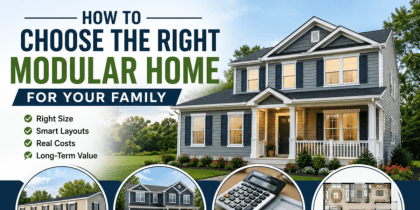
Choosing a new home is a major decision, and finding the right balance between space, comfort, location, and cost can take time. Modular homes have become an appealing option for buyers who want modern housing with flexible floor plans and a more streamlined construction process.
However, choosing a modular home is not simply about selecting the biggest model available. The right home should fit your lifestyle, property, budget, and future plans. From compact layouts to spacious multi-story designs, there are many options to consider before making a final decision.
Before looking at specific homes, think about how you use your living space every day. The number of people in your household is an obvious consideration, but it is not the only one.
A family with young children may need additional bedrooms and storage, while a couple may prefer a smaller home with a larger kitchen or living room. Someone who works from home may also need a dedicated office.
It is helpful to make a list of the spaces you actually need rather than focusing only on square footage. A well-designed floor plan can sometimes feel more comfortable than a larger home with poorly organized rooms.
You should also think about future needs. A home that works perfectly today may feel too small if your family grows or your lifestyle changes.
One of the benefits of modular construction is the variety of home sizes and floor plans available. Buyers can choose from smaller layouts to larger homes designed for families that need more living space.
For buyers with a smaller lot or a more limited budget, single wide modular homes may offer a practical solution. Their narrower design can work well on certain properties while still providing bedrooms, bathrooms, a kitchen, and shared living areas.
Larger modular homes can provide more flexibility when space is a priority. Instead of simply adding rooms, buyers should look at how the floor plan connects those spaces. The placement of the kitchen, bedrooms, bathrooms, and storage areas can have a major effect on everyday comfort.
If your property has limited ground space, building upward can be another way to create more living area. 2 Story Modular Homes can provide additional square footage while leaving more of the lot available for outdoor use.
A two-story design can also create a natural separation between common and private areas. For example, the kitchen, dining area, and family room can be located downstairs, while bedrooms and a quiet office space are placed upstairs.
There are a few practical factors to consider before choosing this layout. Stairs may not be ideal for every household, and local building requirements can affect the design. Buyers should also consider whether the additional floor provides useful space or simply increases the overall cost.
The best floor plan is the one that supports your daily routine rather than one that only looks impressive on paper.
The price shown for a modular home is not always the final amount you will spend. Buyers should consider the complete project cost before deciding which home fits their budget.
Expenses can include land preparation, foundation work, transportation, installation, utility connections, permits, landscaping, and other site-related requirements. The final amount can vary depending on the location and the condition of the property.
For example, someone researching the 2000 square ft modular home cost should look at more than the manufacturer’s base price. Construction materials, interior finishes, delivery distance, site preparation, and customization can all affect the final cost.
Getting a detailed estimate from a qualified builder is one of the best ways to avoid surprises. Ask what is included in the quoted price and which expenses will be handled separately.
Modern modular homes can be customized in many ways. Buyers may have options for flooring, cabinets, countertops, windows, appliances, lighting, siding, roofing, and energy-efficient systems.
It is easy to spend too much on features that look attractive but do not provide much practical value. Instead, focus on improvements that make the home more comfortable, efficient, and useful.
Energy-efficient windows, quality insulation, efficient heating and cooling systems, and durable materials may provide greater long-term value than purely decorative upgrades.
That does not mean you should ignore personal style. Your home should reflect your preferences, but the smartest approach is to balance appearance with functionality.
The land where the home will be placed can be just as important as the home itself. Before choosing a floor plan, make sure the property can support the design.
Check local zoning regulations, setbacks, utility access, foundation requirements, driveway access, and other site conditions. A home may look perfect in a catalog but become difficult or expensive to place on a particular lot.
The condition of the property also matters. Sloping land, drainage issues, difficult access, or the need for extensive grading can increase the cost of the project.
Reviewing these factors early can help you choose a home that fits both your lifestyle and your property.
Choosing the right builder is just as important as choosing the right home. Compare reputation, experience, floor plans, customization, warranties, and customer reviews rather than focusing only on price.
Spark Homes Texas is worth researching when comparing modular home builders, with options for modular and manufactured homes and guidance throughout the buying process.
Before signing a contract, confirm details such as delivery, installation, foundation work, timelines, warranties, and what is included in the final price. Clear terms and good communication can help make the process much easier.
Buying a home is a long-term commitment, so it is worth thinking beyond the initial purchase. Consider how the property and floor plan will work several years from now.
A growing family may eventually need another bedroom. A home office could become more important as remote work changes. Accessibility may also become a greater consideration over time.
Maintenance should be part of the decision as well. Ask about the expected upkeep of exterior materials, roofing, heating and cooling equipment, and other major components.
A home that is practical to maintain can be more valuable over the long term than one that simply offers more features.
A good budget should include both the initial purchase and ongoing ownership costs. In addition to the home itself, buyers may need to account for financing, property taxes, insurance, utilities, maintenance, and future repairs.
It can be useful to compare multiple floor plans within the same overall budget. Sometimes a slightly smaller home with an efficient layout is a better choice than a larger home that leaves little room for other expenses.
Having a financial cushion for unexpected costs can also make homeownership less stressful.
With so many modular home designs available, it can be tempting to make a decision quickly. However, comparing several options can help you identify what actually matters to your household.
Look at floor plans carefully. Think about how people will move through the home, where furniture will go, how much storage is available, and whether the rooms have enough natural light.
Ask builders detailed questions and request written estimates wherever possible. Research the property requirements before committing to a design.
The goal is not to find a home that has every possible feature. It is to find one that provides the right combination of space, quality, comfort, and affordability.
Choosing the right modular home starts with understanding your family’s needs and continues with careful research into floor plans, property requirements, builders, features, and total costs. Whether you are considering single wide modular homes, exploring 2 Story Modular Homes, or researching the 2000 square ft modular home cost, the best decision will depend on how well the home fits your lifestyle and long-term plans.
A thoughtful approach can help you avoid unnecessary expenses and choose a property that feels comfortable today while remaining practical for years to come. By comparing your options carefully and understanding the full cost of ownership, you can move forward with greater confidence when selecting your next modular home.
Submit guest articles that reach decision-makers, influencers, and professionals. Yarabook offers a trusted platform for quality content, strong backlinks, and SEO-driven visibility. Pay. Publish. Promote.