

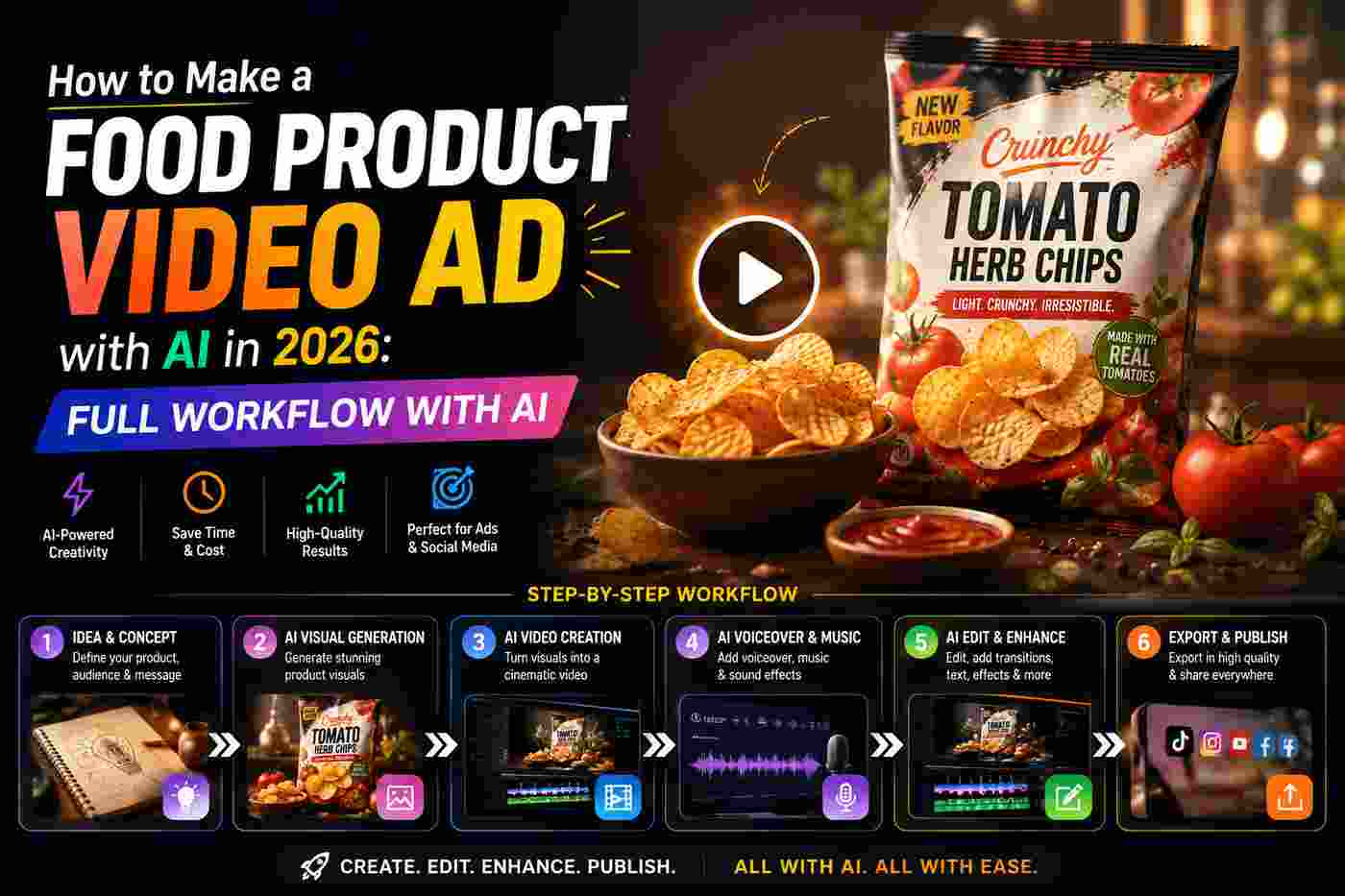
Creating an attractive food product video ad can be challenging when you need professional visuals, editing, voiceovers, music, and effects. In 2026, AI video creation tools are making this process faster and easier. Brands, marketers, and content creators can now turn a simple product idea into an engaging advertisement without requiring a large production team.
AI can help with everything from generating product visuals to creating video scenes, adding voiceovers, and preparing content for social media. Here is a simple step-by-step workflow for creating a food product video ad with AI.
Before generating any visuals, define the main purpose of your advertisement. Decide what product you want to promote, who your target audience is, and what message you want viewers to remember.
For example, if you are promoting a packet of tomato chips, your video could focus on freshness, crunchiness, flavor, or convenience. A short concept such as “crispy tomato chips for a fun evening snack” can become the foundation for the entire video.
Also decide where you will publish the advertisement. A YouTube advertisement may require a different format from an Instagram Reel or TikTok video.
The next step is creating attractive product visuals. AI image generation can help you create backgrounds, food scenes, product compositions, and promotional concepts.
Write detailed prompts that describe the product, lighting, environment, camera angle, colors, and mood. For example:
“A premium packet of tomato herb chips on a wooden table, surrounded by fresh tomatoes and crispy chips, cinematic lighting, realistic food photography, commercial advertisement style.”
Detailed prompts generally provide better creative direction and make it easier to create visuals that match your advertising concept.
Once your product visuals are ready, you can transform them into animated video scenes. AI video generators can add camera movement, object movement, transitions, and cinematic effects to still images or text prompts.
For example, a scene could begin with a close-up of the food package and slowly zoom toward the product. Another scene could show chips falling into a bowl while the camera moves around the food.
For creators who want to simplify this workflow, an AI Video Generator can help turn creative ideas and visual concepts into video content.
Audio is an important part of a food advertisement. A suitable voiceover can explain the product and communicate its main benefit within a few seconds.
Keep the script short and memorable. For example:
“Meet your new favorite snack. Crunchy tomato herb chips packed with delicious flavor in every bite.”
You can then add background music and sound effects. Crunch sounds, packaging sounds, and subtle transitions can make food videos feel more engaging and realistic.
Choose music according to the personality of the product. A fun snack brand may use energetic music, while a premium food product may work better with a sophisticated soundtrack.
After generating the scenes and audio, review the entire video and make improvements. Remove unnecessary scenes and keep the advertisement focused on the product.
Add text overlays to highlight important information such as the product name, flavor, ingredients, discount, or call to action. You can also add transitions and visual effects to make the video smoother.
Try to capture attention within the first few seconds. Showing the product immediately can help viewers understand what the advertisement is about.
Different platforms use different video formats. Vertical videos are generally suitable for short-form platforms, while horizontal videos can work better for traditional YouTube content.
Create multiple versions of your advertisement when possible. A 15-second version can be used for short-form social media, while a longer version can provide more product information.
Make sure the final video has clear text, good audio quality, and a strong call to action such as “Try It Today,” “Shop Now,” or “Discover the Flavor.”
AI can significantly reduce the time required to create advertising content. Traditional food production may require photographers, cameras, locations, lighting equipment, editors, and actors. AI can simplify many of these steps and allow small businesses and individual creators to experiment with professional-looking concepts.
Another advantage is flexibility. You can quickly test different backgrounds, product presentations, camera movements, and advertising messages without recreating an entire physical shoot.
Tools such as Xelta AI can be useful for creators looking to incorporate AI into their creative workflow and produce visual content more efficiently.
Creating a food product video ad with AI in 2026 can be a simple and efficient process. Start with a clear product concept, generate attractive visuals, turn them into video scenes, add voiceover and music, edit the final result, and optimize it for your target platform.
The biggest advantage of an AI-powered workflow is the ability to experiment quickly while reducing the time and resources required for traditional production. Whether you are promoting snacks, beverages, packaged foods, or a new food brand, AI can help transform a basic idea into an engaging video advertisement.
Submit guest articles that reach decision-makers, influencers, and professionals. Yarabook offers a trusted platform for quality content, strong backlinks, and SEO-driven visibility. Pay. Publish. Promote.