

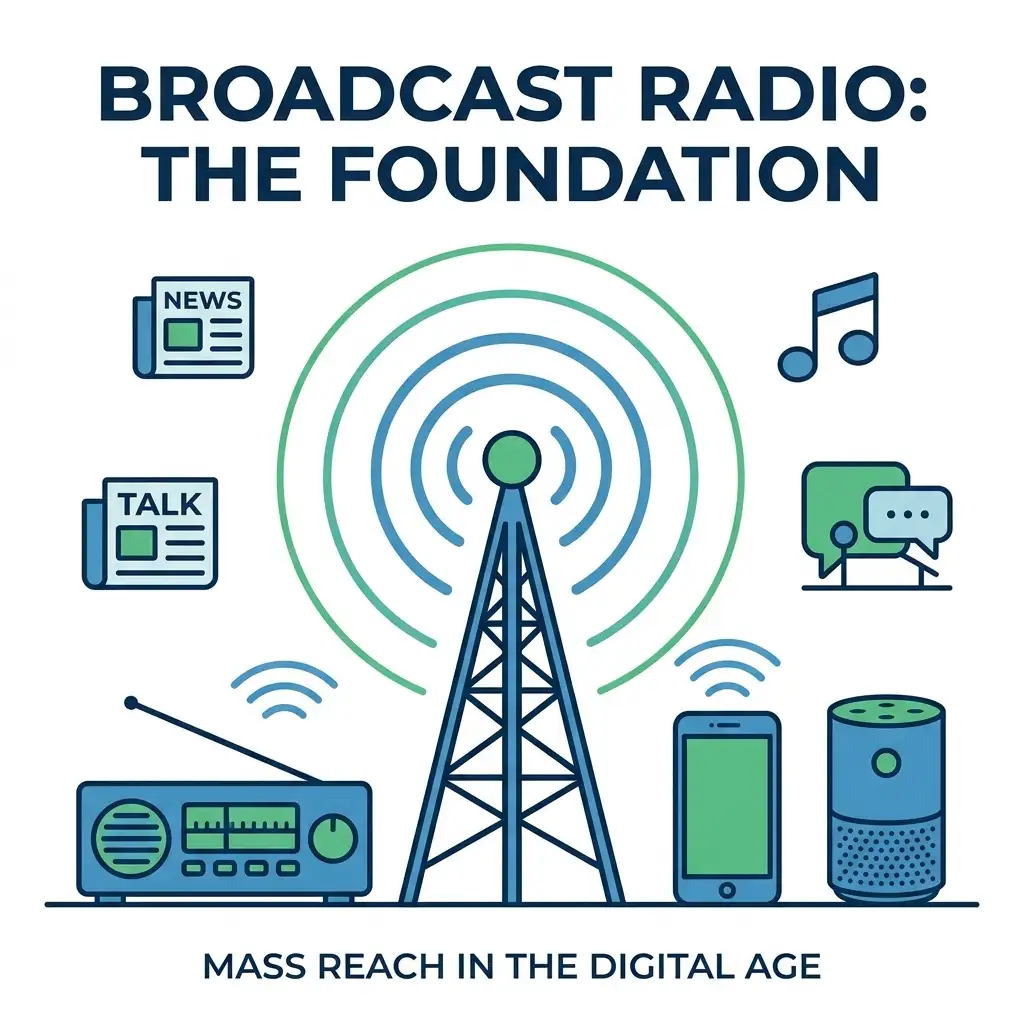
Digital marketing has become a major part of modern business promotion, but traditional advertising still offers valuable opportunities. Among traditional marketing channels, radio advertising remains an effective way for businesses to build awareness, reach local customers, and communicate memorable messages.
Radio connects brands with audiences through sound. People can listen while driving, working, shopping, exercising, or completing daily activities. This makes radio different from many digital advertising formats that require users to look at a screen.
Traditional radio advertising involves paying a radio station to broadcast a promotional message to its listeners. Advertisements can promote products, services, events, special offers, new locations, or brand campaigns.
Radio commercials are usually short, so advertisers need to communicate their main message clearly and quickly. A successful advertisement should identify the brand, explain the key benefit, and provide a simple call to action.
Businesses interested in learning more about this marketing channel can explore this traditional radio advertising guide for additional strategy and planning insights.
Radio continues to have several advantages despite the growth of digital platforms. One of its biggest strengths is repeated exposure. Advertisers can schedule commercials multiple times throughout the day, helping listeners become familiar with a brand.
Radio can also be valuable for local businesses. Companies that depend on customers within a particular city or region can select stations that serve their target market.
Restaurants, retailers, real estate companies, educational institutions, automobile businesses, entertainment venues, and local service providers can all potentially benefit from radio campaigns.
Choosing the right audience is essential for any advertising campaign. A business should understand who its potential customers are before selecting a station or advertising schedule.
Important factors may include:
Age
Location
Lifestyle
Interests
Occupation
Purchasing behavior
Listening habits
For example, a business targeting working professionals may benefit from advertising during commuting hours, while a family-oriented business may prefer programs that attract household audiences.
Audience relevance is often more important than simply choosing the station with the largest listener base.
A radio advertisement needs to work without visual content. This means the script should be simple, conversational, and easy to remember.
An effective commercial can follow a basic structure:
Attention: Start with an interesting question, statement, or situation.
Problem: Introduce a need or challenge that the audience understands.
Solution: Explain how the product or service can help.
Benefit: Highlight the most important advantage.
Call to action: Tell listeners what they should do next.
The business name should also be clearly mentioned so listeners can connect the message with the brand.
Radio gives advertisers an opportunity to use voice, music, sound effects, and storytelling creatively.
A friendly voice can make a business sound approachable, while an energetic voice can create excitement around a promotion. Music can establish a particular mood, and sound effects can help listeners imagine a situation.
However, creative elements should support the main message rather than distract from it. The advertisement should remain easy to understand.
Radio campaigns often depend on frequency. Hearing an advertisement once may not be enough for someone to remember a business or offer.
Repeated exposure can improve familiarity and message recall. For this reason, businesses should develop a consistent campaign that uses recognizable brand elements across multiple broadcasts.
At the same time, advertisers should avoid excessive repetition that could make the commercial irritating. Finding the right balance between reach and frequency is important.
Traditional radio and digital marketing can work together effectively.
A radio commercial can create initial awareness, while a website, social media page, search campaign, or email strategy can provide additional information.
For example, an advertisement might encourage listeners to visit a specific website or search for a memorable campaign phrase. Once they move online, businesses can provide product details, collect leads, or encourage purchases.
This combination allows traditional advertising to support measurable digital activities.
For marketers planning an integrated campaign, this radio advertising strategy resource can provide useful ideas for building an effective campaign.
Although radio does not provide the same level of instant tracking as many digital platforms, businesses can still measure results.
Useful methods include:
Unique promotional codes
Dedicated phone numbers
Special landing pages
Customer surveys
Sales comparisons
Website traffic monitoring
For example, a restaurant could provide a special discount code that customers mention after hearing the radio advertisement. This can help the business estimate how many customers responded to the campaign.
Businesses should avoid making their radio advertisements overly complicated. Too much information can make the message difficult to remember.
Another common mistake is using a weak call to action. Listeners should clearly understand what they need to do after hearing the advertisement.
Choosing a station without researching its audience can also lead to wasted advertising spend. Businesses should always consider whether the station’s listeners match their target customers.
Traditional radio advertising remains a useful marketing channel for businesses that want to increase awareness, reach local audiences, and create memorable brand messages.
The most effective campaigns begin with clear objectives and audience research. Businesses should choose the right station, select appropriate advertising times, create simple and engaging scripts, and use strong calls to action.
When combined with digital marketing, radio can become part of a broader customer journey. By using traditional and digital channels together, businesses can create more opportunities to reach customers and strengthen brand recognition.
Submit guest articles that reach decision-makers, influencers, and professionals. Yarabook offers a trusted platform for quality content, strong backlinks, and SEO-driven visibility. Pay. Publish. Promote.