

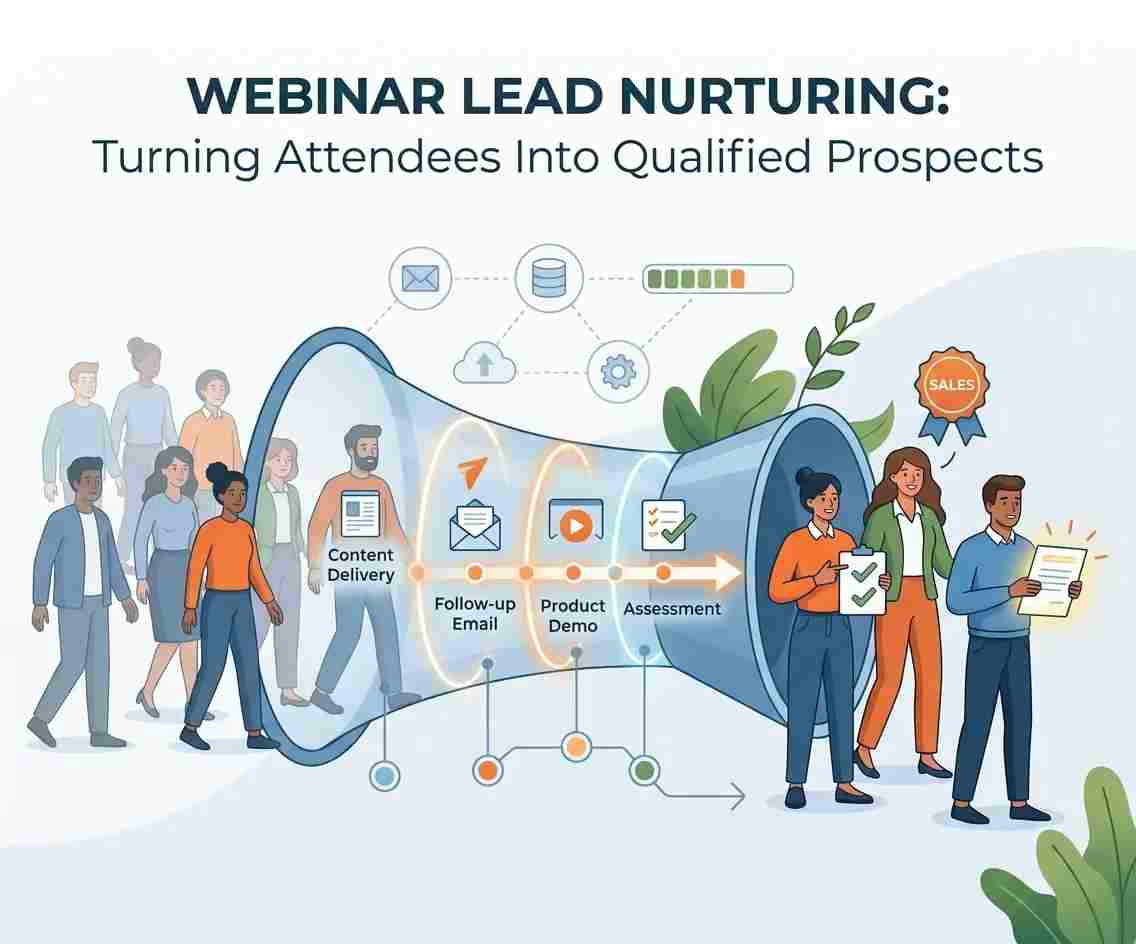
A webinar can generate valuable engagement, but registration alone does not guarantee that an attendee will become a customer. After the event ends, businesses need a structured follow-up process to maintain interest and move potential customers toward the next stage of the buying journey. This is where an effective webinar lead nurturing strategy becomes important.
The first follow-up should happen soon after the webinar while the experience is still fresh in the attendee’s mind. A simple thank-you email can include the webinar recording, presentation materials, key takeaways, or additional resources.
The goal is not to immediately make a sales pitch. Instead, the follow-up should provide something useful and encourage attendees to continue interacting with the brand. A helpful follow-up can create a positive impression and increase the likelihood of future engagement.
Every webinar attendee has a different level of interest. Some people may register but never attend, while others may watch the entire presentation, participate in polls, ask questions, or download additional resources.
Businesses can use these behaviors to create different audience segments. Highly engaged attendees can receive more product-focused information, while people who showed limited engagement can receive educational content designed to build awareness.
Segmentation makes communication more relevant and prevents businesses from sending the same message to every lead.
After the webinar, continue providing content that helps prospects solve problems related to the webinar topic. Blog articles, guides, case studies, checklists, videos, and industry reports can all be useful for keeping leads engaged.
For marketers looking for a more detailed approach, this guide on Webinar Lead Nurturing: Turning Attendees Into Qualified Prospects explores practical ways to continue engaging webinar attendees after the event.
Educational content is especially valuable for prospects who are still researching their options. Instead of pushing them toward an immediate purchase, businesses can gradually establish credibility and demonstrate their expertise.
Personalization can make webinar follow-up campaigns more effective. Instead of sending generic emails, marketers can customize messages according to the attendee’s interests, questions, industry, or interactions during the webinar.
For example, someone who showed interest in a specific product feature could receive additional information about that feature. Another attendee who asked a question about implementation could receive a relevant case study or guide.
This type of personalized communication makes the nurturing process more useful and helps prospects feel that the brand understands their specific needs.
One follow-up email may not be enough to convert a webinar attendee. A well-planned email sequence can keep the conversation active over several days or weeks.
The first email can thank attendees and provide the recording. A second message can share related educational content. A later email can introduce a case study, customer success story, or solution that addresses a common problem. Once a prospect demonstrates stronger buying intent, the communication can become more product-focused.
The timing and frequency of these messages should be carefully managed. Sending too many emails can cause fatigue, while waiting too long can result in lost interest.
Tracking attendee behavior helps marketers understand which prospects are most engaged. Important signals may include webinar attendance, watch duration, email opens, link clicks, content downloads, website visits, and interactions with follow-up campaigns.
These activities can be used as part of a lead-scoring system. A prospect who repeatedly interacts with content may be more sales-ready than someone who only registered for the webinar.
Lead scoring allows marketing teams to prioritize their efforts and helps sales teams focus on prospects who have demonstrated meaningful interest.
Successful lead nurturing requires communication between marketing and sales teams. Marketing teams can identify highly engaged prospects, while sales representatives can use that information to start more relevant conversations.
For example, if a prospect attended the full webinar, downloaded a related guide, and visited a product page, the sales team has valuable context before making contact. Instead of beginning with a generic sales message, the representative can address the prospect’s likely interests and needs.
This creates a smoother transition from marketing engagement to sales conversation.
Not every webinar attendee will be ready to purchase immediately. Some prospects may need additional time, information, or internal approval before making a decision.
Rather than removing these leads from the marketing process, businesses can place them into longer-term nurturing campaigns. Regular educational content, industry insights, newsletters, and relevant updates can keep the brand visible until the prospect becomes more prepared to take action.
Finally, businesses should regularly evaluate the performance of their webinar lead nurturing campaigns. Metrics such as email engagement, content downloads, meeting requests, qualified leads, and conversions can reveal what is working and what needs improvement.
By analyzing these results, marketers can refine their content, segmentation, timing, and messaging for future webinars.
A webinar should not be treated as a one-time marketing event. With consistent follow-up, personalized communication, valuable content, and proper lead scoring, businesses can build stronger relationships with attendees and gradually turn webinar participants into qualified prospects.
Submit guest articles that reach decision-makers, influencers, and professionals. Yarabook offers a trusted platform for quality content, strong backlinks, and SEO-driven visibility. Pay. Publish. Promote.