

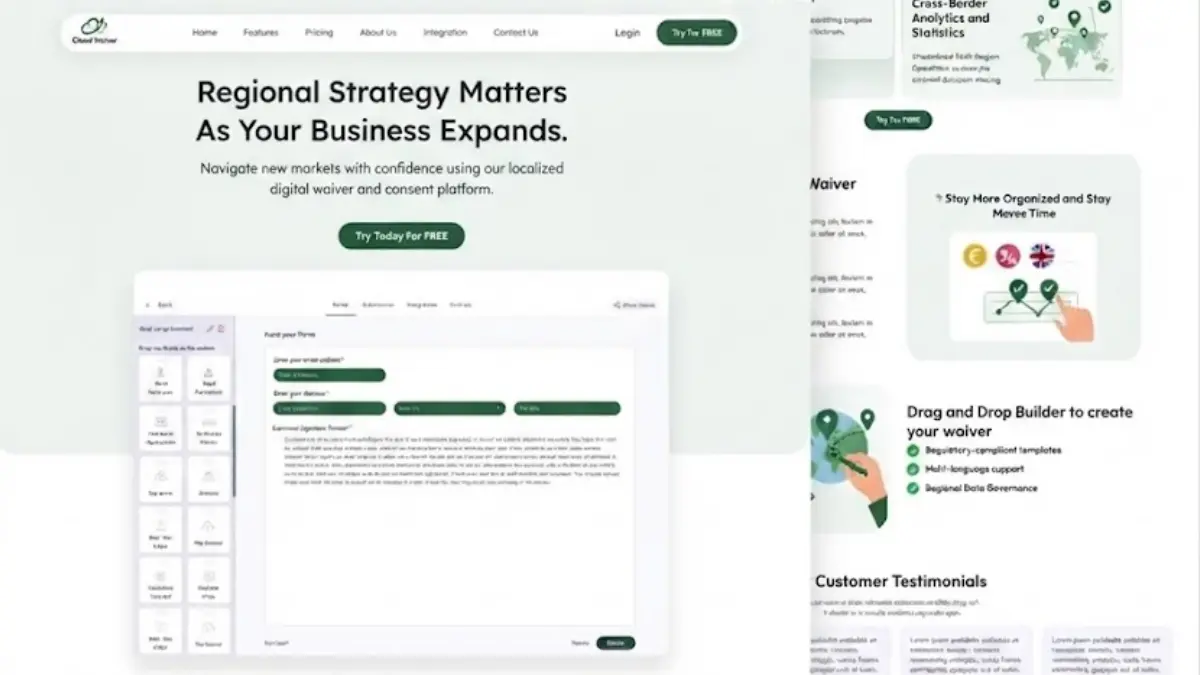
A business website is often the first meaningful interaction a potential customer has with a company. Before making a purchase, requesting a quote, or contacting a service provider, people commonly use a website to evaluate whether a business appears credible, relevant, and capable of meeting their needs.
That makes web design more than a visual exercise. A well-designed website combines usability, performance, accessibility, content structure, mobile responsiveness, and clear conversion paths to create a better experience for visitors.
For businesses competing online, these elements can influence whether a visitor continues exploring a website or leaves after viewing the first page.
Effective web design begins with understanding what the website is expected to accomplish.
An e-commerce company may need an intuitive product discovery and checkout experience. A professional service business may focus on generating inquiries and consultation requests. A local company may want visitors to find its location, services, opening hours, and contact information quickly.
The design should therefore be built around user intent rather than decoration alone.
Clear navigation, logical page structures, descriptive headings, prominent calls to action, and useful information help visitors move through a website without unnecessary friction. When the structure reflects customer needs, the website becomes a practical business tool instead of simply an online brochure.
Visitors form opinions about websites quickly. An outdated layout, confusing navigation, inconsistent branding, or difficult-to-read content can create unnecessary doubt about a company.
Professional web design helps establish a consistent digital identity. Typography, imagery, spacing, colors, page layouts, and brand messaging should work together rather than compete for attention.
Trust also comes from information. Businesses can strengthen credibility by clearly presenting their services, company information, contact details, policies, customer experiences, credentials, and other relevant evidence.
The objective isn’t to make a website look expensive. It is to make the business appear clear, reliable, accessible, and professional.
A website that works well on a desktop but becomes difficult to use on a smartphone can create a significant usability problem.
Responsive design allows page layouts to adapt to different screen sizes. Navigation, buttons, forms, images, and text should remain usable without requiring visitors to constantly zoom or scroll horizontally.
Mobile usability is particularly important for businesses that depend on local searches, service inquiries, or quick customer interactions. A visitor who cannot easily find a phone number, service description, or contact form may simply move to another business.
Design and performance should not be treated as separate priorities.
Large images, unnecessary scripts, excessive plugins, poorly optimized code, and inefficient third-party resources can make pages slower. Even an attractive website can underperform when visitors have to wait for important content to load.
A professional web design process should consider performance from the beginning. Image optimization, efficient code, appropriate caching, reliable hosting, and careful use of scripts can contribute to a smoother browsing experience.
Performance should also be evaluated alongside real-world user experience rather than relying on a single speed score.
Search engine optimization does not begin after a website has been designed. Technical and structural decisions made during development can affect how search engines discover, understand, and index a website.
A search-friendly website should have logical page architecture, descriptive URLs, crawlable content, appropriate heading structures, useful internal links, mobile compatibility, and properly implemented metadata.
Technical SEO also requires attention to issues such as canonical URLs, redirects, XML sitemaps, indexability, structured data where appropriate, and status codes.
This is why web design and SEO are most effective when considered together. A visually impressive website that search engines cannot properly crawl or understand may struggle to reach its organic potential.
Good design cannot compensate for weak information.
Visitors usually arrive with a question, problem, or objective. They may want to compare services, understand pricing, learn about a company, solve a problem, or decide whether to contact a provider.
Website content should answer those questions clearly.
Instead of filling pages with generic marketing language, businesses should provide useful explanations, relevant service information, supporting evidence, frequently asked questions, and clear next steps.
Strong content and strong design reinforce each other. Design makes information easier to consume, while useful information gives the design a meaningful purpose.
A website should make it obvious what visitors can do next.
Depending on the business model, that could mean requesting a quote, scheduling an appointment, purchasing a product, submitting an inquiry, downloading a resource, or calling the company.
Calls to action should be noticeable without overwhelming the page. More importantly, they should appear at logical points in the visitor journey.
For example, a service page might introduce the problem, explain the solution, demonstrate expertise, answer common questions, and then provide an appropriate contact option.
This approach creates a natural progression from information to confidence to action.
An effective website should be usable by as many people as reasonably possible.
Accessible design can include readable typography, sufficient contrast, descriptive alternative text for meaningful images, keyboard-friendly navigation, properly labeled forms, logical heading structures, and content that works with assistive technologies.
Accessibility is not simply a technical checkbox. It contributes to a better experience for users and encourages businesses to communicate information more clearly.
There is no single website platform or design style that is ideal for every business.
The right approach depends on factors such as business goals, content requirements, expected traffic, integrations, budget, internal resources, and future growth.
A small company may benefit from a straightforward content-managed website, while a larger organization may require custom functionality, advanced integrations, or a more complex digital experience.
The important question is not simply, “What does the website look like?”
A better question is:
Does the website make it easier for the right audience to understand the business and take meaningful action?
A professionally designed website can become an important foundation for digital marketing. Businesses can build search visibility, publish educational content, promote services, generate leads, support advertising campaigns, and strengthen their brand through the same digital property.
However, a website should not be considered finished forever.
Businesses change. Customer expectations evolve. Search technology develops. New devices and accessibility standards emerge. Analytics may reveal that certain pages perform better than others.
Regular improvements can therefore be more valuable than treating a website redesign as a one-time project.
Professional web design is ultimately about creating a useful digital experience that supports both visitors and business objectives.
Visual presentation matters, but it is only one part of the equation. Performance, mobile usability, accessibility, content quality, SEO structure, trust signals, navigation, and conversion paths all contribute to a website’s effectiveness.
For businesses investing in their online presence, the strongest website is not necessarily the one with the most visual effects. It is the one that helps visitors find the information they need, understand the value being offered, trust the organization, and take the appropriate next step.
Submit guest articles that reach decision-makers, influencers, and professionals. Yarabook offers a trusted platform for quality content, strong backlinks, and SEO-driven visibility. Pay. Publish. Promote.