

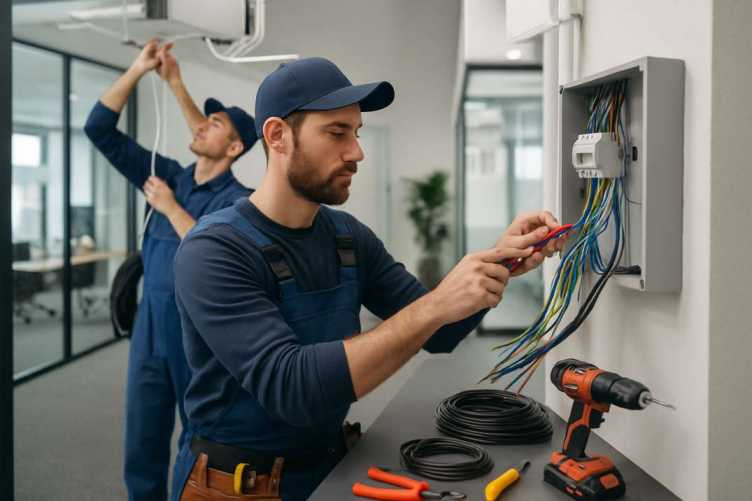
Modern homes and commercial buildings depend on a growing number of connected technologies. Security cameras, access control systems, video intercoms, wireless networks, audio-visual equipment, alarm systems, smart lighting, and building automation all require reliable infrastructure to communicate and operate effectively.
While many people focus on the devices themselves, the wiring connecting those systems is just as important. Poorly installed or improperly planned wiring can lead to unstable connections, system interruptions, difficult troubleshooting, and expensive modifications later.
Professional low-voltage installation provides the infrastructure that allows technology systems to operate reliably. A qualified low voltage contractor can help design, install, organize, and test wiring for modern security, communication, and technology systems while considering the property’s current requirements and future expansion.
Low-voltage wiring is commonly used for systems that transmit data, communication signals, or relatively low levels of electrical power.
These systems may include:
Although these systems perform different functions, they often depend on the same underlying infrastructure.
A properly planned wiring system helps ensure that these technologies can communicate consistently.
Modern security systems are increasingly network-based. Security cameras may transmit video across a network, access control systems communicate with centralized software, and video intercoms depend on reliable data connections.
If wiring is poorly installed, security systems may experience:
Professional wiring helps create a more stable foundation for these technologies.
Security cameras are among the most common low-voltage applications.
Modern surveillance systems may include cameras positioned around:
Each camera requires appropriate connectivity and, depending on the system, power.
Wiring must therefore be planned around camera locations, network requirements, environmental conditions, and future expansion.
A professional installer can help determine appropriate cable routes and connection points before installation begins.
Access control systems help regulate who can enter a building or restricted area.
These systems may include:
Reliable wiring is essential because these components need to communicate with one another.
An improperly wired access control system can cause inconsistent operation or make future maintenance more difficult.
Professional installation helps ensure that connections are organized and properly documented.
Video intercoms combine communication and visual identification at property entrances.
They may be installed at:
These systems require dependable connections for video, audio, access control, and sometimes network communication.
A well-designed low-voltage infrastructure helps ensure that the intercom system performs consistently.
Many modern technologies depend on network connectivity.
A building’s network may support:
If the network infrastructure is poorly designed, adding new technologies can become difficult.
Professional low-voltage planning helps establish organized infrastructure that can support current devices while allowing room for future growth.
Wireless technology still depends on wired infrastructure.
Wireless access points typically require physical network connections to communicate with the broader network.
Strategic placement of access points is important, but the cabling connecting them also needs to be reliable.
Professional installation can help businesses and homeowners organize network connections for:
Reliable wiring provides the foundation for dependable wireless connectivity.
Modern spaces increasingly rely on audio-visual equipment.
Conference rooms may include displays, microphones, cameras, speakers, and video conferencing systems. Businesses may also use digital signage, distributed audio, and presentation technologies.
These systems often require multiple low-voltage connections.
Proper infrastructure helps support:
This can improve reliability while making future upgrades easier.
Smart buildings use connected systems to manage different aspects of the property.
These may include:
Low-voltage infrastructure provides communication pathways between many of these devices.
As building automation becomes more sophisticated, organized wiring becomes increasingly important.
One of the biggest advantages of professional installation is planning.
Before running cables, installers can evaluate:
Planning in advance helps reduce unnecessary cable runs and makes the finished infrastructure easier to manage.
Cable management is an important part of long-term system reliability.
Unorganized cables can make it difficult to identify connections or troubleshoot problems.
Professional installations often use:
This organization can save significant time when systems need to be repaired or expanded.
Technology changes quickly.
A property that currently uses basic security cameras may eventually require additional surveillance, access control, smart building systems, or more network devices.
A scalable wiring design makes these upgrades easier.
Future expansion may involve:
Planning for these possibilities can reduce future installation costs.
Low-voltage wiring may be installed in different environments.
Outdoor installations can be exposed to:
Indoor installations may face different challenges, such as crowded ceilings, long cable pathways, and existing infrastructure.
The wiring approach and materials should be selected according to the environment.
Installing cables is only part of the process.
Professional installers should also test connections to verify that the system performs as expected.
Documentation is equally important.
Useful records can identify:
Good documentation makes maintenance and future expansion easier.
Selecting the right low voltage contractor is an important part of any technology installation.
Property owners should consider:
A contractor should understand how different systems interact rather than focusing only on installing individual cables.
A properly designed and installed infrastructure can provide:
These benefits can provide long-term value for both residential and commercial properties.
Modern security and technology systems depend on more than high-quality devices. They also require dependable infrastructure that allows those devices to communicate effectively.
Professional low-voltage wiring provides the foundation for security cameras, access control, video intercoms, networks, audio-visual equipment, building automation, and other connected technologies.
Working with an experienced low voltage contractor can help ensure that wiring is properly planned, installed, tested, organized, and documented.
By building reliable infrastructure from the beginning, property owners can improve system performance, simplify future upgrades, reduce maintenance challenges, and create a stronger foundation for the connected technologies their buildings depend on.
Submit guest articles that reach decision-makers, influencers, and professionals. Yarabook offers a trusted platform for quality content, strong backlinks, and SEO-driven visibility. Pay. Publish. Promote.