

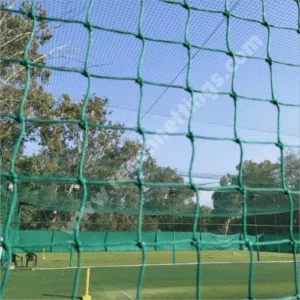
A cricket net is the kind of purchase most people forget about until something goes wrong. The net sags, a hole appears behind the batter, balls start leaking onto the road, and suddenly replacing it feels like a bigger job than it should. The good news is that a little regular care can easily double the life of a cricket practice net, and none of it needs special tools or skills.
Three things damage a net faster than anything else: sun, moisture and repeated impact in the same spot. Knowing how each one works makes it easier to protect the net.
Strong sunlight slowly breaks down the twine, making it dry, stiff and brittle. A UV stabilized net resists this far better than an ordinary one, but even the best net ages faster if it is ignored. In India, where summer sun is harsh for months, this is the main reason nets lose strength.
Water on its own does little harm to a good net. The real problem is dirt and moisture sitting on the net and the poles for long periods. This leads to rust on the metal, mould on the twine and weak knots that slowly loosen.
In every practice lane the ball tends to land in the same area again and again, usually the back and the sides near the batter. These spots take the most impact, so they are the first to wear thin, and the first to tear.
You do not need to spend hours on this. A quick walk along the net once a month is usually enough to catch problems early.
If you run an academy or a busy turf, do this check every two weeks instead, since the net takes far more use.
A small hole is easy to fix. A large tear is not, and a torn net can let balls through, which is a safety problem for people nearby.
Most big tears begin as one broken strand that nobody noticed. A two-minute fix saves a long and expensive repair later.
Heavy rain and strong winds are the toughest season for any net. A little preparation makes a big difference.
Before the monsoon, check the tension, tighten the fixings and cut back any branches that touch the net. Wet leaves and twigs add weight and rub against the twine. After the rain, let the net dry in the sun, wipe off mud, and look again for rust on the poles and bolts. If the poles are metal, a coat of rust-protective paint on any scratched spots stops small damage from spreading.
Part of good care is using the right net for the job. A thin net used for hard leather balls will wear out quickly, no matter how well you look after it. For regular hard-ball practice, thicker twine and a UV stabilized finish hold up much better. For casual tennis-ball games, a lighter net is usually enough. If you are not sure, think about how often the net is used, how hard the ball hits it, and how much sun it gets each day.
The last point matters more than people think. Even a strong net wears out quickly if it was fitted with loose corners or uneven tension, because the load ends up on a few points instead of the whole net.
Repair works well for small, isolated damage. But if the twine feels dry and snaps easily, or holes keep appearing in several places, repair will not hold for long. The same is true if the net has stretched so much that it no longer stays tight. At that point a fresh net is the safer and cheaper choice, especially for hard-ball practice, where a failing net can let a ball through at speed.
A cricket net does not ask for much: a quick check every month, small repairs on time and a tight, well-fitted setup from day one. Do that, and the net will keep doing its quiet job through sun, rain and thousands of deliveries. If you are planning a new setup or want the fitting done properly, you can see cricket net supply and installation for Delhi-NCR and Jaipur.
Tage: cricket net, cricket practice net, cricket net maintenance, cricket net repair, sports equipment care
Submit guest articles that reach decision-makers, influencers, and professionals. Yarabook offers a trusted platform for quality content, strong backlinks, and SEO-driven visibility. Pay. Publish. Promote.