

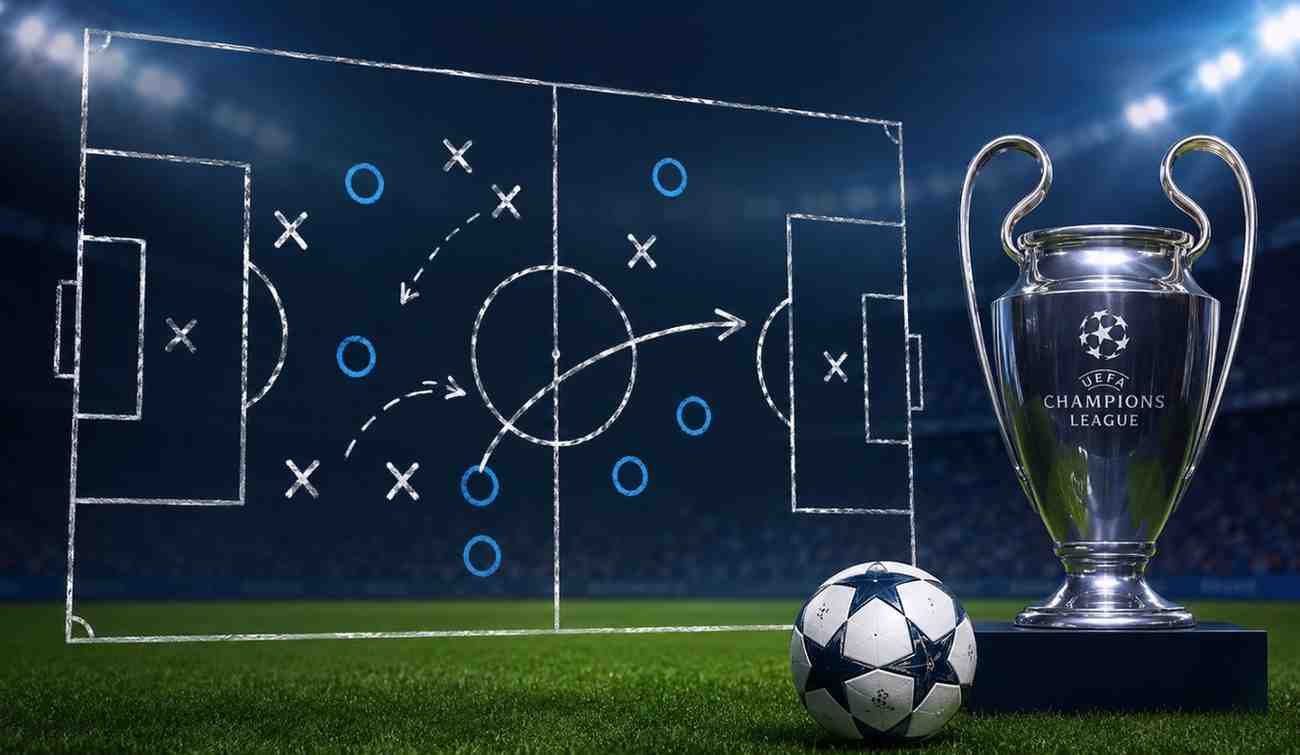
Every UEFA Champions League season reminds us that trophies are rarely won through talent alone. Elite clubs often share similar levels of quality, making tactical preparation the true difference between victory and disappointment. We enjoy spectacular goals as much as anyone, yet the real story usually unfolds between the passing lanes, pressing traps, and subtle positional shifts. That is why UEFA Champions League Match Analysis has become essential for supporters seeking deeper insight instead of relying solely on final scores or headline moments.
Watching Champions League football sometimes feels like watching grandmasters playing chess while sprinting uphill—and somehow making it look effortless. Every formation has a purpose, every pressing trigger has a target, and every tactical adjustment aims to expose a weakness. We often hear someone declare a team “wanted it more,” but tactical discipline usually deserves the applause. Managers prepare countless scenarios before kickoff, ensuring their teams react intelligently instead of emotionally when the pressure inevitably rises.
Possession percentages, shots on target, and expected goals certainly provide valuable context, but they never explain everything. A side can dominate the numbers while quietly losing the tactical battle across midfield or wide areas. One intelligent substitution or formation tweak can transform an ordinary performance into a memorable comeback. Statistics illuminate part of the picture; tactical analysis fills in the missing pieces. Looking beyond the spreadsheet often reveals why football remains beautifully unpredictable, despite our best attempts to measure every moment.
The biggest European fixtures are frequently settled by details that casual viewers barely notice. Midfield duels dictate rhythm, overlapping full-backs stretch defensive structures, and coordinated pressing forces costly mistakes. Set pieces also become decisive when open-play opportunities are scarce. We have lost count of the times a seemingly balanced contest shifted because one coach spotted a vulnerable channel before anyone else. These hidden battles often determine who celebrates at full-time and who spends the journey home wondering what changed.
Strong football previews begin long before the referee blows the opening whistle. At Best Previews, every assessment considers tactical trends, recent performances, probable lineups, injuries, fixture congestion, and managerial flexibility. We prefer asking why a team performs well rather than simply accepting recent results. That approach helps identify strengths and weaknesses which traditional statistics sometimes overlook. Reliable previews emerge from understanding how two playing styles interact instead of assuming history will automatically repeat itself on another Champions League evening.
Football debates often become wonderfully dramatic after ninety minutes, especially when hindsight suddenly makes everyone sound like an experienced coach. Yet several tactical details regularly escape attention. Defensive midfield absences, overloaded flanks, pressing intensity, and recovery speed can influence a match far more than league position alone. Another common mistake is assuming teams repeat identical game plans every week. Elite managers constantly adapt because Champions League opponents quickly punish predictable football, regardless of reputation or previous success.
Quality predictions depend on understanding far more than current form tables. Tactical matchups explain why certain teams consistently trouble stronger opponents while others struggle against compact defensive systems. Many of the best football prediction tips begin with studying formations, transitions, and pressing structures instead of chasing popular narratives. We have all witnessed confident pre-match opinions disappear before halftime because one manager completely altered the tactical picture. Football has a remarkable habit of rewarding preparation over assumptions every single time.
One Champions League night still stands out for all the right reasons. The opening forty-five minutes suggested a predictable outcome, yet the second half became an entirely different contest after one tactical adjustment reshaped midfield control. Suddenly, passing lanes opened, pressing improved, and momentum changed almost instantly. Moments like these remind us that football refuses to follow convenient scripts. Every match offers fresh lessons for anyone willing to study the game beneath the obvious highlights and familiar talking points.
Champions League football evolves every season because managers refuse to stand still. Advanced analytics, versatile players, flexible formations, and detailed opposition scouting continue transforming tactical preparation. Clubs now adjust during matches with remarkable speed, making adaptability as valuable as technical ability. Yesterday’s winning strategy quickly becomes tomorrow’s outdated idea. That constant evolution keeps supporters fascinated and analysts permanently occupied. The game’s greatest competition rewards innovation, intelligence, and courage far more often than comfortable routines or predictable habits.
Champions League football has always been about more than famous clubs and world-class players. Tactical awareness consistently separates good performances from unforgettable ones, revealing the hidden stories behind every dramatic European night. Whether examining pressing systems, defensive organization, or clever positional rotations, deeper analysis always adds valuable perspective. Football never stops surprising us—and perhaps that is exactly why we keep returning for another kickoff. There is always another tactical puzzle waiting to be solved, and that mystery keeps the game endlessly compelling.
Tactical analysis explains how formations, pressing systems, player roles, and managerial decisions influence the outcome of elite matches. It provides a deeper understanding than statistics alone and helps supporters appreciate why certain teams consistently succeed against Europe’s strongest opposition.
A complete UEFA Champions League Match Analysis should evaluate team news, tactical setups, recent form, player availability, head-to-head trends, pressing intensity, defensive organization, and possible in-game adjustments before making any overall assessment.
Yes. Tactical research identifies favorable matchups, potential weaknesses, and strategic advantages that basic statistics often overlook. This creates more informed expectations and reduces reliance on reputation or recent headlines.
European knockout football usually features stronger opponents, greater preparation time, and more detailed game plans. Managers carefully adapt tactics because even small mistakes can decide an entire season.
Best Previews combines tactical evaluation, squad news, statistical trends, recent performances, managerial approaches, and historical matchups to provide balanced previews focused on football insight rather than simple predictions.
Submit guest articles that reach decision-makers, influencers, and professionals. Yarabook offers a trusted platform for quality content, strong backlinks, and SEO-driven visibility. Pay. Publish. Promote.