
The apparel industry involves several interconnected processes, from managing customer orders and sourcing raw materials to production planning, inventory management, quality control, and shipment. As apparel businesses grow, handling these activities through spreadsheets or separate software can become challenging. Disconnected systems often lead to data errors, production delays, higher operational costs, and poor coordination between departments.
An apparel ERP software helps businesses streamline these operations through a centralized platform. It connects different departments, automates routine activities, and provides better visibility into business operations.
However, not every ERP system offers the functionality required by garment manufacturers. When choosing an apparel ERP, businesses should look for features that address the specific challenges of the fashion and garment industry.
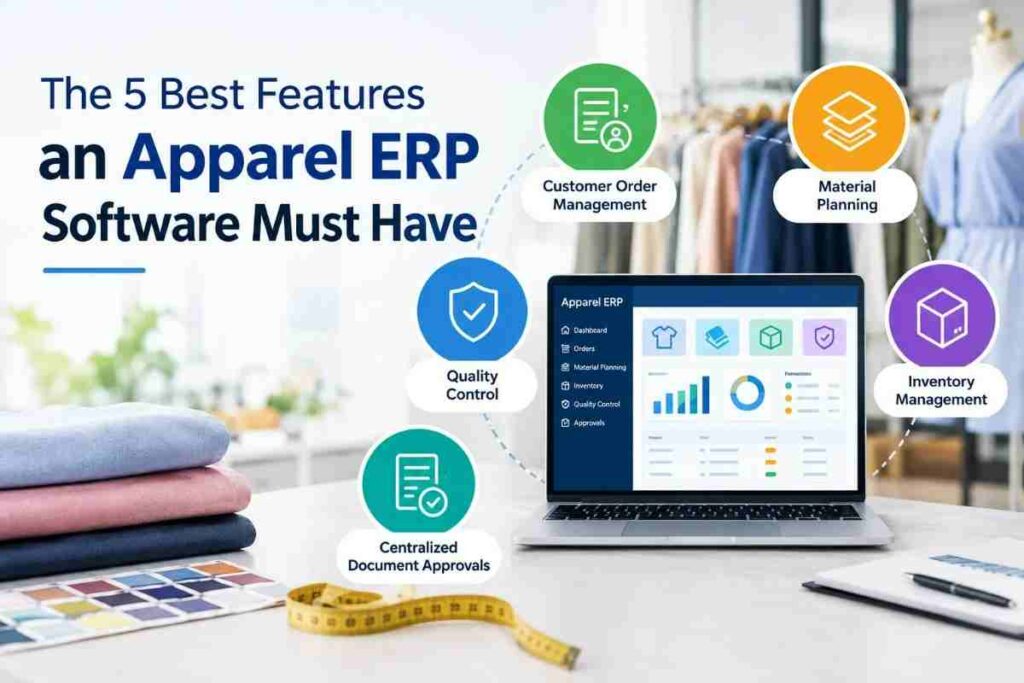
Here are five essential features every apparel ERP software must have.
1. Customer Order Management
Managing multiple customer orders, product styles, colors, sizes, quantities, and delivery schedules can be complicated, particularly for manufacturers working with several buyers simultaneously.
A good apparel ERP should provide a centralized order management system that allows businesses to track orders from initial confirmation through production and final shipment.
Important features to look for:
-
Centralized order tracking: Manage customer orders and related information from one platform.
-
Style, color, and size-wise management: Track order quantities and specifications at the individual product variant level.
-
Order amendments: Record changes in quantities, specifications, pricing, and delivery dates.
-
Production and shipment tracking: Connect customer orders with manufacturing progress and shipment schedules.
-
Real-time order visibility: Allow teams to access updated order information and monitor order status.
With centralized customer order management, apparel manufacturers can reduce manual errors, improve communication between departments, and ensure orders are processed according to buyer requirements.
2. Material Planning
Material availability plays a critical role in garment manufacturing. Fabric, trims, accessories, labels, and other raw materials must be available in the right quantities and at the right time.
Poor material planning can result in production delays, unnecessary purchasing, excess inventory, and increased manufacturing costs.
An apparel ERP should include material planning capabilities that connect customer orders with material requirements and procurement activities.
Important features to look for:
-
Bill of Materials (BOM) management: Maintain detailed material requirements for individual styles and products.
-
Material Requirement Planning (MRP): Calculate material requirements based on confirmed orders and production plans.
-
Material availability tracking: Check available stock against upcoming production requirements.
-
Purchase planning: Generate purchase requirements based on material shortages and demand.
-
Supplier lead time management: Monitor supplier delivery schedules to support timely material procurement.
Effective material planning helps manufacturers avoid shortages, reduce excess purchasing, minimize material wastage, and keep production schedules on track.
3. Inventory Management
Apparel manufacturers manage different types of inventory throughout the production cycle, including raw materials, fabrics, trims, work-in-progress (WIP), and finished garments.
When businesses operate multiple warehouses, factories, and production facilities, maintaining accurate inventory records becomes even more challenging.
An apparel ERP should provide centralized inventory management with real-time stock visibility across different locations.
Important features to look for:
-
Real-time inventory tracking: Monitor stock availability and movements across the business.
-
Multi-warehouse management: Manage inventory across multiple warehouses and manufacturing locations.
-
Fabric and trim inventory control: Track raw materials by type, quantity, color, and other relevant attributes.
-
Batch and lot tracking: Maintain traceability of materials throughout the manufacturing process.
-
Stock movement monitoring: Record material receipts, issues, transfers, and adjustments.
-
Finished goods management: Track completed products and their availability for shipment.
Better inventory management helps apparel businesses maintain accurate stock levels, reduce unnecessary inventory costs, prevent material shortages, and improve overall warehouse efficiency.
4. Quality Control
Product quality directly affects customer satisfaction, brand reputation, and profitability. Quality issues such as fabric defects, stitching problems, incorrect measurements, and finishing errors can result in rework, rejected products, and delayed shipments.
For this reason, quality control should be an integrated part of apparel ERP software rather than a separate manual process.
A good ERP system should allow manufacturers to monitor quality at different stages, from incoming material inspections to final garment checks.
Important features to look for:
-
Incoming material inspections: Check fabric, trims, and accessories before they enter production.
-
In-process quality checks: Monitor quality during cutting, stitching, finishing, and other manufacturing stages.
-
Final product inspections: Verify finished garments against buyer specifications and quality standards.
-
Defect tracking and reporting: Record defects, rejections, and inspection results.
-
Corrective action monitoring: Track quality issues and follow-up actions to prevent recurring problems.
Integrating quality control with production and order management helps manufacturers identify problems earlier, reduce rework, maintain consistent product quality, and meet buyer expectations.
5. Centralized Document Approvals
Apparel manufacturing involves several documents that require review and approval from different teams. These may include purchase orders, material specifications, tech packs, samples, costing sheets, production documents, and quality reports.
Managing these documents through emails, spreadsheets, and paper-based workflows can create confusion, approval delays, and version conflicts.
An apparel ERP should provide centralized document management with configurable approval workflows.
Important features to look for:
-
Centralized document storage: Keep important business documents organized and accessible from one platform.
-
Configurable approval workflows: Set up approval processes based on departments, roles, and business requirements.
-
Role-based access control: Ensure employees can access documents according to their responsibilities.
-
Approval status tracking: Monitor pending, approved, and rejected documents.
-
Document version management: Maintain updated versions and reduce confusion caused by outdated files.
-
Automated notifications and reminders: Notify relevant users about pending approvals and required actions.
Centralized document approvals improve accountability, reduce manual follow-ups, and help teams make faster decisions. They also create a more organized workflow across departments.
What Else Should You Consider When Choosing Apparel ERP Software?
Apart from these five essential features, apparel businesses should evaluate whether an ERP system can support their long-term operational requirements.
Some additional capabilities worth considering include:
-
Production management: Track production orders, schedules, work-in-progress, and factory performance.
-
Costing and budgeting: Calculate product costs and monitor expenses against budgets.
-
Supplier management: Coordinate supplier information, purchase orders, and deliveries.
-
Time & Action (T&A): Monitor important production and delivery milestones.
-
Financial management: Connect manufacturing operations with accounting and financial reporting.
-
Business intelligence: Access dashboards, reports, and performance indicators.
-
Integration and scalability: Connect with existing business applications and support future growth.
It is also important to request a product demonstration using actual apparel styles, orders, and manufacturing workflows before making a final decision.
Conclusion
Choosing the right apparel ERP software is essential for managing the complexities of garment manufacturing and improving operational efficiency.
Customer order management, material planning, inventory management, quality control, and centralized document approvals are five important features that every apparel manufacturer should prioritize.
An ERP system that connects these functions on one platform can help businesses reduce manual errors, control costs, improve departmental coordination, and gain better visibility across their operations.
The right apparel ERP is not just about managing day-to-day operations; it is about building a more connected, efficient, and scalable apparel business.

Leave a Reply
You must be logged in to post a comment.