

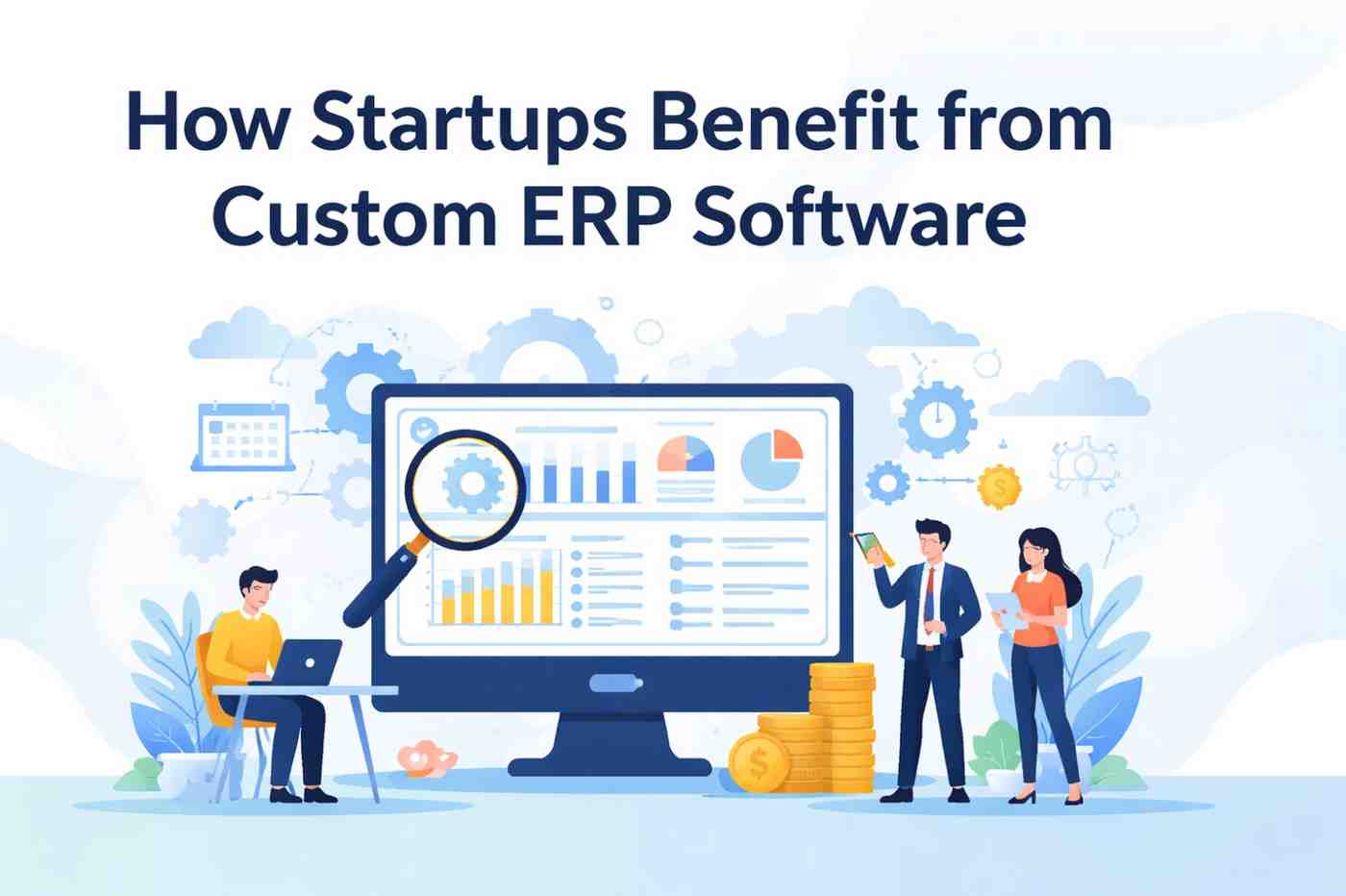
Startups often begin with a mix of tools, spreadsheets, and a fair amount of “organized chaos” (which usually feels organized—until it isn’t). As operations grow, that patchwork system starts showing cracks—data duplication, missed updates, and inefficiencies that quietly slow everything down. This is where structured systems step in. Many growing businesses are now turning to custom ERP software development services to bring clarity into their workflows. Instead of juggling disconnected tools, everything moves into one unified system—streamlined, scalable, and far less stressful to manage.
Custom ERP software is a tailored solution designed to manage and integrate core business processes—finance, sales, inventory, HR—into a single platform. Unlike off-the-shelf systems that force businesses to adapt, custom ERP adapts to business needs which is how it should be. Built by an experienced ERP developer, these systems align closely with existing workflows. That means fewer compromises and more efficiency. In short, it’s not just software—it’s a system designed to fit how a startup actually operates, rather than how software thinks it should.
Data scattered across multiple tools creates confusion faster than expected (and usually at the worst possible time). Custom ERP brings everything into one place, offering a single source of truth across departments. Sales, finance, and operations all work from the same data—no duplication, no mismatched reports. This reduces errors and improves consistency across the organization. Instead of asking, “Which file is correct?”, teams move forward with confidence. And yes, it quietly eliminates those late-night spreadsheet hunts that no one really enjoys.
Startups rarely grow in straight lines—they expand, pivot, and evolve quickly. Systems that work today may not support tomorrow’s needs. Custom ERP is built with flexibility in mind, allowing businesses to scale without constantly replacing tools. Features can be added, workflows adjusted, and modules expanded as needed. This avoids the costly cycle of switching platforms every few years. Growth becomes smoother (and far less disruptive), allowing teams to focus on strategy instead of rebuilding systems from scratch every time the business levels up.
Repetitive tasks consume time that teams could spend on meaningful work. Custom ERP automates processes like invoicing, reporting, inventory tracking, and approvals—reducing manual effort and minimizing errors. This leads to faster operations and better productivity across departments. Instead of chasing routine tasks, teams can focus on growth and innovation. Automation may not sound exciting at first—but when routine work starts completing itself (almost like magic), its value becomes very clear, very quickly.
Decisions based on outdated or incomplete data often lead to missed opportunities. Custom ERP systems provide real-time insights through dashboards and reports, helping businesses stay informed and responsive. Whether it’s tracking sales performance, monitoring expenses, or analyzing trends, everything is accessible instantly. This enables faster and more accurate decision-making. Instead of relying on guesswork, startups gain clarity (and confidence) in their strategies—something that becomes increasingly valuable as competition grows.
Custom ERP may seem like a larger investment upfront, but it often proves more cost-effective over time. Multiple software subscriptions, manual processes, and inefficiencies quietly add up. A unified system reduces these hidden costs while improving operational efficiency. Businesses also avoid frequent migrations and integration expenses. In the long run, the return on investment becomes evident—not just in savings, but in improved productivity and smoother operations. Efficiency, after all, tends to pay for itself.
Customer satisfaction is closely tied to how efficiently a business operates behind the scenes. Custom ERP systems streamline order management, communication, and service processes—leading to faster response times and better accuracy. This allows businesses to deliver consistent and personalized experiences. When internal systems run smoothly, customer interactions naturally improve. It’s one of those indirect benefits that quickly becomes a competitive advantage (even if customers never see the system itself).
Startups often rely on a variety of tools for different functions. Custom ERP systems can integrate seamlessly with these tools, ensuring smooth data flow without disrupting workflows. This eliminates the need to abandon useful platforms while still achieving centralization. The result is a connected ecosystem where systems communicate effectively. Instead of forcing teams to adjust to rigid software, the software adapts to the business environment—exactly how modern systems should function.
Data security is no longer optional—especially for growing businesses handling sensitive information. Custom ERP systems provide better control over data access, ensuring that only authorized users can view or modify information. They can also be designed to meet specific compliance requirements relevant to the industry. This builds trust with clients and reduces risks associated with data breaches. Security becomes part of the system’s foundation, rather than an afterthought added later.
Efficiency, speed, and adaptability define competitive advantage for startups. Custom ERP systems support all three by optimizing workflows and enabling faster decision-making. Businesses can respond to market changes more effectively and operate with greater precision. This creates a noticeable edge over competitors relying on disconnected tools. While the difference may not always be visible externally, it plays a significant role in long-term growth and stability.
In several early-stage businesses, operations often start with enthusiasm and a handful of tools that “seem good enough.” Over time, those tools multiply—and so do inefficiencies. One common pattern emerges: teams spend more time managing systems than running the business. Once a structured ERP system is introduced, the shift is immediate. Processes become clearer, communication improves, and teams finally operate with alignment. It’s not a dramatic overnight transformation—but it’s a steady, noticeable improvement that builds momentum.
There are clear signs when a startup is ready for ERP implementation. If multiple tools are being used to manage operations, data inconsistencies are frequent, or manual processes are slowing growth, it’s time to consider a change. Waiting too long can create deeper inefficiencies that are harder to fix later. Early investment in structured systems often prevents future complications. When operations begin to feel overwhelming, that’s usually a signal—not a coincidence.
Selecting the right development partner is critical for ERP success. Experience in building scalable systems, understanding of business processes, and customization capabilities are key factors to consider. A reliable partner focuses not just on development but also on long-term support and adaptability. Communication and transparency also play an important role throughout the project. The goal is to work with a team that understands both technology and business needs—because ERP is as much about strategy as it is about software.
Custom ERP is not just a technical upgrade—it’s a strategic investment in how a business operates and grows. By centralizing data, automating processes, and enabling smarter decisions, it creates a strong operational foundation. Startups that implement structured systems early often scale more efficiently and with fewer obstacles. In a fast-moving environment, clarity and control make a significant difference. Less chaos, more alignment—and ultimately, better outcomes for the business as a whole.
Custom ERP software is a tailored system designed to manage and integrate business processes like finance, sales, and operations in one platform.
Startups benefit from improved efficiency, centralized data, and better decision-making as they grow.
While it requires an upfront investment, it reduces long-term costs by improving efficiency and eliminating multiple tools.
Development timelines vary depending on complexity, but most custom ERP systems take a few months to build and deploy.
Yes, custom ERP systems can integrate with various tools, ensuring seamless workflows.
Look for experience, customization expertise, scalability, and strong communication when selecting a development partner.
Submit guest articles that reach decision-makers, influencers, and professionals. Yarabook offers a trusted platform for quality content, strong backlinks, and SEO-driven visibility. Pay. Publish. Promote.