

Shocks and struts are essential suspension components that control vehicle movement and help keep the tires in contact with the road. They gradually lose their effectiveness as they accumulate mileage and experience repeated impacts from normal driving. Because suspension wear usually develops gradually, many drivers do not realize their shocks or struts are becoming less effective until handling and ride quality noticeably change.
Understanding the warning signs that your shock and strut lifespan in Santa Clara is coming to an end can help you arrange an inspection before worn components begin affecting tires, steering, braking stability, or other suspension parts.
Shocks and struts constantly work whenever the vehicle accelerates, brakes, turns, or travels over uneven surfaces. Their internal components can gradually deteriorate, reducing their ability to control suspension movement.
Factors that can accelerate wear include:
Eventually, the suspension may no longer provide the same level of control it had when the vehicle was newer.
One of the most recognizable signs of worn shocks or struts is excessive bouncing.
After passing over a bump, the vehicle should normally settle relatively quickly. If it continues moving up and down several times, the dampers may no longer be controlling suspension movement effectively.
You may notice this when driving over:
Repeated bouncing is a good reason to have the suspension inspected.
Some forward movement during braking is normal because weight naturally transfers toward the front axle.
However, excessive front-end movement can indicate worn suspension components.
You may notice the front of the vehicle dropping significantly when:
Worn struts can allow the front suspension to compress more than it should.
A vehicle naturally leans slightly when cornering.
If shocks and struts are worn, the body may move excessively from side to side.
This can make the vehicle feel:
Excessive body roll may be especially noticeable during highway lane changes or sharper turns.
Shocks and struts help maintain consistent tire contact with the road.
When suspension components become worn, the tires may develop irregular wear patterns.
Watch for:
Uneven tire wear can also result from alignment or tire problems, so the entire system should be inspected.
A shock absorber or strut may develop a fluid leak as its internal seals deteriorate.
Look for:
A small amount of residue does not always mean immediate failure, but significant leakage should be professionally evaluated.
Suspension wear can become much more noticeable at higher speeds.
A vehicle with worn shocks or struts may feel:
If you find yourself constantly making steering corrections on the highway, the suspension, tires, steering, and alignment should be checked.
Unusual suspension noises can indicate worn or damaged components.
You may hear:
The noise may come from the shock or strut itself, but it can also originate from mounts, bushings, springs, control arms, or other components.
Proper diagnosis is therefore important before replacing parts.
A healthy suspension should control movement after the vehicle encounters a bump.
If the vehicle continues moving noticeably after the initial impact, the shocks or struts may have lost damping performance.
This can be one of the first changes a driver notices as suspension components age.
Worn suspension components can change the way the vehicle responds to steering inputs.
Drivers may notice:
Other problems can cause similar symptoms, so suspension and steering should be evaluated together.
Suspension deterioration does not always produce an obvious mechanical symptom.
Sometimes the vehicle simply feels different.
You may notice:
Gradual changes are easy to overlook, but they can indicate that suspension components are approaching the end of their effective service life.
Shocks and struts do not operate independently of the rest of the suspension.
When damping performance decreases, other components may experience different loads and movement.
Depending on the vehicle, this can contribute to wear in:
That is why suspension problems are best addressed before they become more extensive.
If the vehicle moves sideways, bounces repeatedly, or requires steering correction after hitting a bump, the suspension may not be controlling the movement effectively.
This can be particularly noticeable when driving at higher speeds.
A professional inspection can determine whether the problem is related to shocks, struts, tires, alignment, or another component.
Continuing to drive with severely worn suspension components can lead to several problems.
Potential consequences include:
The severity depends on the condition of the components and the vehicle.
In many cases, shocks and struts are replaced in pairs on the same axle.
This helps maintain similar damping characteristics on both sides of the vehicle.
However, replacement should be based on the condition of the components, their age, mileage, and vehicle-specific recommendations.
If one component has failed, the opposite side should also be inspected before deciding on the repair.
A professional suspension inspection can include checking:
Technicians can also evaluate suspension movement and determine whether the symptoms are actually caused by worn shocks or struts.
Do not wait until a suspension component completely fails.
An inspection is recommended if you notice:
Early diagnosis can help prevent additional wear and unnecessary repair costs.
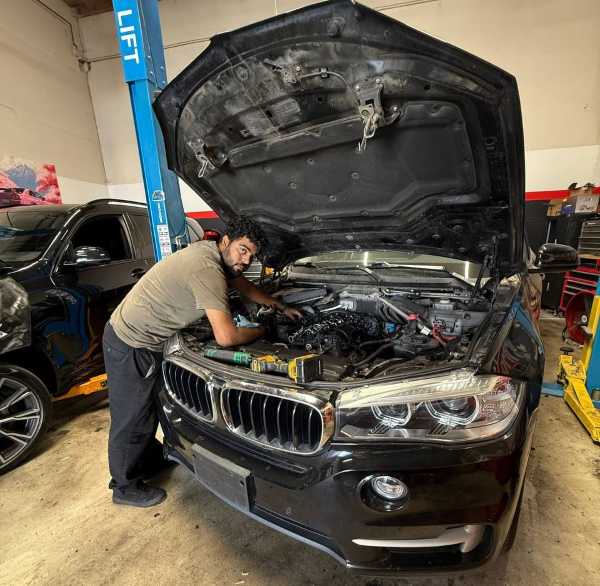
At One Nation Auto, technicians inspect shocks, struts, springs, mounts, bushings, tires, steering components, and other suspension parts to identify the source of handling and ride-quality problems.
If you notice signs that your shock and strut lifespan in Santa Clara is coming to an end, One Nation Auto can evaluate the condition of the suspension and determine whether replacement or additional repairs are appropriate.
A complete inspection helps identify the actual cause of the symptoms instead of replacing components unnecessarily.
Shocks and struts usually wear gradually rather than failing without warning. Excessive bouncing, nose diving, body roll, uneven tire wear, fluid leakage, unusual noises, and poor highway stability can all indicate that suspension components are losing their effectiveness. Paying attention to these symptoms can help prevent additional tire and suspension problems.
If you notice several signs that your shock and strut lifespan in Santa Clara is coming to an end, having the vehicle inspected by One Nation Auto can help determine whether the shocks or struts require replacement. Timely suspension service can help maintain proper tire contact, predictable handling, ride comfort, and vehicle stability.
Submit guest articles that reach decision-makers, influencers, and professionals. Yarabook offers a trusted platform for quality content, strong backlinks, and SEO-driven visibility. Pay. Publish. Promote.