

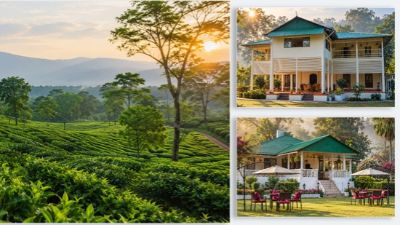
The tea garden resorts managed by Octavius are historic colonial-style bungalows located inside active tea farms in the Dooars region of northern West Bengal, India. Staying here lets you experience three things together: the history of growing tea, classic building designs from the past, and the daily work of a real tea farm. Unlike standard hotels, these stays bring visitors incredibly close to nature and an offbeat experience. The tea plants will surround you, and you will be able to observe from the factory how tea leaves are processed as well as how Dooars weather changes over the seasons.
These Octavius tea estate resorts feature two main historic options: the bungalow at Nagrakata and the bungalow at Damdim. Even though both bungalows are historic heritage buildings, they have been carefully restored to preserve their original charm and keep them in excellent condition. Each bungalow feels unique, with its own special design, history, and view of the surrounding tea farm. Many years ago, during the British colonial period, these bungalows were originally built as private homes for the British directors who also controlled the tea estates. Over time, the owners have continuously looked after and repaired these structures to keep them in great condition. Inside and outside, the bungalows show a classic, old-fashioned style with large covered outdoor porches, called verandas, along with very big, open rooms and traditional design details. Today, instead of housing estate managers, these historic bungalows open their doors to travelers and visitors exploring the Dooars region.
The tea estate resorts are managed by Octavius, a company with years of experience growing and producing tea. Its parent company, Octavius Industries Pvt. Ltd., has restored and maintained these heritage bungalows for more than twenty years. While the tea farms continue to grow and process tea leaves every day, the bungalows are used separately as historic accommodation. This direct connection gives the stay a real link to the local tea history, rather than just using the tea gardens as pretty background scenery.
Both bungalows are in the Jalpaiguri district of northern West Bengal, part of the broader Dooars region. The Dooars region is well-known for its large tea estates, lush forest habitat, rivers, and locating at the foot of the Himalayan Mountains. Tea farming has had a significant impact on the local ecosystem and economy, and staying on the estates allows visitors to have a better understanding of farm life. From the locations of the bungalows, visitors can easily explore more destinations of North Bengal, such as nearby forests with wild animals, river valleys, and local towns.
Meal is a primary priority during a visit at any stays, and both Octavius bungalows strictly adhere to the 100% vegetarian meal guideline. All meals offered to tourists are vegetarian, with no meat or fish. The kitchen staff prepares a set daily menu of classic, home-style Indian dishes that vary depending on the season. The daily meal plan consists of early morning tea, breakfast, lunch, late afternoon tea with snacks, and dinner. This structured schedule gives travelers regular, comfortable dining times throughout their stay as part of their experience on the estate.
Octavius operates these tea resorts on American Plan, which means all your main daily meals are already included in the cost of your suite. Under this plan, the bungalow stay includes breakfast, lunch, dinner, as well as morning and afternoon tea with snacks. This is different from other hotel options that only include breakfast or just two meals a day. While exact prices and details depend on your specific booking, the main rule of the American Plan is that daily meals are already built into the total cost of the stay rather than billed separately.
Visiting the tea gardens is another key part of the experience. Guests can learn how tea bushes are planted and grown, enjoy views across the vast green fields, and join in special tea-focused activities organized by the staff. You can also try tea tasting, which will help you understand how different types of tea have their own unique scent, strength, and taste. When the estate factory is actively working, staff can arrange factory tours for vacationers to see how fresh leaves are turned into finished tea, though this depends on the factory’s production schedule at that time.
Together, both bungalows offer a historic place to stay that is deeply tied to working tea farms in the Dooars. Their unique character is inherited from the history of the bungalows, the tea farm, the policy of offering only vegetarian food, and the easy all-inclusive meal plan. All of these characteristics distinguish Octavius tea estate stays as destinations where local history and everyday tea cultivation naturally form the combo experience for every visitors.
Submit guest articles that reach decision-makers, influencers, and professionals. Yarabook offers a trusted platform for quality content, strong backlinks, and SEO-driven visibility. Pay. Publish. Promote.