
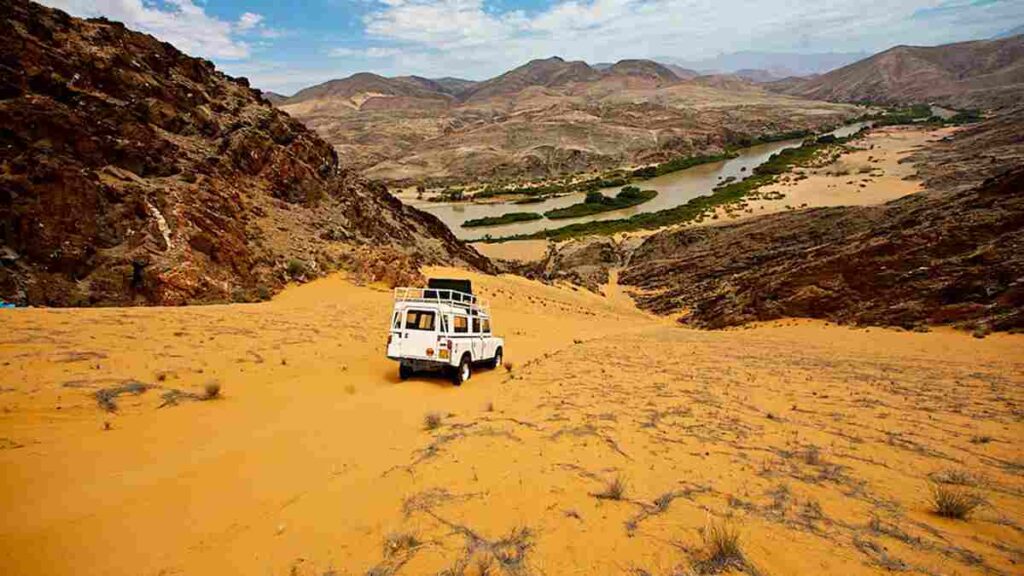
Namibia is a country made for road trips. The roads are quiet, the skies are huge and the scenery changes from red dunes to salt pans to foggy coastline in just a few days of driving. Best of all for UK visitors, cars here drive on the left, so you will feel at home behind the wheel.
At Travel to Africa, our team is based in Stratford, East London, and we plan Namibia self-drive trips for many travellers. This guide covers three of the best stops, Sossusvlei, Etosha and the Skeleton Coast, with some honest tips on how to make the trip go smoothly.
Why Choose a Namibia Road Trip?
Namibia is one of the least crowded countries in Africa. You can drive for long stretches without seeing another car, which gives you a real feeling of freedom. Distances are big, but the roads are generally simple to follow, and many lodges and campsites are well set up for independent travellers.
A self-drive trip also lets you set your own pace. You can stop for photos whenever you like, stay longer where you enjoy it and skip what does not interest you.
Starting in Windhoek
Most trips begin in Windhoek, the capital. You will usually fly there via Johannesburg or another hub, so check the routes when you book. Spend your first night in the city, pick up your hire car and buy any supplies you need.
Take your time collecting the vehicle. Check the spare tyre, the jack and the fuel level, and ask for a quick lesson if you are not used to a 4×4.
Sossusvlei: Red Dunes at Sunrise
Sossusvlei is the image most people have in mind when they think of Namibia. Giant red sand dunes rise out of the desert, and the colours change as the sun climbs higher.
The best plan is to stay close to the park gate at Sesriem, so you can enter early in the morning. The light is soft, the air is cooler, and the dunes look their best.
Don’t miss:
- Dead Vlei: A white clay pan with old, dark tree skeletons standing against the orange dunes. It is a very popular spot for photographs.
- Dune climbing: Climbing a dune gives you wide views, but it is tiring in loose sand, so go early and take water.
- Sesriem Canyon: A short walk into a narrow gorge, which is a pleasant break from the heat.
Swakopmund and Walvis Bay
Heading west, you reach the Atlantic coast. Swakopmund is a small, calm town with German-style buildings, cafés and plenty of activities. You can try quad biking on the dunes, sandboarding or a scenic flight.
Nearby, Walvis Bay has a lagoon with flamingos and other birds, and boat trips where you may see seals and dolphins. It makes a nice change of pace after several days of desert driving.
The Skeleton Coast
The Skeleton Coast has a wild and lonely feel. Cold sea fog often rolls in from the Atlantic, and the shoreline is scattered with old shipwrecks and whale bones. The name sounds scary, but the area is also beautiful and very quiet.
A good stop on the way is Cape Cross, where a large colony of Cape fur seals gathers on the rocks. It can be noisy and smelly, but it is a fun place to watch the animals up close.
Some parts of the Skeleton Coast need permits, and some areas can only be reached with a guide or by air. Ask us what is possible for your dates before you go.
Damaraland: A Stop Worth Making
Between the coast and Etosha, many travellers stay in Damaraland. It has rocky hills, wide valleys and ancient rock engravings at Twyfelfontein. With luck, you may spot desert-adapted elephants. Local guides can help you find signs of wildlife and explain the history of the land.
Etosha National Park: Wildlife at the Waterholes
Etosha is one of the best places for wildlife in the country. It is built around a huge salt pan, and animals gather at waterholes, especially in the dry season. You can sit and watch while elephants, zebras, giraffes and lions come and go.
You can drive yourself in Etosha, which many people enjoy. Rhinos are found here too, and the waterholes near the camps are popular at dusk. Take your time, be patient and bring binoculars.
Travel O Africa can help you choose between the lodges inside the park and those just outside, depending on your budget and what you want from your stay.
Practical Tips for the Drive
- Expect gravel roads. Many routes are unpaved, so drive slowly and keep a good distance from other vehicles.
- Avoid driving at night. Animals can wander onto the road, and it is hard to see them.
- Fill up often. Fuel stations can be far apart, so top up whenever you can.
- Carry water and snacks. It is hot and dry, and help may be far away.
- Check your tyres. Punctures can happen, so know how to change a wheel.
- Allow enough time. Distances are long, so plan for ten to fourteen days.
When to Go
The dry season, from about May to October, is the best time for wildlife, as animals gather at waterholes. Days are warm and nights can be cool, even cold in the desert. The wetter months bring green scenery and fewer visitors, but some roads can be harder to drive and the heat can be strong.
Plan Your Namibia Trip with Us
A Namibia road trip is easier with good planning. The Travel to Africa team can build a route, book the car and lodges, and give you a clear plan to follow. Call or email us for a friendly chat. There is no pressure to book.
Frequently Asked Questions
Is Namibia good for a self-drive trip?
Yes. The roads are quiet and mostly simple to follow, and cars drive on the left, as in the UK.
How long do I need for Sossusvlei, Etosha and the Skeleton Coast?
We suggest ten to fourteen days, so you do not have to rush the long drives.
Do I need a 4×4?
Not always, but many travellers choose one for the gravel roads. We can advise based on your route.
Is it safe to drive in Namibia?
It is generally a good place for self-drive, but take care on gravel roads, avoid night driving and watch for animals.
When is the best time to visit Etosha?
The dry season from May to October is best, as animals gather at the waterholes.
Can Travel O Africa arrange the whole trip?
Yes. Travel O Africa can book your car, lodges, flights and permits, and give you a clear route to follow.
Do I need a visa?
Requirements can change, so check the latest rules for UK passport holders before you travel.

Leave a Reply
You must be logged in to post a comment.