
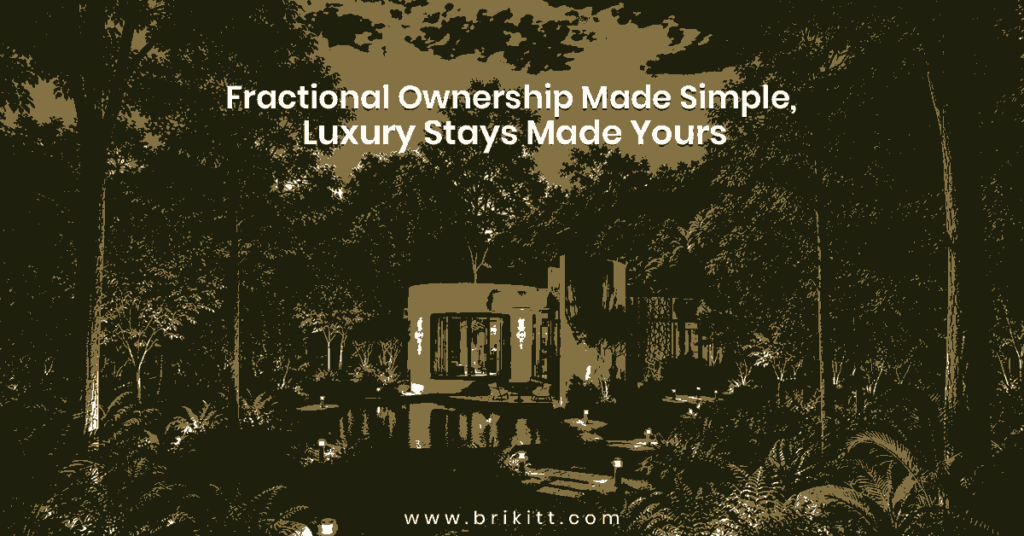
Many people keep a favourite escape in mind. It might be a seaside villa, a hill cottage or a quiet house in a leisure town. The plan usually stalls once the full price of buying comes into view.
The cost does not stop at the sale. A holiday home needs cleaning, repairs and regular supervision, and it often sits empty for long periods. Few buyers want that burden for a few weeks of use each year.
BRIKitt is an Indian proptech platform that offers a more practical option. It is built around fractional ownership of luxury holiday homes, with each property divided into 11 equal shares. A 1/11 share costs about one-eleventh of the property’s value.
What Is BRIKitt and How Does Fractional Ownership Work?
BRIKitt launched in 2021 as a technology-driven platform for fractional ownership of luxury holiday homes. It identifies properties, structures ownership legally, lists homes for guests when owners are away and handles upkeep.
Fractional ownership means a few buyers hold one property together. Each buyer owns a defined portion and receives benefits that match it. A holiday home fits this model because it is not lived in all year, and days that owners skip can be rented to guests.
How the BRIKitt Model Works
The path from first interest to first stay has four steps:
- Property selection: BRIKitt identifies a luxury holiday home to offer for ownership.
- Legal structuring: Ownership is set up so that each owner’s stake is clearly defined.
- Buying a 1/11 share: You purchase one BRIK, which is one of the 11 equal shares in the property.
- Stay, earn and track: You use your stay days, unused days are rented to guests, and you follow the details on your owner dashboard.
What Does a 1/11 Share Give You?
One 1/11 share comes with four benefits:
- A defined ownership stake in the holiday home
- About 30 personal stay days a year, taken when you choose
- A proportionate share of net rental income
- A proportionate share of any rise in the property’s value
Eleven owners use about 330 days between them. The remaining days are open to guests, which is the source of rental income.
Ownership Structure: The SPV Model
Each holiday home is held in its own special purpose vehicle, or SPV. An SPV is a separate legal entity created for that one asset.
It is kept apart from other assets and from BRIKitt’s own business. The SPV documents each owner’s stake, rights and obligations. It also earns the rental income before distribution.
Before you invest, ask for these and read them closely:
- SPV documents
- Ownership terms
- Income distribution rules
What You Get as an Owner
Your 30 stay days are yours to plan. You can take one long holiday, a few short breaks or a trip timed to a family event. This flexible 30-day model makes the stay option worthwhile.
Looking after a luxury home normally means repairs, cleaning and guest arrangements. Here, the hospitality team looks after the property. You enjoy a luxury lifestyle without the hassle.
How You Make Money: Rental Income
How unused days earn income
Days that owners do not use are rented to guests through BRIKitt’s booking and hospitality ecosystem. Guests come through online booking channels and BRIKitt’s own data-driven booking portal.
The hospitality team handles check-ins, housekeeping, maintenance and guest support.
How income reaches you
Net income is what remains after operating costs such as management, housekeeping and utilities. The SPV earns this income before it is distributed. The net amount is shared among the 11 owners by share.
Income varies and is not guaranteed, so plan for a range of outcomes.
Rental Yield Explained
How rental yield is measured
Rental yield is net annual rental income divided by your investment. Net annual rental income is rental income minus operating costs.
The figure varies with these factors:
- Occupancy
- Seasonality
- Pricing
- Operating costs
- Property quality
A hypothetical example
The figures below are hypothetical and only show how the calculation works:
- Annual rental income: ₹30 lakh
- Operating costs: ₹10 lakh
- Net annual income: ₹20 lakh
- Income per share: about ₹1.8 lakh
The yield is ₹1.8 lakh divided by the share price. Real results depend on how the property performs, so treat this as a method, not a forecast.
Capital Appreciation
Capital appreciation is a rise in a property’s value over time. As a 1/11 owner, you hold a proportionate share of any such rise.
Infrastructure, tourism and demand for second homes can support higher values. Capital appreciation is possible, but it is not guaranteed.
What Sets BRIKitt Apart from Other Platforms
Here is what makes BRIKitt different from other platforms:
- Fractional ownership of luxury holiday homes: The focus is on premium leisure properties.
- Rental yield: Unused days generate income that owners share.
- A stay option: You can use the home, not just hold it.
- A luxury lifestyle without hassle: A team manages daily operations.
- The flexible 30-day model: You choose when your stay days fall.
- A resale option: You can sell your BRIK when you want to exit.
In short, one ownership combines personal use, shared income and an exit route.
Coverage, Management and Exit
BRIKitt has a pan-India presence, with coastal getaways, hill retreats and leisure towns. An exchange program lets you use homes in other destinations.
An owner dashboard and app shows your funds, rental income and occupancy in one place. Resale of BRIKs is an exit option, so ask how the resale process works before you buy.
Is BRIKitt Right for You?
This model suits several kinds of buyers:
- First-time second-home buyers
- Investors
- NRIs
- Families
Before you invest, check each of these points:
- Legal structure
- SPV documents
- Property papers
- Stay allotment
- Booking rules
- Income sharing
- Cost deductions
- Payout frequency
- Resale process
Get all terms in writing. Clear documents protect you and support a confident decision.
Fractional Ownership FAQs
1. What is a 1/11 share in fractional ownership?
Each property is divided into 11 equal shares called BRIKs. A 1/11 share costs about one-eleventh of the property’s value.
2. How many stay days do I get in a year?
You get about 30 personal stay days a year. You choose when to use them.
3. How many days do all owners use together?
Eleven owners use about 330 days between them. The remaining days are rented to guests.
4. What kind of stake do I own?
You own a defined ownership stake in the holiday home. It is documented through the property’s SPV.
5. How is rental income shared?
Net income after operating costs is shared among the 11 owners by share. The SPV earns the income before distribution.
6. Is the income guaranteed?
No. Income varies and is not guaranteed.
7. How is rental yield calculated?
It is net annual rental income divided by your investment. Net annual rental income is rental income minus operating costs.
8. Can the property gain value?
Capital appreciation is possible, supported by infrastructure, tourism and demand for second homes. It is not guaranteed.
9. Why is each home held in its own SPV?
An SPV is a separate legal entity for one asset. It keeps the home apart from other assets and from BRIKitt’s own business.
10. Can I sell my BRIK when I want to exit?
Yes. Resale of BRIKs is an exit option, so confirm the resale process before you invest.
11. Who is fractional ownership with BRIKitt suited to?
It suits first-time second-home buyers, investors, NRIs and families.
12. What should I verify before buying?
Verify the legal structure, SPV documents, property papers, stay allotment, booking rules, income sharing, cost deductions, payout frequency and resale process. Get all terms in writing.
Final Thoughts
A luxury holiday home no longer has to mean buying the whole property. A 1/11 share brings personal stay days, a share of net rental income and a share of any rise in value.
The model works best when you understand it fully. Read the SPV documents, ask direct questions and keep your expectations realistic.

Leave a Reply
You must be logged in to post a comment.