

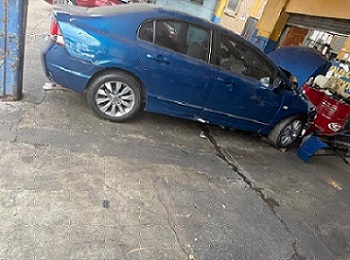
A car is an important part of everyday life, but there comes a time when keeping it on the road becomes more expensive than practical. As vehicles get older, repair bills can increase, parts may become harder to find, and reliability often begins to decline. At Sydwreck, we regularly speak with vehicle owners who are unsure whether they should invest in another repair or consider moving on from their current vehicle. While every situation is different, understanding the warning signs can help you make a practical and informed decision. This guide explains when repairing a car may no longer be worthwhile and what factors you should consider before spending more money on an ageing vehicle.
One of the clearest signs that a car may no longer be worth repairing is the number of repairs it requires. Occasional maintenance is normal for any vehicle, but if you are visiting the mechanic every few weeks or replacing major components regularly, the costs can quickly exceed the value of the vehicle.
For example, replacing an engine, transmission, suspension, and electrical components within a short period can become a significant financial burden. Even if each repair solves one problem, another issue may appear soon after. In these situations, continuing to repair the vehicle may not be the most practical long-term solution.
Before approving expensive repairs, compare the estimated repair cost with your vehicle’s current market value. If repairing the car costs close to or even more than what the vehicle is worth, it is often time to reconsider.
Older vehicles usually lose value over time, making large repair investments difficult to justify. Spending thousands on repairs may not increase the resale value enough to recover those costs. Looking at both the repair estimate and the vehicle’s condition can help you decide whether repairing it makes financial sense.
Safety should always come before convenience. If your vehicle has serious structural damage, worn safety systems, brake problems, or corrosion affecting the chassis, repairing it may not always be the best option.
Modern vehicles are designed with many safety features, and extensive damage can reduce their effectiveness. If several important safety-related repairs are needed at the same time, replacing or recycling the vehicle may be a safer decision than continuing to drive it.
A reliable vehicle should start easily, drive smoothly, and give you confidence on every journey. If your car frequently breaks down, overheats, struggles to start, or develops unexpected mechanical faults, reliability becomes a major concern.
Repeated breakdowns not only lead to additional repair costs but can also disrupt work, family commitments, and travel plans. When reliability continues to decline despite ongoing repairs, it may be time to consider other options.
Surface rust is often manageable, but severe rust affecting the frame, suspension mounting points, or other structural areas can become expensive to repair. Corrosion weakens important parts of the vehicle and may eventually affect its roadworthiness.
Once rust spreads into major structural components, repairs can become complicated and costly. In many cases, replacing heavily corroded sections may not provide good value compared with the overall condition of the vehicle.
As vehicles become older, sourcing replacement parts can become more challenging. Some discontinued models require specialist suppliers or second-hand components, increasing both repair costs and waiting times.
If parts are difficult to locate or unavailable, even relatively simple repairs can take much longer to complete. This is another important factor when deciding whether continued repairs remain practical.
Older vehicles often become less fuel-efficient as engines, transmissions, and other components wear over time. Higher fuel consumption, combined with increasing maintenance costs, can make daily driving more expensive than expected.
While regular servicing helps maintain performance, there comes a point where age-related wear reduces overall efficiency. Comparing ongoing fuel costs with the benefits of upgrading to a newer vehicle may help you make a more informed decision.
Avoid making your decision based on a single repair. Instead, look at the vehicle as a whole.
Ask yourself:
Looking at the complete picture often provides a clearer answer than focusing on one individual repair bill.
If repairing your vehicle no longer makes financial or practical sense, there are several alternatives available. Depending on its condition, you may choose to sell it privately, trade it in when purchasing another vehicle, or sell it to a licensed vehicle recycler.
Vehicles that are old, damaged, unregistered, or no longer roadworthy may still contain reusable parts and valuable recyclable materials. Responsible recycling allows these materials to be recovered while reducing unnecessary waste.
Many people assume that an old vehicle has little value once it stops running, but that is often not the case. Engines, gearboxes, body panels, wheels, electrical components, and many other parts may still be suitable for reuse. Materials such as steel, aluminium, plastics, glass, batteries, and tyres can also be recycled through approved processes.
Choosing responsible vehicle recycling helps reduce landfill waste, conserves natural resources, and supports a more sustainable automotive industry by keeping valuable materials in circulation.
Knowing when to stop repairing a car is not always an easy decision. While routine maintenance helps extend a vehicle’s lifespan, repeated breakdowns, rising repair costs, safety concerns, and declining reliability are all signs that it may no longer be worth investing in further repairs. Taking the time to compare repair costs with your vehicle’s overall condition can help you make a practical choice. If the cost of keeping the vehicle on the road continues to outweigh its value, exploring other options such as responsible vehicle recycling may provide a more sensible long-term solution.
Submit guest articles that reach decision-makers, influencers, and professionals. Yarabook offers a trusted platform for quality content, strong backlinks, and SEO-driven visibility. Pay. Publish. Promote.